

The US is holding about 10,500 prisoners in Iraq, more than double the number held in October, the US military says.
About 100 of those prisoners are under age 18, said army Lieutenant Colonel Guy Rudisill, a spokesman for detention operations in Iraq.
Five months ago, the military said it was holding about 4,300 prisoners in Iraq. The growth in the prison population has come amid a lingering insurgency in Iraq and despite the formal transfer of power to an interim Iraqi government last June.
The number of US-held prisoners in Iraq declined last summer after international outrage over abuses at the Abu Ghraib prison near Baghdad. Revelations of abuse have continued since then; on Friday, the Army released documents detailing a half-dozen prison abuse investigations in Afghanistan and Iraq.
The reports said soldiers had stripped prisoners naked and released them to walk home, beaten detainees with their fists and feet, broke a prisoner's jaw and forced detainees to exercise to the point of exhaustion. One investigator concluded prisoners at a temporary jail near Mosul were systematically mistreated and possibly tortured in December 2003.
Spokesmen for US Combined Forces Command-Afghanistan did not respond Monday and Tuesday to e-mailed questions about the number of prisoners there. The military estimated in January that it was holding about 500 people in Afghanistan.
A human rights group was issuing a report Wednesday saying the rising number of detainees increases the risk that the prisoners will be mistreated. The report from New York-based Human Rights First says secrecy about the prisoners is also increasing, citing the refusal of military officials to discuss the number of prisoners in Afghanistan since January.
"We're seriously concerned about overburdening of what the Pentagon has called transient facilities, the field prisons," Human Rights First lawyer Deborah Pearlstein said Tuesday. "These are places where conditions are terrible, where the worst abuses occurred from 2002 to 2004, and ICRC [International Committee of the Red Cross] access is limited to nonexistent."
About 1,200 of the prisoners in Iraq are being held in temporary facilities at forward bases, Rudisill said. He said the other 9,300 are being held in three permanent prisons: the Abu Ghraib jail near Baghdad, Camp Cropper at the Baghdad International Airport and Camp Bucca in southern Iraq.
In December, US officials said they were holding about 65 prisoners age 16 and under. The 100 or so under-18 prisoners in custody now are being held separately from adult prisoners, Rudisill said.

Philippine Secretary of National Defense Gilberto Teodoro Jr on Tuesday hit out at China at an international forum after a memo asserting Beijing’s position over their longstanding maritime dispute was delivered to him while he was speaking on stage. The unusual incident was captured on video at the Seoul Defense Dialogue as the secretary was responding to a question about “gray zone” coercion in the South China Sea. The video shows what appears to be a conference staffer placing it on the table next to him while speaking. “I have a note here, I think this is from China,” he said, describing

Thai police yesterday said that they arrested a senior Buddhist monk on suspicion of embezzling US$2.8 million intended for his monastery, alongside a suspected female accomplice he was having sex with. The case is the latest scandal to hit the clergy in Buddhist-majority Thailand after a sex and extortion case involving senior monks last year prompted public outrage and calls for greater scrutiny of temple finances. Phra Wachirayan Wi, the 66-year-old abbot of the 14th-century Wat Phutthaisawan in the ancient capital of Ayutthaya, was arrested on Thursday on charges including embezzlement and money laundering, lead police investigator Pattanasak Bupphasuwan said. A 47-year-old woman

SECRET FOOTAGE: A 17-year-old girl told British broadcaster Channel 4 that she had been approached by a man who covertly recorded her and their interaction Calls are growing louder in Europe for action against “pervert” smart glasses after secretly filmed footage of girls and women appeared online — with a petition in Britain demanding a ban on their sale. Anyone wearing smart glasses can take photos, film videos, listen to music, make phone calls, translate text or interact with an artificial intelligence (AI) assistant, with sales now hitting millions. The devices grabbed attention this summer after a marketing tie-up between Kylie Jenner, beauty mogul and member of the Kardashian dynasty, and tech giant Meta. Since smartphones are now embedded in daily life, “big tech” is
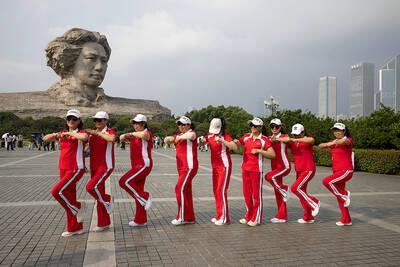
China yesterday marked half a century since the death of Mao Zedong (毛澤東), founder of the People’s Republic, who brought roughly one-quarter of the world’s population under communist rule and whose specter still haunts China’s future. Mao’s death on Sept. 9, 1976, at age 82, mourned by many and welcomed by some who suffered under his nearly three-decade rule, also hastened the end of the Cultural Revolution, a frenzied mass movement he launched in 1966. The party later condemned the Cultural Revolution as a grave error for which Mao bore primary responsibility, but still reveres him, saying his achievements outweigh his mistakes. Mao’s


 RSS
RSS