


India's government says that seven truck drivers from India, Kenya and Egypt who were taken hostage in Iraq are set to be released, but an Iraqi negotiator denied there was an agreement to free the men.
India's junior foreign minister, E. Ahamed, told reporters in New Delhi that "face-to-face" negotiations took place over the weekend.
"The way has reportedly been cleared for the release of the hostages," he told reporters Saturday.
However, Ahamed added that "unless we have authoritative and clear confirmation that the hostages have been released, we must wait with hope."
In Iraq, Sheik Hisham al-Duleimi, a tribal chief who has been working as a negotiator since the seven were kidnapped on June 21, said he had no word from the kidnappers about a release.
He said that he's been in contact with the drivers' employer, Kuwait and Gulf Link Transport, which has sent a negotiator to Iraq, but that there has been no progress so far.
A diplomat in Baghdad with knowledge of the crisis denied that the men have been released or were about to be released, and said it was not clear whether the kidnappers have even agreed to begin negotiations. The diplomat spoke on condition of anonymity.
Phone calls to Rana Abu-Zaineh, spokeswoman for Kuwait and Gulf Link Transport, went unanswered.
The kidnappers, who call themselves the Holders of the Black Banner, threatened to behead the seven hostages if their Kuwaiti employer kept doing business in Iraq and their respective countries did not withdraw their citizens.
The kidnappers have repeatedly extended deadlines for killing the abductees, and have also demanded reparations for the people of the Iraqi city of Fallujah.
The seven men are Ibrahim Khamis, Salm Faiz Khamis and Jalal Awadh of Kenya; Antaryami, Tilak Raj and Sukdev Singh of India; and Mohammed Ali Sanad of Egypt.
The Indian government has not released any details of conditions and a time for a possible release. Indian news channels, including New Delhi Television and Aaj Tak, said talks had been held in Fallujah, where the hostages are believed to be.
"All indications at this juncture point to a positive outcome of this crisis," Ahamed said.
Militants in Iraq have kidnapped more than 70 foreigners in recent months in an effort to thin the ranks of foreigners assisting the US-led invasion and occupation forces.
False hopes were raised a week ago, when Kenyan Foreign Affairs Minister Chirau Ali Mwakwere erroneously said that the seven truck drivers had been released. He said on Saturday: ``We are optimistic and hopeful, but we will only be confident of their release when we hold their hand.''
He said he didn't want to comment further because of the delicate nature of the negotiations. "Things change by the minute," he said.
Ram Moorti, father of hostage Antaryami, told Aaj Tak television channel: "We will believe it only when we see him."
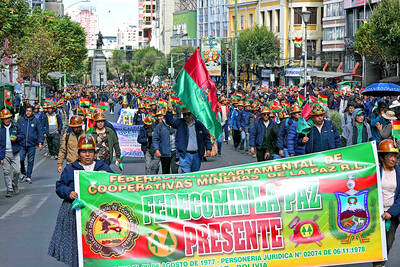
The Bolivian government on Friday struck a deal with protesting miners, but was still grappling with blockades and demonstrations by other workers across La Paz. Other groups are still blocking access roads into the city, which is also the seat of the government. Police on Thursday prevented the miners from entering the main square by using tear gas, while the demonstrators hurled stones and explosives with slingshots. Protests against the policies of Bolivian President Rodrigo Paz have convulsed the Andean nation since early this month, and roadblocks were choking routes into La Paz throughout Friday, the national road authority said. Miners demanded that Paz
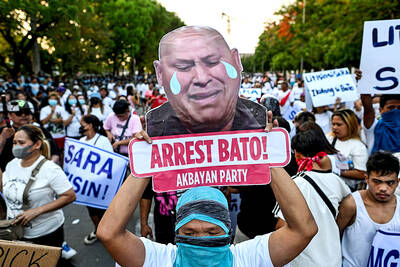
The Philippines said it has asked the country’s Supreme Court to allow it to arrest former Philippine president Rodrigo Duterte’s chief drug war enforcer to stand trial in an international tribunal. The International Criminal Court (ICC) last week unsealed an arrest warrant against Philippine Senator Ronald dela Rosa, accusing him along with Duterte and other “coperpetrators” of the “crime against humanity of murder.” Dela Rosa briefly sought refuge in the Philippine Senate last week while asking the Philippine Supreme Court to stop an ongoing attempt by government agents to arrest him. “By his own conduct, he has placed himself outside the protection of
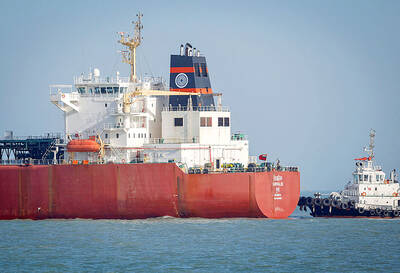
A ship anchored off the United Arab Emirates (UAE) was seized and taken toward Iran and another — a cargo ship near Oman — sank after being attacked, authorities said on Thursday, as tensions escalated near the Strait of Hormuz. It was not immediately clear who was behind these incidents, but they happened as a senior Iranian official reiterated his country’s claim of control over the waterway and another said it had a right to seize oil tankers connected to the US. The turmoil in the strait has been a sticking point for weeks in talks between the US and Iran to
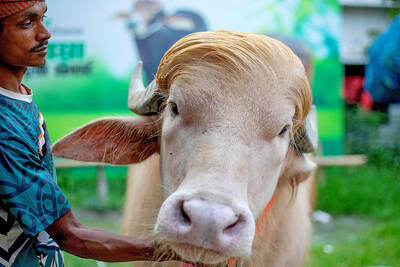
Crowds in Bangladesh are flocking to snap photographs with an unlikely social media star — an albino buffalo with flowing blond hair nicknamed “Donald Trump” that is due to be sacrificed within days. Owner Zia Uddin Mridha, 38, said his brother named the 700kg bull over its flowing helmet of hair resembling the signature look of the US president. “My younger brother picked this name because of the buffalo’s extraordinary hair,” he said at his farm in Narayanganj, just outside the capital, Dhaka. Mridha said that a constant stream of curious visitors — social media fans, onlookers and children — have come throughout


 RSS
RSS