


After a two-month search, Israel has taken vengeance on a Palestinian militant believed to have jubilantly displayed the severed head of an Israeli soldier, killing him with a helicopter-launched missile.
The helicopter attack in Gaza that killed Hazem Rahim and another militant late Thursday partly fulfilled a pledge by the Israeli army chief to "show no forgiveness" to the men who gloated over the corpses of six Israeli soldiers in May and held the body parts for ransom.
The missile pulverized a white Subaru driving through the crowded Zeitoun district of Gaza City. The Islamic Jihad organization identified them as its members, and the Israeli army said at least one of them was involved in the deadly roadside bombing.

PHOTO: REUTERS
The May 11 incident was one of the more gruesome in the recent conflict in Gaza: the bomb shattered an armored personnel carrier transporting explosives, scattering the remains of the six soldiers.
Militants paraded through the streets with body parts. Video footage flashed on Arab television showed two masked Islamic Jihad activists displaying the head of an Israeli soldier on a table.
Israeli security officials say they believe Rahim was one of the men in the video. He was known to be involved in the negotiations for the return of the remains, initially demanding the release of Palestinian prisoners in exchange.
Rahim's name was on an Israeli list of Palestinians to be hunted down for desecration of the soldiers' bodies, the officials said on condition of anonymity.
Also on Friday, Palestinian witnesses said a teenager in Beit Hanoun in the northern Gaza Strip was killed by militants in an argument when he tried to stop them from planting a weapon near his house targeting Israeli patrols. Palestinian officials said the man was killed by Israeli gunfire.
Israel's relations with the EU plunged further with a warning from the regional group's foreign policy chief, Javiar Solana, that Europeans cannot be ignored in Mideast diplomacy.
Solana's two-day visit to Israel turned frosty after the EU voted as a bloc for a resolution in the UN General Assembly demanding that Israel dismantle the barrier it is building in the West Bank and compensate Palestinians for land that has been confiscated.
In a meeting with Solana on Thursday, Prime Minister Ariel Sharon said the European vote would make it difficult for Israel to involve the EU in the peace process.
But Solana fired back that the Europeans will remain involved.
Europe "is a very important international power and is going to play a role whether you like it or not," he said on Friday.
Meanwhile, an Israeli court cleared the way for the deportation of an American Jewish member of the International Solidarity Movement, an organization that tries to protect Palestinians from Israeli military operations.
Jamie Spector, 32, a social worker from San Francisco, lost an appeal against an order barring her entry into Israel, and was to be deported early yesterday, said her lawyer, Gaby Lasky.
The decision came just two days after a judge overturned a similar ban against a member of the same organization on the condition that she not engage in political activity.
Two members of the group were killed by Israeli military personnel last year, with one woman crushed by a bulldozer as she opposed the army's destruction of Palestinian homes.
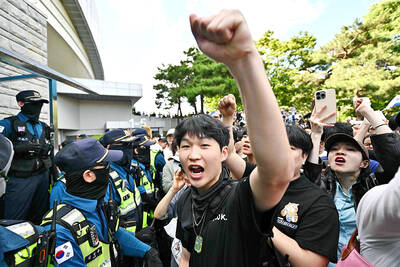
‘ABSURD MISTAKE’: The election commission said that there had been a failure to anticipate turnout after 14 polling stations ran short of ballot papers South Korean riot police yesterday cleared protesters from a Seoul polling station after a 35-hour blockade sparked by a shortage of ballot papers during local elections earlier this week. Wednesday’s election was the first nationwide vote since South Korean President Lee Jae-myung took office following the ouster of Yoon Suk-yeol over his short-lived martial law declaration. Lee’s ruling Democratic Party swept most races, but failed to flip the crucial Seoul mayoral seat. The South Korean National Election Commission apologized, blaming a failure to anticipate turnout after 14 polling stations in Seoul ran short of ballot papers. Some polling stations stayed open until 10pm to

France experienced its hottest spring on record, the French weather service said on Tuesday, after an exceptional early heat wave that also broke highs for the season in England and Wales. Meteo-France said the average nationwide temperature over March to May was 13.8°C — about 1.7°C above the norm, and surpassing records set in 2011 and 2020. “The warmest spring since records began in 1900,” it said in a bulletin. All three months were warmer than average, but the onset of an “unprecedented heatwave” late last month pushed the mercury to highs typically seen at the height of the summer. “Our country had never

A Sherpa guide was found crawling to base camp on Mount Everest a week after he went missing and was reunited with his family, who had given up hope he would return. Dawa Sherpa was last seen on Friday last week descending the mountain, but he did not reach base camp even though his client did. The pair were among the last climbers on the mountain as the climbing season came to an end and the route was dismantled. Dawa was located by a cleaning crew on Thursday morning as he was crawling down the snowy slopes around the Khumbu Icefall, just above
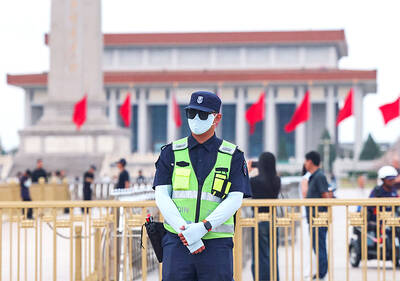
Chinese authorities are snuffing out any remembrance of the deadly 1989 military crackdown on student-led pro-democracy protests in Tiananmen Square, which happened 37 years ago yesterday, in a further tightening of a years-long campaign to erase what happened from public memory. Police told relatives of the victims they would not be allowed to visit a cemetery in Beijing on the anniversary of the crackdown, a person with knowledge of the matter said. Relatives of the victims visited the cemetery on the anniversary for more than 30 years to read memorial statements with police keeping watch, Amnesty International said. Hundreds of people,


 RSS
RSS