


A bomb killed a senior member of Lebanese guerrilla group Hezbollah in the southern suburbs of Beirut yesterday in an attack the group blamed on Israel.
Witnesses said the wreckage of a Mercedes car lay in the road, its glass shattered. Blood stained the road beside it.
In a statement, Hezbollah said the blast killed Ghalib Awali -- who it called "part of the Islamic Resistance's cadre" -- as he left his home. Hezbollah's TV station, which interrupted programming to announce the blast, called him a member of the group's leadership.
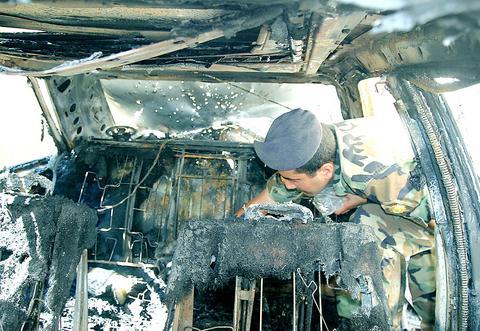
PHOTO: AP
There was no immediate claim of responsibility for the blast.
A Hezbollah official, which played a leading role in helping to end Israel's 22-year occupation of south Lebanon in 2000, pointed the finger at the Jewish state and hinted at retribution.
"It is an attempt to destabilize the resistance and Lebanon, and we see in it the hand of the Zionist enemy," Sheikh Hassan Ezzeddine said. "The enemy bears complete responsibility for what it has done."
Israel assassinated the group's leader Abbas al-Mussawi in 1992 in an air strike on his car, and Lebanon has tried and convicted several people in recent years of spying on and plotting against the Iranian and Syrian-backed group.
There was no immediate comment from Israel, which in recent months has stepped up its rhetoric against Hezbollah, calling the group a major backer of Palestinian militants in the West Bank and the Gaza Strip.
The blast recalled the killings of two Lebanese whom Israel accused of links to Hezbollah and al-Qaeda. Locals blamed those killings on Israel's Mossad, a charge the Jewish state neither confirmed nor denied.
A car bomb last year in the same part of Beirut killed a Hezbollah member whom security sources and witnesses had identified as an employee of the Iranian embassy in the Lebanese capital.
Since helping drive Israel from south Lebanon, Hezbollah brokered a swap of the remains of Israeli soldiers it captured in a disputed border zone and a reservist it abducted for Lebanese captives in Israel, including senior Hezbollah figures.
The group has vowed to secure the release of Samir al-Qantar, a Lebanese held over the killing of four Israelis in 1979, for which Israel demands information about the fate of Ron Arad, an Israeli airman who went missing while bombing Lebanon in 1986.
Hezbollah leader Sheikh Hassan Nasrallah has said the group would kidnap more Israelis if Qantar was not released.
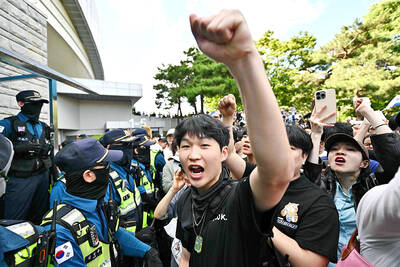
‘ABSURD MISTAKE’: The election commission said that there had been a failure to anticipate turnout after 14 polling stations ran short of ballot papers South Korean riot police yesterday cleared protesters from a Seoul polling station after a 35-hour blockade sparked by a shortage of ballot papers during local elections earlier this week. Wednesday’s election was the first nationwide vote since South Korean President Lee Jae-myung took office following the ouster of Yoon Suk-yeol over his short-lived martial law declaration. Lee’s ruling Democratic Party swept most races, but failed to flip the crucial Seoul mayoral seat. The South Korean National Election Commission apologized, blaming a failure to anticipate turnout after 14 polling stations in Seoul ran short of ballot papers. Some polling stations stayed open until 10pm to
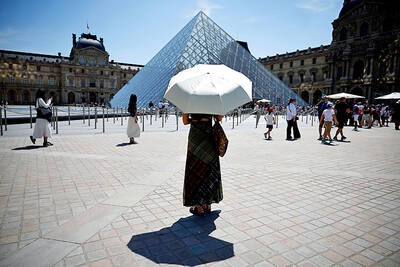
France experienced its hottest spring on record, the French weather service said on Tuesday, after an exceptional early heat wave that also broke highs for the season in England and Wales. Meteo-France said the average nationwide temperature over March to May was 13.8°C — about 1.7°C above the norm, and surpassing records set in 2011 and 2020. “The warmest spring since records began in 1900,” it said in a bulletin. All three months were warmer than average, but the onset of an “unprecedented heatwave” late last month pushed the mercury to highs typically seen at the height of the summer. “Our country had never
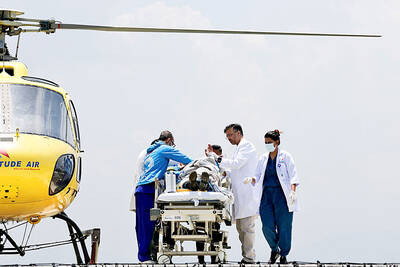
A Sherpa guide was found crawling to base camp on Mount Everest a week after he went missing and was reunited with his family, who had given up hope he would return. Dawa Sherpa was last seen on Friday last week descending the mountain, but he did not reach base camp even though his client did. The pair were among the last climbers on the mountain as the climbing season came to an end and the route was dismantled. Dawa was located by a cleaning crew on Thursday morning as he was crawling down the snowy slopes around the Khumbu Icefall, just above
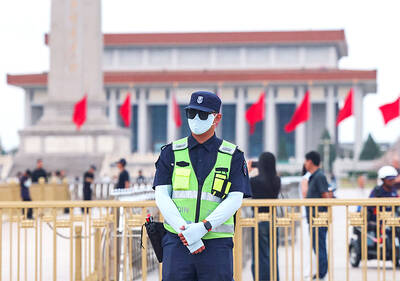
Chinese authorities are snuffing out any remembrance of the deadly 1989 military crackdown on student-led pro-democracy protests in Tiananmen Square, which happened 37 years ago yesterday, in a further tightening of a years-long campaign to erase what happened from public memory. Police told relatives of the victims they would not be allowed to visit a cemetery in Beijing on the anniversary of the crackdown, a person with knowledge of the matter said. Relatives of the victims visited the cemetery on the anniversary for more than 30 years to read memorial statements with police keeping watch, Amnesty International said. Hundreds of people,


 RSS
RSS