


An explosion in the western Afghan city of Herat yesterday killed five people and wounded 34, raising fresh concerns about security for elections due in October, officials said.
The UN said the blast was the latest in a string of violent incidents that underscored the need for more international troops to protect the October 9 presidential vote and parliamentary elections next April.
The explosion came shortly before the launch of a drive to disarm militia forces in the ancient city near the border with Iran.
The device exploded outside a military post near a busy morning market, said Ghulam Mohammad Masoan, a spokesman for the provincial governor.
"The death toll has reached five; a child is among them. And we have 34 wounded people," said Nasir Habib, a doctor at Herat's main hospital.
The death toll could rise because some of the wounded were in critical condition, he said. All the victims were civilians.
Herat's police chief, Zia Uddin Mahmodi, said the blast was thought to have been caused by a bomb hidden in a bucket.
Members of the ousted Taliban militia could have been responsible, he said.
The Taliban, ousted by US-led forces in late 2001, have vowed to disrupt the October election and have launched a string of attacks on government and foreign troops and election workers in recent months, but most of the violence has been in the south and east of the country.
Masoan said he believed it was the work of "those people who do not want a stable Herat." He was apparently referring to rivals of the province's powerful governor, Ismail Khan.
Herat has long been seen as one of the more stable parts of the country, but in March fighting erupted between forces loyal to a government military commander and members of Khan's militia.
Khan's son, Aviation Minster Mirwais Sadiq, was killed in the clash. President Hamid Karzai's central government sent troops to intervene but commanders loyal to Khan, who forced those of the rival commander out of the city, said they were not needed.
A UN spokesman in Kabul said a Disarmament, Demobilization and Integration drive was due to be launched in Herat yesterday with a parade and a ceremony at a site about 5km from the explosion site.
One of Khan's armored militia brigades was due to be demobil-ized in the campaign.
The disarming of tens of thousands of irregular fighters under the command of regional strongmen is seen as a step in Afghanistan's path to political stability.
Some regional commanders, including Khan, have warned that disarming their forces will actually increase instability, especially while a new national army of 12,000 is so small.
Western diplomats and human rights groups have argued that it would be difficult to ensure fair parliamentary elections while powerful factions, some of them closely aligned to local political parties, hold sway over large parts of Afghanistan.
More than 20,000 US-led troops are hunting remnants of the Taliban and their al-Qaeda allies in Afghanistan.
NATO has deployed about 6,500 troops, most on peacekeeping duty in Kabul. It has agreed to send another 1,500 to Kabul and to the more stable north for the polls -- far fewer than the UN and the government had been seeking.
The UN representative for Afghanistan said more troops were needed.
"All the incidents that have been happening recently, including the killing of our three female registration officers, do demonstrate that protection of the election process is not a matter of arriving for polling day," UN special representative Jean Arnault told reporters.
"The time for the arrival of international forces is now, not in four months from now," he said.
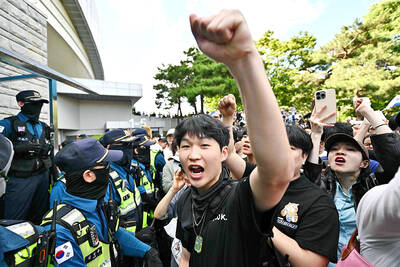
‘ABSURD MISTAKE’: The election commission said that there had been a failure to anticipate turnout after 14 polling stations ran short of ballot papers South Korean riot police yesterday cleared protesters from a Seoul polling station after a 35-hour blockade sparked by a shortage of ballot papers during local elections earlier this week. Wednesday’s election was the first nationwide vote since South Korean President Lee Jae-myung took office following the ouster of Yoon Suk-yeol over his short-lived martial law declaration. Lee’s ruling Democratic Party swept most races, but failed to flip the crucial Seoul mayoral seat. The South Korean National Election Commission apologized, blaming a failure to anticipate turnout after 14 polling stations in Seoul ran short of ballot papers. Some polling stations stayed open until 10pm to

France experienced its hottest spring on record, the French weather service said on Tuesday, after an exceptional early heat wave that also broke highs for the season in England and Wales. Meteo-France said the average nationwide temperature over March to May was 13.8°C — about 1.7°C above the norm, and surpassing records set in 2011 and 2020. “The warmest spring since records began in 1900,” it said in a bulletin. All three months were warmer than average, but the onset of an “unprecedented heatwave” late last month pushed the mercury to highs typically seen at the height of the summer. “Our country had never
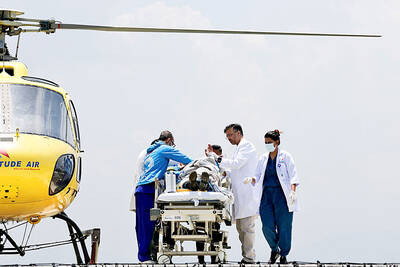
A Sherpa guide was found crawling to base camp on Mount Everest a week after he went missing and was reunited with his family, who had given up hope he would return. Dawa Sherpa was last seen on Friday last week descending the mountain, but he did not reach base camp even though his client did. The pair were among the last climbers on the mountain as the climbing season came to an end and the route was dismantled. Dawa was located by a cleaning crew on Thursday morning as he was crawling down the snowy slopes around the Khumbu Icefall, just above
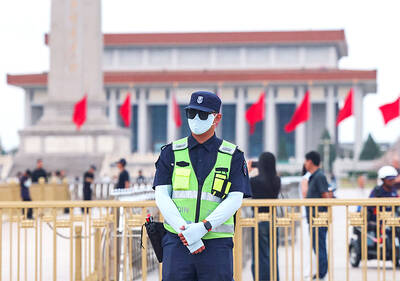
Chinese authorities are snuffing out any remembrance of the deadly 1989 military crackdown on student-led pro-democracy protests in Tiananmen Square, which happened 37 years ago yesterday, in a further tightening of a years-long campaign to erase what happened from public memory. Police told relatives of the victims they would not be allowed to visit a cemetery in Beijing on the anniversary of the crackdown, a person with knowledge of the matter said. Relatives of the victims visited the cemetery on the anniversary for more than 30 years to read memorial statements with police keeping watch, Amnesty International said. Hundreds of people,


 RSS
RSS