


Israel's Atomic Energy Commission posted a Web site on Sunday about the country's nuclear program, which has always been highly secretive, though the new site is limited to the most basic information and a few long-distance photos.
The introduction of the site came just two days before a visit by the director of the International Atomic Energy Agency, Mohamed ElBaradei, who last week called for talks on a nuclear-free Middle East.
As noted on the new Web site (www.iaec.gov.il), the Atomic Energy Commission was established in 1952 by then-prime minister David Ben-Gurion.
Since then, Israel has tried to say as little as possible about its nuclear program. It has always refused to confirm or deny whether it possesses nuclear weapons, though various estimates have said the country has enough plutonium to make about 200 warheads.
In an interview last December with the Israeli newspaper Haaretz, ElBaradei said he presumed that Israel had a nuclear arsenal.
The Web site notes that Israel has two nuclear research centers, including a nuclear reactor in the Negev Desert, outside the southern town of Dimona.
There is no reference to nuclear weapons on the Web posting, which says the Dimona facility is for "expanding and deepening basic knowledge of nuclear science and related fields and providing an infrastructure for the practical and economic utilization of atomic energy."
Some photos are of nondescript buildings, with bright flowers in the foreground. One shows what appears to be the silhouette of the dome-shaped Dimona reactor at sunset, from a great distance.
The Web site, in English and Hebrew, offer just a few pages of general information that is already common knowledge.
In May, Israel's equally secretive intelligence service, Mossad, posted its own Web site, which advertises for recruits.
While ElBaradei's two-day visit will focus attention on Israel's nuclear program, Israeli analysts say they see no possibility that it will lead Israel to change its policy of "strategic ambiguity."
"These policies have been followed by all prime ministers; they enjoy wide support in the Israeli body politic, and are well understood by Israel's allies," said Uzi Arad, director of the Institute for Policy and Strategy at the Interdisciplinary Center Herzliya, outside Tel Aviv.
ElBaradei's visit is likely to cover a variety of civilian nuclear issues, like nuclear medicine and safety regulations, Arad said.
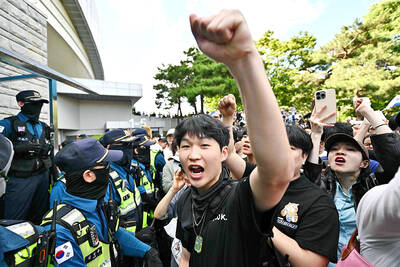
‘ABSURD MISTAKE’: The election commission said that there had been a failure to anticipate turnout after 14 polling stations ran short of ballot papers South Korean riot police yesterday cleared protesters from a Seoul polling station after a 35-hour blockade sparked by a shortage of ballot papers during local elections earlier this week. Wednesday’s election was the first nationwide vote since South Korean President Lee Jae-myung took office following the ouster of Yoon Suk-yeol over his short-lived martial law declaration. Lee’s ruling Democratic Party swept most races, but failed to flip the crucial Seoul mayoral seat. The South Korean National Election Commission apologized, blaming a failure to anticipate turnout after 14 polling stations in Seoul ran short of ballot papers. Some polling stations stayed open until 10pm to

France experienced its hottest spring on record, the French weather service said on Tuesday, after an exceptional early heat wave that also broke highs for the season in England and Wales. Meteo-France said the average nationwide temperature over March to May was 13.8°C — about 1.7°C above the norm, and surpassing records set in 2011 and 2020. “The warmest spring since records began in 1900,” it said in a bulletin. All three months were warmer than average, but the onset of an “unprecedented heatwave” late last month pushed the mercury to highs typically seen at the height of the summer. “Our country had never
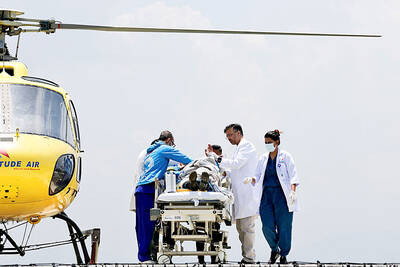
A Sherpa guide was found crawling to base camp on Mount Everest a week after he went missing and was reunited with his family, who had given up hope he would return. Dawa Sherpa was last seen on Friday last week descending the mountain, but he did not reach base camp even though his client did. The pair were among the last climbers on the mountain as the climbing season came to an end and the route was dismantled. Dawa was located by a cleaning crew on Thursday morning as he was crawling down the snowy slopes around the Khumbu Icefall, just above
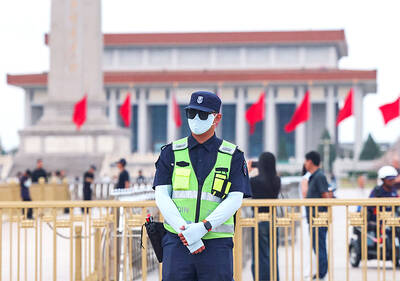
Chinese authorities are snuffing out any remembrance of the deadly 1989 military crackdown on student-led pro-democracy protests in Tiananmen Square, which happened 37 years ago yesterday, in a further tightening of a years-long campaign to erase what happened from public memory. Police told relatives of the victims they would not be allowed to visit a cemetery in Beijing on the anniversary of the crackdown, a person with knowledge of the matter said. Relatives of the victims visited the cemetery on the anniversary for more than 30 years to read memorial statements with police keeping watch, Amnesty International said. Hundreds of people,


 RSS
RSS