


The people of Serbia will look on with deep cynicism as former Yugoslav president and Serbian nationalist Slobodan Milosevic launches his defense against war-crimes charges at The Hague this week.
Milosevic is due to make an opening statement in his self-defense today and the proceedings, as they have been for more than two years, will be broadcast live on TV throughout the Balkan republic.
But the broadcasts long ago lost their appeal in a country that is trying to move on rather than constantly relive the past. To many the proceedings have become little more than a tiresome soap opera starring a man most would rather forget.
Analysts expect few surprises, saying Milosevic will stick to his strategy of challenging the legitimacy of the UN war-crimes court while using the trial as a political platform to speak to the Serbian people.
"He has combined ignoring of the procedural side of the trial and the evidence, addressing more the domestic audience," journalist Nenad Stefanovic said in the weekly Vreme.
"Surely he will not give up such tactics" during his defense time, said Stefanovic, who has been covering the trial for Vreme.
At the start of the trial Milosevic announced that he would summon world leaders including former US president Bill Clinton and UN Secretary-General Kofi Annan to give evidence about the Balkans wars of the 1990s.
"There is no doubt that he will try [on Monday] to change places with the prosecution as he thinks that the trial should be held against those who have brought him there," Stefanovic said.
Sociologist Dragan Popovic estimated that the resumption of the trial would hardly "glue anyone to the television screen, although his supporters have not disappeared from Serbian soil."
"But even they have now realized that this will be a long process, with almost no chances for Milosevic to return to his homeland," Popovic said.
Last week, on the third anniversary of the former strongman's extradition to the International Criminal Tribunal for the former Yugoslavia, only several hundred supporters gathered in Belgrade to demand his release.
Public interest in the almost daily TV coverage of the trial has waned from the start of proceedings, when it nearly brought the country to a standstill.
In a bid to revive the ratings of the broadcast on B92 TV, the only station which has constantly transmitted the proceedings, editors decided to combine the trial with "current affairs" programs.
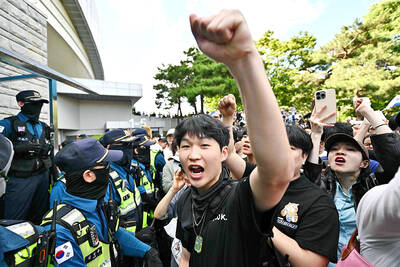
‘ABSURD MISTAKE’: The election commission said that there had been a failure to anticipate turnout after 14 polling stations ran short of ballot papers South Korean riot police yesterday cleared protesters from a Seoul polling station after a 35-hour blockade sparked by a shortage of ballot papers during local elections earlier this week. Wednesday’s election was the first nationwide vote since South Korean President Lee Jae-myung took office following the ouster of Yoon Suk-yeol over his short-lived martial law declaration. Lee’s ruling Democratic Party swept most races, but failed to flip the crucial Seoul mayoral seat. The South Korean National Election Commission apologized, blaming a failure to anticipate turnout after 14 polling stations in Seoul ran short of ballot papers. Some polling stations stayed open until 10pm to

France experienced its hottest spring on record, the French weather service said on Tuesday, after an exceptional early heat wave that also broke highs for the season in England and Wales. Meteo-France said the average nationwide temperature over March to May was 13.8°C — about 1.7°C above the norm, and surpassing records set in 2011 and 2020. “The warmest spring since records began in 1900,” it said in a bulletin. All three months were warmer than average, but the onset of an “unprecedented heatwave” late last month pushed the mercury to highs typically seen at the height of the summer. “Our country had never

A Sherpa guide was found crawling to base camp on Mount Everest a week after he went missing and was reunited with his family, who had given up hope he would return. Dawa Sherpa was last seen on Friday last week descending the mountain, but he did not reach base camp even though his client did. The pair were among the last climbers on the mountain as the climbing season came to an end and the route was dismantled. Dawa was located by a cleaning crew on Thursday morning as he was crawling down the snowy slopes around the Khumbu Icefall, just above
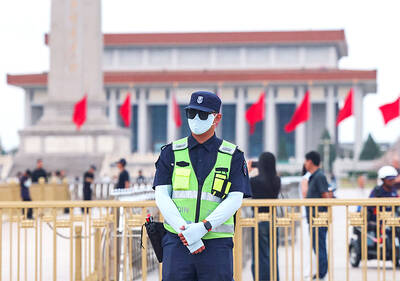
Chinese authorities are snuffing out any remembrance of the deadly 1989 military crackdown on student-led pro-democracy protests in Tiananmen Square, which happened 37 years ago yesterday, in a further tightening of a years-long campaign to erase what happened from public memory. Police told relatives of the victims they would not be allowed to visit a cemetery in Beijing on the anniversary of the crackdown, a person with knowledge of the matter said. Relatives of the victims visited the cemetery on the anniversary for more than 30 years to read memorial statements with police keeping watch, Amnesty International said. Hundreds of people,


 RSS
RSS