


Thai Prime Minister Thaksin Shinawatra's dreams of acquiring a 30 percent stake in English club Liverpool lie in tatters, with analysts and observers decrying Thailand's latest schemes to revive the bid as farcical.
The goal of buying into the Premiership side was touted by the government first as a source of unifying national pride.
But in the end it has brought ridicule, a loss of face and raised eyebrows among foreign observers and investors over the administration's motives over the bid.
"The deal is not a good image for Thai people," media rights campaigner Supinya Klangnarong said of the continuing and shifting attempts to secure some form of a buy-in despite a loud chorus of opposition.
"I don't think the international community would admire us for what our government or businesses are trying to do," he said.
Supinya, who is currently being sued by Thaksin for alleging that a conglomerate he founded that is now run by his family has benefited under his tenure, said the premier at least distanced his administration from the deal when opposition reached fever pitch.
Had a deal gone through Thaksin may have broken barriers as the first Asian to have bought his way into the world's wealthiest football league.
England's Premiership enjoys massive popularity in Thailand, partly because its games are screened live here during prime viewing time.
In May, Thaksin, a billionaire-turned-politician and an avowed football fan, launched his campaign. The Thai press seized on the drama, and within days he found himself backpedaling over the bid in which at first he had been expected to use over 4 billion baht (US$100 million) of his own fortune.
From the start, two of three Thais thought a government-funded stake would be a waste of state money, according to a survey reported in The Nation newspaper. Then it got worse.
Thaksin variously announced plans to use taxpayer money, float shares on the Thai stock exchange, and eventually launch a massive US$250 million public lottery to raise the money.
But the Thai fantasy of pulling strings at the top of one of the world's most celebrated sports dynasties unravelled.
Last month he backed out altogether, handing over control of negotiations to Paiboon Damranongchaitham, chairman of Thailand's biggest entertainment company GMM Grammy.
Paiboon quickly sought the financial help of "millions" of Thais to contribute somehow to the purchase, but when vague proposals fell flat, the deal was reduced to passing the hat around Asian business leaders.
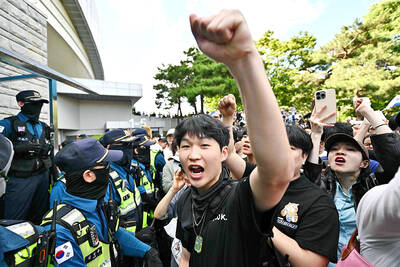
‘ABSURD MISTAKE’: The election commission said that there had been a failure to anticipate turnout after 14 polling stations ran short of ballot papers South Korean riot police yesterday cleared protesters from a Seoul polling station after a 35-hour blockade sparked by a shortage of ballot papers during local elections earlier this week. Wednesday’s election was the first nationwide vote since South Korean President Lee Jae-myung took office following the ouster of Yoon Suk-yeol over his short-lived martial law declaration. Lee’s ruling Democratic Party swept most races, but failed to flip the crucial Seoul mayoral seat. The South Korean National Election Commission apologized, blaming a failure to anticipate turnout after 14 polling stations in Seoul ran short of ballot papers. Some polling stations stayed open until 10pm to

France experienced its hottest spring on record, the French weather service said on Tuesday, after an exceptional early heat wave that also broke highs for the season in England and Wales. Meteo-France said the average nationwide temperature over March to May was 13.8°C — about 1.7°C above the norm, and surpassing records set in 2011 and 2020. “The warmest spring since records began in 1900,” it said in a bulletin. All three months were warmer than average, but the onset of an “unprecedented heatwave” late last month pushed the mercury to highs typically seen at the height of the summer. “Our country had never

A Sherpa guide was found crawling to base camp on Mount Everest a week after he went missing and was reunited with his family, who had given up hope he would return. Dawa Sherpa was last seen on Friday last week descending the mountain, but he did not reach base camp even though his client did. The pair were among the last climbers on the mountain as the climbing season came to an end and the route was dismantled. Dawa was located by a cleaning crew on Thursday morning as he was crawling down the snowy slopes around the Khumbu Icefall, just above
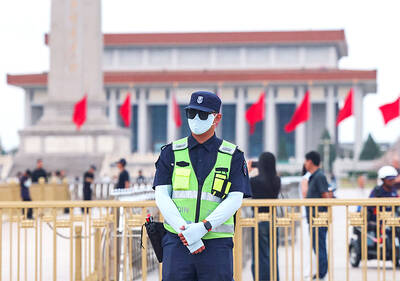
Chinese authorities are snuffing out any remembrance of the deadly 1989 military crackdown on student-led pro-democracy protests in Tiananmen Square, which happened 37 years ago yesterday, in a further tightening of a years-long campaign to erase what happened from public memory. Police told relatives of the victims they would not be allowed to visit a cemetery in Beijing on the anniversary of the crackdown, a person with knowledge of the matter said. Relatives of the victims visited the cemetery on the anniversary for more than 30 years to read memorial statements with police keeping watch, Amnesty International said. Hundreds of people,


 RSS
RSS