


Spanish Prime Minister-elect Jose Luis Rodriguez Zapatero said yesterday his position on withdrawing Spanish troops from Iraq remained firm despite an appeal from US President George W. Bush to stand by the US.
"My position is the same. I have explained it throughout the election campaign," he told Onda Cero radio. "I will listen to Mr. Bush but my position is very clear and very firm."
Zapatero has pledged to withdraw troops from Iraq by July 1 if the UN does not take charge there.
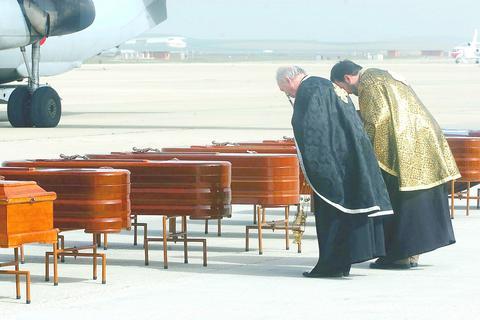
PHOTO: AP
"The occupation is a fiasco. There have been almost more deaths after the war than during the war," he said. "The occupying forces have not allowed the United Nations to take control of the situation."
On Tuesday, Bush called on Spain and other allies in Iraq not to yield to pressure from al-Qaeda by pulling their troops from the coalition occupying the country.
"It's essential that we remain side-by-side with the Iraqi people," Bush said. "Al-Qaeda wants us out of Iraq."
White House spokesman Scott McClellan cautioned Spaniards and others against sending a "terrible message" by letting "terrorists" influence their elections and policies.
The White House said it may seek a new UN resolution before it hands back sovereignty to Iraqis by the end of June to persuade allies such as Spain not to withdraw.
With Europe struggling to digest the consequences of what may be the first al-Qaeda-style attack in the West since the Sept. 11, 2001, strikes, France, Britain and South Korea said they were targets for Islamic militants.
Outgoing Spanish Foreign Minister Ana Palacio summed up global fears at a memorial service on Tuesday in Morocco, home of eight of the main suspects in last Thursday's train bombings that killed 201 people and wounded nearly 1,700.
"We were all in those trains blown apart by hatred," she said. "Those who think they can find a safe haven from terrorism delude themselves."
Spanish media said police were looking for five Moroccan men, part of a group of eight main suspects. Three Moroccan suspects have already been detained.
One of the three detained Moroccans has been identified as Jamal Zougam. Police said bomb survivors had identified him from photos as having been on board one of the trains but they were treating witness reports cautiously.
There were reports Zougam had connections with some of those arrested for last May's bombings in Casablanca that killed 45 people, including 12 suicide bombers. In Rabat, Moroccan authorities said no direct links had been established.
In France, a letter sent on Tuesday by a shadowy Islamist group to several newspapers threatened "to plunge France into terror and remorse and spill blood outside its frontiers."
The government confirmed the letter mentioned possible attacks on France and French interests abroad.
The group called itself the Movsar Barayev Commando, an apparent reference to the militant who organized the October 2002 Chechen hostage-taking at a Moscow theater.
In Seoul, South Korea's acting president ordered security to be boosted, saying the country was a major potential terrorism target.
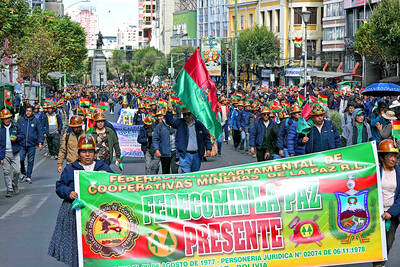
The Bolivian government on Friday struck a deal with protesting miners, but was still grappling with blockades and demonstrations by other workers across La Paz. Other groups are still blocking access roads into the city, which is also the seat of the government. Police on Thursday prevented the miners from entering the main square by using tear gas, while the demonstrators hurled stones and explosives with slingshots. Protests against the policies of Bolivian President Rodrigo Paz have convulsed the Andean nation since early this month, and roadblocks were choking routes into La Paz throughout Friday, the national road authority said. Miners demanded that Paz
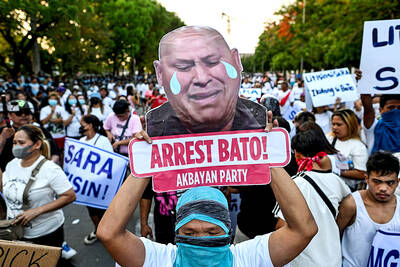
The Philippines said it has asked the country’s Supreme Court to allow it to arrest former Philippine president Rodrigo Duterte’s chief drug war enforcer to stand trial in an international tribunal. The International Criminal Court (ICC) last week unsealed an arrest warrant against Philippine Senator Ronald dela Rosa, accusing him along with Duterte and other “coperpetrators” of the “crime against humanity of murder.” Dela Rosa briefly sought refuge in the Philippine Senate last week while asking the Philippine Supreme Court to stop an ongoing attempt by government agents to arrest him. “By his own conduct, he has placed himself outside the protection of
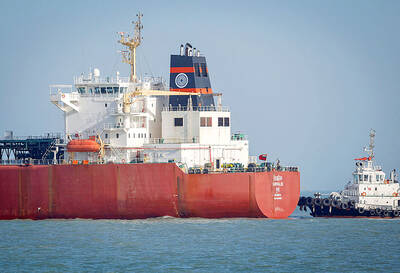
A ship anchored off the United Arab Emirates (UAE) was seized and taken toward Iran and another — a cargo ship near Oman — sank after being attacked, authorities said on Thursday, as tensions escalated near the Strait of Hormuz. It was not immediately clear who was behind these incidents, but they happened as a senior Iranian official reiterated his country’s claim of control over the waterway and another said it had a right to seize oil tankers connected to the US. The turmoil in the strait has been a sticking point for weeks in talks between the US and Iran to

Crowds in Bangladesh are flocking to snap photographs with an unlikely social media star — an albino buffalo with flowing blond hair nicknamed “Donald Trump” that is due to be sacrificed within days. Owner Zia Uddin Mridha, 38, said his brother named the 700kg bull over its flowing helmet of hair resembling the signature look of the US president. “My younger brother picked this name because of the buffalo’s extraordinary hair,” he said at his farm in Narayanganj, just outside the capital, Dhaka. Mridha said that a constant stream of curious visitors — social media fans, onlookers and children — have come throughout


 RSS
RSS