


After France, Belgium is now mired in an emotionally-charged debate on whether to ban Islamic headscarves and other overt religious symbols in state schools.
Inspired by a planned French law, two Belgian senators have sponsored similar legislation to combat what they say is Islamic sexism.
"The veil amounts to oppression of the individual in the name of religion," said one of the senators, socialist Anne-Marie Lizin.
French President Jacques Chirac called last month for a ban on religious insignia in schools following months of fierce debate over whether to allow Islamic headscarves in state schools, which are officially secular.
The draft law, which parliament is likely to pass next month, has drawn protest across the Muslim world and in France.
Belgium has no such laws at the moment. But school boards have the right to take their own action, a right exercised recently by the Athenee Royal high school in Brussels, which has a high number of immigrant pupils.
"We have changed our rules to forbid the wearing of headscarves in the school because the situation was no longer tenable," said the school's administrator, Francis Lees.
"Some pupils have since left the school, but we have been able to break out of our ghetto," he said.
A French teacher of Moroccan origin at the school said he was convinced that if Belgium passed an anti-headscarf law, "most of the girls would conform with it."
"They're not going to play with their futures for the sake of that. We shouldn't exaggerate the influence of Islamists," he said.
But in Belgium's 350,000-strong Muslim community (out of a total population of 10 million), the debate has aroused fierce passions.
Following an appeal from a radical Muslim political group, the Party for Citizenship and Prosperity, about 100 Belgian Muslims were expected to take part in a demonstration in Paris this weekend against the proposed French legislation.
"We want to denounce an attack on fundamental liberties and affirm our solidarity with our European colleagues," said a party offi-cial, Rachid Zegzaoui.
He said the party would organize a similar demonstration in Brus-sels in the weeks ahead.
Several Muslim groups said in a joint statement that a ban on Islamic headscarves and veils "would deprive Muslim citizens of the pleasure of exercising their civic rights."
The Belgian government is divided over the senators' initiative.
Interior Minister Patrick Dewael has come out in support of a ban on Islamic veils and other overt religious symbols in schools and other state institutions, such as hospitals and government offices.
But the minister for public functions and social integration, Marie Arena, has called the proposals "radical and aggressive."
The issue is unlikely to recede with local elections in June giving an opportunity for backers of the headscarf bill to press their case.
The anti-immigrant, far-right Vlaams Blok party is hoping to do particularly well in the forthcoming ballot, having gained three seats for a total of 18 in the national parliament in a general election last May.

South Korea’s air force yesterday apologized for a 2021 midair collision involving two fighter jets, a day after auditors said the pilots were taking selfies and filming during the flight and held them responsible for the accident. “We sincerely apologize to the public for the concern caused by the accident that occurred in 2021,” an air force spokesman told a news conference, adding that one of the pilots involved had been suspended from flying duties, received severe disciplinary action and has since left the military. The apology followed a report released on Wednesday by the South Korean Board of Audit and Inspection,
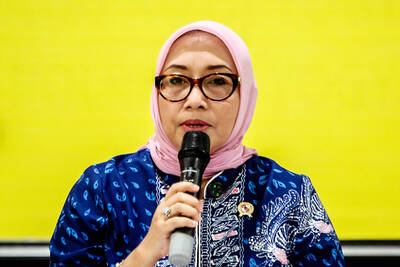
Indonesian police have arrested 13 people after shocking images of alleged abuse against small children at a daycare center went viral, sparking outrage across the nation, officials said on Monday. Police on Friday last week raided Little Aresha, a daycare center in Yogyakarta on Java island, following a report from a former employee. CCTV footage circulating on social media showed children, most younger than two, lying on the floor wearing only diapers, their hands and feet bound with rags. The police have confirmed that the footage is authentic. Police said they also found 20 children crammed into a room just 3m by 3m. “So
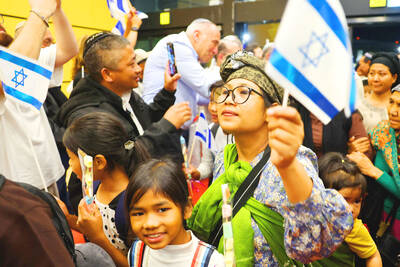
About 240 Indians claiming descent from a Biblical tribe landed at Tel Aviv airport on Thursday as part of a government operation to relocate them to Israel. The newcomers passed under a balloon arch in blue and white, the colors of the Israeli flag, as dozens of well-wishers welcomed them with a traditional Jewish song. They were the first “bnei Menashe” (“sons of Manasseh”) to arrive in Israel since the government in November last year announced funding for the immigration of about 6,000 members of the community from the states of Manipur and Mizoram in northeast India. The community claims to descend from

‘TROUBLING’: The firing of Phelan, who was an adviser to a nonprofit that supported the defense of Taiwan, was another example of ‘dysfunction’ under Trump, a US senator said US Secretary of the Navy John Phelan has been fired, a US official and a person familiar with the matter said on Wednesday, in another wartime shakeup at the Pentagon coming just weeks after US Secretary of Defense Pete Hegseth ousted the Army’s top general. The Pentagon announced his departure in a brief statement, saying he was leaving the administration “effective immediately,” but it did not provide a reason or say whether it was his decision to go. The sources, who spoke on condition of anonymity, said Phelan was dismissed in part because he was moving too slowly to implement reforms to


 RSS
RSS