


US soldiers and Iraqi police were on high alert on Thursday for more attacks to mark the start of 2004 after a car bomb ripped through a Baghdad restaurant, killing five New Year revellers.
The bomb devastated the upscale Nabil restaurant around two and a half hours before midnight, scattering debris and wrecked cars across the street outside and wounding more than 20 people including three foreign journalists with the Los Angeles Times.
US commanders had feared guerrillas would launch attacks over the New Year period to send a message that they would press on with their campaign to drive out occupying troops despite the capture of fugitive dictator Saddam Hussein in December.
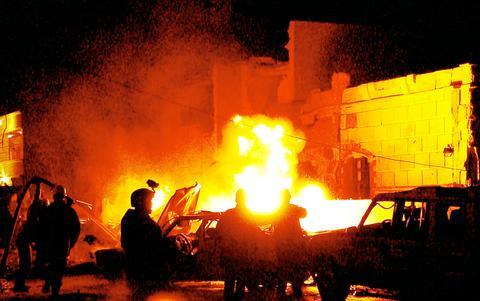
PHOTO: EPA
Christmas Day was marked by a series of rocket and mortar attacks in Baghdad.
"We always take a posture of extra vigilance on key dates in the calendar," Brigadier General Martin Dempsey, commander of the US 1st Armored Division responsible for security in Baghdad, told reporters on Wednesday.
"We have gathered intelligence on what could happen over the next 72 hours ... and you can be sure the 1st AD will be ready to do what it gets paid to do."
He added: "We have only one New Year's resolution and that is to remain resolute in our efforts to provide safety and security to the Iraqi people."
Restaurant workers said more than 40 diners were inside when the bomb was detonated.
US troops and Iraqi ambulances, police and firemen rushed to the scene.
"This is a criminal attack and a terrorist act by people who have no morals or ethics," said Iraqi police chief Ahmed Qadim Ibrahim. "It was a car bomb filled with TNT explosives."
Washington blames Saddam loyalists and foreign Muslim militants for attacks on occupying troops, international organizations and Iraqis working with them.
At least 327 US soldiers have been killed in action since the war began in March, 212 of them in guerrilla attacks since major combat was declared over on May 1.
The streets of Baghdad were mostly deserted when 2004 began at midnight -- most people scurried home after the restaurant bomb blast reverberated through the city centre, rattling windows of buildings more than a kilometer away.
In the northern city of Kirkuk, ethnic tension simmered after Arabs and Turkmens were involved in a violent confrontation with Kurds on Wednesday that left five dead.
They were killed in shooting that erupted after several thousand Arab and Turkmen protesters marched on the headquarters of the Patriotic Union of Kurdistan to protest about a Kurdish proposal to make the ethnically mixed oil-rich city the capital of an autonomous region in northern Iraq controlled by Kurds.
Both sides blamed each other for the shooting.
During Saddam's rule many Kurds and Turkmens were forced out of Kirkuk to as Saddam attmpted to "Arabize" the site of Iraq's richest oil reserves.
But Kurds, who have controlled an autonomous region in northern Iraq since the end of the 1991 Gulf War, have extended their influence since the fall of Saddam, angering Turkmens and Arabs and alarming Turkey, which has long battled a Kurdish separatist insurgency within its own borders.
Turkey sees itself as the protector of the Turkmen minority in Iraq and is deeply opposed to any strengthening of Kurdish power and influence in northern Iraq.
A Foreign Ministry statement said Ankara was "deeply saddened" by the killings, and blamed the Kurds.
"Certain groups should not be given the chance to damage the desired atmosphere of peace and national reconciliation with their statements and actions based on ethnic nationalism," it said.
"No one should ignore the fact that all the cities and regions of Iraq belong to all Iraqis," the statement said.
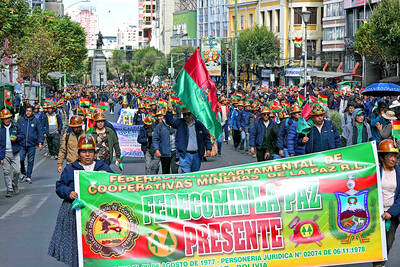
The Bolivian government on Friday struck a deal with protesting miners, but was still grappling with blockades and demonstrations by other workers across La Paz. Other groups are still blocking access roads into the city, which is also the seat of the government. Police on Thursday prevented the miners from entering the main square by using tear gas, while the demonstrators hurled stones and explosives with slingshots. Protests against the policies of Bolivian President Rodrigo Paz have convulsed the Andean nation since early this month, and roadblocks were choking routes into La Paz throughout Friday, the national road authority said. Miners demanded that Paz
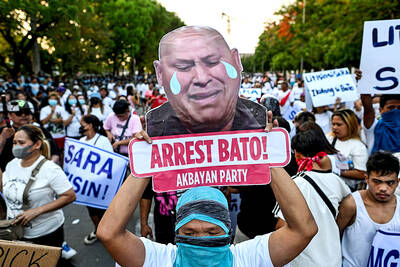
The Philippines said it has asked the country’s Supreme Court to allow it to arrest former Philippine president Rodrigo Duterte’s chief drug war enforcer to stand trial in an international tribunal. The International Criminal Court (ICC) last week unsealed an arrest warrant against Philippine Senator Ronald dela Rosa, accusing him along with Duterte and other “coperpetrators” of the “crime against humanity of murder.” Dela Rosa briefly sought refuge in the Philippine Senate last week while asking the Philippine Supreme Court to stop an ongoing attempt by government agents to arrest him. “By his own conduct, he has placed himself outside the protection of

A ship anchored off the United Arab Emirates (UAE) was seized and taken toward Iran and another — a cargo ship near Oman — sank after being attacked, authorities said on Thursday, as tensions escalated near the Strait of Hormuz. It was not immediately clear who was behind these incidents, but they happened as a senior Iranian official reiterated his country’s claim of control over the waterway and another said it had a right to seize oil tankers connected to the US. The turmoil in the strait has been a sticking point for weeks in talks between the US and Iran to
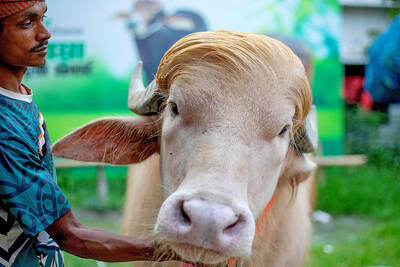
Crowds in Bangladesh are flocking to snap photographs with an unlikely social media star — an albino buffalo with flowing blond hair nicknamed “Donald Trump” that is due to be sacrificed within days. Owner Zia Uddin Mridha, 38, said his brother named the 700kg bull over its flowing helmet of hair resembling the signature look of the US president. “My younger brother picked this name because of the buffalo’s extraordinary hair,” he said at his farm in Narayanganj, just outside the capital, Dhaka. Mridha said that a constant stream of curious visitors — social media fans, onlookers and children — have come throughout


 RSS
RSS