


The first human clinical trial of an HIV vaccine in South Africa begins this week, researchers said on Monday.
The drug, which is also being tested in the US, is one of about two dozen potential vaccines being tested by some 12,000 human volunteers in experiments around the world.
But it is the only one that contains genetic material from the HIV strain most prevalent in South Africa -- the country with the most people infected with HIV in the world.
4.7 million South Africans, 11 percent of the population, are infected with the AIDS-causing virus. An estimated 600 to 1,000 South Africans die every day from AIDS-related complications.
The tests beginning this week are the first of a series planned by the South African AIDS Vaccine Initiative, established by the government three years ago to develop an affordable, effective and locally relevant vaccine.
"An HIV vaccine is our best hope of eradicating HIV from the globe," said Tim Tucker, who heads the initiative. "It is an extremely exciting time."
The first drug being tested contains parts of a weakened strain of Venezuelan equine encephalitis and a harmless gene from a South African HIV strain.
By entering human cells, scientists hope to stimulate the production of antibodies that will fight off AIDS infections, and also train specialized cells -- dubbed "killer T-cells" -- to identify and eliminate infected cells after the virus is contracted.
Animal studies have shown significant immune responses of both types, researchers say.
The first human trials are aimed at establishing the safety of the drug and are expected to last two years. If successful, they will be widened to take in more volunteers and determine the vaccine's effectiveness.
AIDS is notoriously successful at beating the body's immune system and so far has resisted every drug tried. In February, VaxGen Inc reported that the world's most advanced human vaccine experiment, involving 5,000 volunteers, had failed.
Tucker predicted it would be at least 10 years before an effective vaccine was ready for distribution.
The global HIV Vaccine Trials Network, funded by the National Institute of Allergy and Infectious Diseases of the US National Institutes of Health, is conducting the preliminary trials.
A total of 48 volunteers -- 24 each in the US and South Africa -- are participating.
Each group has been randomly divided into two groups of 12 people, 10 of whom will be injected with the vaccine and two of whom will receive a placebo. The first group in each country is being administered a lower dosage than the second.
The first 12 US volunteers received their vaccinations in July at Johns Hopkins University, Columbia University, the University of Rochester and Vanderbilt University.


When a hiker fell from a 55m waterfall in wild New Zealand bush, rescuers were forced to evacuate the badly hurt woman without her dog, which could not be found. After strangers raised thousands of dollars for a search, border collie Molly was flown to safety by a helicopter pilot who was determined to reunite the pet and the owner. A week earlier, an emergency rescue helicopter found the woman with bruises and lacerations after a fall at a rocky spot at the waterfall on the South Island’s West Coast. She was airlifted on March 24, but they were forced to

HIGH HOPES: The power source is expected to have a future, as it is not dependent on the weather or light, and could be useful for places with large desalination facilities A Japanese water plant is harnessing the natural process of osmosis to generate renewable energy that could one day become a common power source. The possibility of generating power from osmosis — when water molecules pass from a less salty solution to a more salty one — has long been known. However, actually generating energy from that has proved more complicated, in part due the difficulty of designing the membrane through which the molecules pass. Engineers in Fukuoka, Japan, and their private partners think they might have cracked it, and have opened what is only the world’s second osmotic power plant. It generates
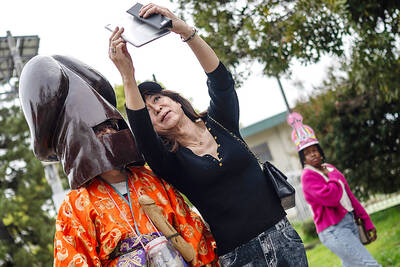
Showcasing phallus-shaped portable shrines and pink penis candies, Japan’s annual fertility festival yesterday teemed with tourists, couples and families elated by its open display of sex. The spring Kanamara Matsuri near Tokyo features colorfully dressed worshipers carrying a trio of giant phallic-shaped objects as they parade through the street with glee. The festival, as legend has it, honors a local blacksmith in the Edo Period (1603-1868) who forged an iron dildo to break the teeth of a sharp-toothed demon inhabiting a woman’s vagina that had been castrating young men on their wedding nights. A 1m black steel phallus sits in the courtyard of

JAN. 1 CLAUSE: As military service is voluntary, applications for permission to stay abroad for over three months for men up to age 45 must, in principle, be granted A little-noticed clause in sweeping changes to Germany’s military service policy has triggered an uproar after it emerged that the law requires men aged up to 45 to get permission from the armed forces before any significant stay abroad, even in peacetime. The legislation, which went into effect on Jan. 1 aims to bolster the military and demands all 18-year-old men fill out a questionnaire to gauge their suitability to serve in the armed forces, but stops short of conscription. If the “modernized” model fails to pull in enough recruits, parliament will be compelled to discuss the reintroduction of compulsory service, German


 RSS
RSS