


A top foreign policy aide to US President Barack Obama on Wednesday refused to comment on a possible meeting between President Ma Ying-jeou (馬英九) and Chinese President Xi Jinping (習近平).
Deputy National Security Adviser for Strategic Communications Ben Rhodes danced around the question, giving little indication of the White House’s reaction. Nevertheless, it was the first time the Obama administration had publicly addressed the possible meeting.
Rhodes was asked at a conference in the US Department of State’s Foreign Press Center how the Obama administration viewed the prospect of a “summit” or meeting between Xi and Ma.
“That is something that both sides would have to agree to,” he said. “We have, as a general matter, supported cross-strait dialogue.”
He said the US had encouraged the “constructive approach” that Ma and Xi had brought to the dialogue.
“As a friend to both sides, what we would want to see is an outcome that reduces any tension across the Strait and that pursues closer ties that benefit both the people of Taiwan and the People’s Republic of China,” Rhodes said.
He had been reminded by the questioner at the conference that Mainland Affairs Council Minister Wang Yu-chi (王郁琦) and Taiwan Affairs Office Director Zhang Zhijun (張志軍) were scheduled to meet in Nanjing on Feb. 11 and that there was speculation that the meeting could lead to a Ma-Xi summit later in the year.
“The US will continue to support cross-strait dialogue, to see it advance and evolve over time, to see it address the different facets of the relationship,” Rhodes said.
If Ma and Xi decided to meet, “that is something we will have to review at the time,” he said.
“We will await to see the outcome of those talks,” he said.
“In the meantime, we will continue our long-standing practice of supporting a one China policy, maintaining our friendship with the people of Taiwan and seeking to support dialogue across the Strait,” he said.
Asked to enlarge on US relations with China this year — a subject Obama barely mentioned in his State of the Union address on Tuesday — Rhodes said that North Korea and Iran would form “key parts” of the agenda.
He said the trade and economic relationship between the US and China would continue to be “broad and entwined.”
Rhodes also said the US would “initiate a dialogue” with Beijing on cybersecurity and cyberconcerns.
“Maritime security will continue to be an issue,” he said.
“If you take an issue like the South China Sea, the US believes there should not be unilateral actions that seek to change facts on the ground,” he said.
He added that problems should be solved with dialogue and established policies.

AGING: While Japan has 22 submarines, Taiwan only operates four, two of which were commissioned by the US in 1945 and 1946, and transferred to Taiwan in 1973 Taiwan would need at least 12 submarines to reach modern fleet capabilities, CSBC Corp, Taiwan chairman Chen Cheng-hung (陳政宏) said in an interview broadcast on Friday, citing a US assessment. CSBC is testing the nation’s first indigenous defense submarine, the Hai Kun (海鯤, Narwhal), which is scheduled to be delivered to the navy next month or in July. The Hai Kun has completed torpedo-firing tests and is scheduled to undergo overnight sea trials, Chen said on an SET TV military affairs program. Taiwan would require at least 12 submarines to establish a modern submarine force after assessing the nation’s operational environment and defense
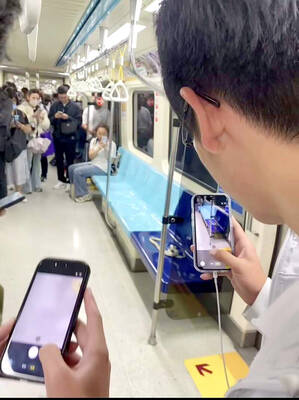
A white king snake that frightened passengers and caused a stir on a Taipei MRT train on Friday evening has been claimed by its owner, who would be fined, Taipei Rapid Transit Corp (TRTC) said yesterday. A person on Threads posted that he thought he was lucky to find an empty row of seats on Friday after boarding a train on the Bannan (Blue) Line, only to spot a white snake with black stripes after sitting down. Startled, he jumped up, he wrote, describing the encounter as “terrifying.” “Taipei’s rat control plan: Release snakes on the metro,” one person wrote in reply, referring

The coast guard today said that it had disrupted "illegal" operations by a Chinese research ship in waters close to the nation and driven it away, part of what Taipei sees a provocative pattern of China's stepped up maritime activities. The coast guard said that it on Thursday last week detected the Chinese ship Tongji (同濟號), which was commissioned only last year, 29 nautical miles (54km) southeast of the southern tip of Taiwan, although just outside restricted waters. The ship was observed lowering ropes into the water, suspected to be the deployment of scientific instruments for "illegal" survey operations, and the coast
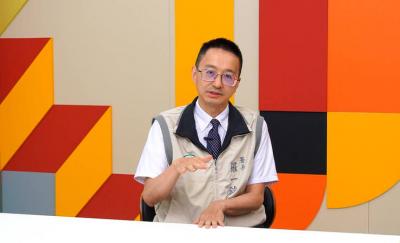
Taiwan’s two cases of hantavirus so far this year are on par with previous years’ case numbers, and the government is coordinating rat extermination work, so there should not be any outbreaks, Centers for Disease Control (CDC) Director-General Philip Lo (羅一鈞) said today in an interview with the Liberty Times (the Taipei Times’ sister newspaper). An increase in rat sightings in Taipei and New Taipei City has raised concerns about the spread of hantavirus, as rats can carry the disease. In January, a man in his 70s who lived in Taipei’s Daan District (大安) tested positive posthumously for hantavirus, Taiwan’s


 RSS
RSS