


The funeral for 228 Massacre survivor Chen Shui-lien (陳水蓮) was held on Monday in Chiayi.
Chiang Jung-sen (江榮森) of the Chiayi 228 Memorial Foundation said Chen, who died on Oct. 16, had been “an important witness to the massacre of civilians at Chiayi’s Lioucuo neighborhood (劉厝) at the hands of Chinese Nationalist Party [KMT] troops from China. What he saw and experienced in 1947 was very crucial to historians and researchers.”
“During his lifetime, Chen’s heart was always troubled by the fact that the murderers were never identified, and that justice was not served for the victims and their families. He regretted this fact right up to his death,” Chiang said.
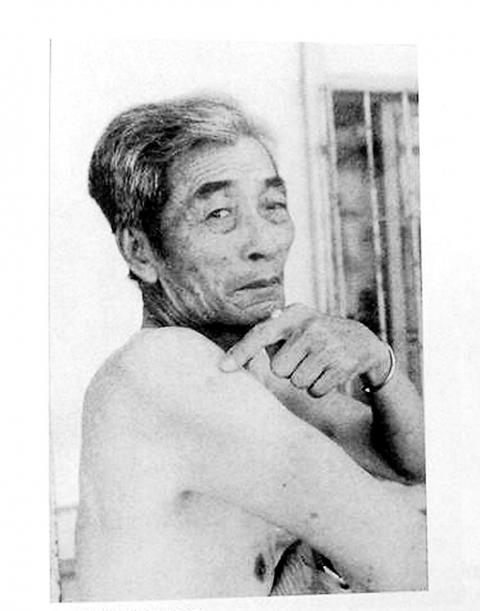
Photo courtesy of the Chiayi City 228 Memorial Cultural Foundation
A protest by Taiwanese against the KMT administration and troops that began in Taipei on Feb. 27, 1947, was violently suppressed by the government, but eventually led to four decades of martial law rule in Taiwan. Estimates of the number killed range from 10,000 to 30,000 or more.
According to eyewitness accounts and documented reports by Chen and other survivors, KMT troops marched into Chiayi in early March, triggering a fierce battle at Chiayi Shuishang Airport against locals who tried to defend their city. The troops headed for Lioucuo to loot houses on March 9.
Chen, then 27, hid inside a granary barn while the soldiers were looting. A soldier spotted him and fired three shots. Chen was hit by one bullet, which passed through his arm. He was then locked up with more than 20 other civilians in a house, guarded by two KMT soldiers. However, the guard abandoned the house to join the looting spree, which is why Chen and the others survived.
Twelve Lioucuo residents locked up in a nearby house were not so lucky and were executed by KMT soldiers the next day, along with another individual in an event that became known as the “Lioucou Neighborhood Massacre.”
Chen was a special guest to the opening of the Chiayi City 228 Memorial Park in Lioucou on Dec. 19, 2011, along with then-vice president Vincent Siew (蕭萬長).
Chen told Siew and other attendees that his most important wish was for the government to provide answers about the massacres and identify those who were responsible for perpetrating it. His wish was never fulfilled.
“Chen was among the last survivors of the 228 Massacre victims in the Chiayi area. At 93, he was the oldest of the survivors. Now he is gone, but the truth of what happened during the 228 Massacre has never been revealed,” Chiang said.

UPGRADE: The Kang Ding-class frigate is replacing its Chaparall missiles with Tien Chien II and Hua Yang VLS, which would provide it with long-range, 360° air defense Taiwan plans to produce 1,200 to 1,376 Hai Chien II missiles (海劍二, Sea Sword II) — also known as TC-2N — to serve as the standard air defense system of the navy’s surface combatant fleet, a source said yesterday. Last week, the Hai Chien II, the naval version of the Tien Kung II missile (天劍二, Sky Sword II), completed a live-fire test in waters off the National Chungshan Institute of Science and Technology’s Jiupeng facility (九鵬) in Pingtung County’s Manjhou Township (滿州). The MIM72 Chaparral and other dated air defense missiles that currently arm Taiwanese ships have inadequate range to combat Chinese

REASONS FOR TRAVEL: An assistant professor said that proposed amendments to penalize drivers if they used drugs overseas would not deter people from traveling People who operate a motor vehicle under the influence of marijuana would have their driver’s license revoked, even if they used the substance while overseas, the Ministry of Transportation and Communications said yesterday, citing proposed amendments to the Road Traffic Management and Penalty Act (道路交通管理處罰條例). The amendments would also authorize the government to revoke the licenses of people determined to have used Category 1 or Category 2 narcotics, even if they were not operating a vehicle while under the influence of drugs, as well as ban them from taking the license test for three years, the ministry said. People aged 18 or

HEAVY WEATHER: Typhoon Jangmi is due to crash straight into the Ryukyus as airlines look to shift flights to larger aircraft or cancel flights to Okinawa entirely Taiwan’s international air carriers announced flight adjustments over the weekend as Typhoon Jangmi is forecast to hit the Ryukyu Islands today and tomorrow. The Central Weather Administration (CWA) upgraded Jangmi from a tropical storm to a typhoon at 8am yesterday, with the eye located 580km south of Naha city. It was moving north at 19kph. Today, China Airlines’ CI-120, CI-121, CI-122 and CI-123 flights between Taoyuan and Naha, Okinawa, have been canceled as well as CI-132 and CI-133 between Kaohsiung and Naha. EVA Air’s BR-112, BR-113, BR-186 and BR-185 flights between Taoyuan and Naha are also canceled. Low-cost carrier Tigerair Taiwan canceled IT-230,
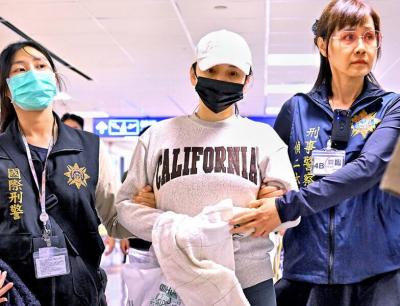
Johanne Liou (劉喬安), a Taiwanese woman who shot to unwanted fame during the Sunflower movement protests in 2014, returned to Taiwan last night after being deported from the US. She is to stand trial in Taiwan for charges involving embezzlement, fraud and drug crimes. The Criminal Investigation Bureau (CIB) said it took her into custody at Taiwan Taoyuan International Airport and would first question her before transferring her to the New Taipei District Prosecutors’ Office. She was arrested upon disembarking a flight from San Francisco that landed shortly before 7pm. Liou absconded to the US in 2019 after jumping bail


 RSS
RSS