


Despite the rise of China’s military power, India is seeking to engage China and also make its largest neighbor understand that it and other countries in the region are concerned about China’s rise, Indian Foreign Secretary Nirupama Rao told a delegation of Taiwanese reporters in New Delhi earlier this month.
Rao said it was always good for regional neighbors to engage in an open and inclusive dialogue, which enables the creation of balanced and flexible security in the region.
“I think the way we look at it is that we must engage China rather than isolate it. We must encourage China to be much more transparent, much more open and much more clear about how we view its role in the region,” she told the Taipei Times. “The challenge is to engage China and for China also to understand what the concerns of the region are because I think it has to be a two-way street.”
When asked how China’s growing threat and how India sought to resolve its longstanding border dispute with China, Rao said the matters would take time to settle.
“We have been engaged in negotiations for many years now trying to settle this issue,” she said.
China is growing very fast, she said, adding that China’s economic growth had catapulted it into the ranks of the leading global economic powers and that India saw this very clearly.
With economic strength has come military strength and modernization, she said. China has significant resources and its recent defense budget stood at US$91 billion, an increase of about 12 percent over the last year, she said.
“So we are seeing China’s military budgets grow significantly each year and how does that translate into or affect our region? We see of course the People’s Liberation Army, Navy, is much more visible. You saw the evacuation from Libya. They had a missile frigate in the Mediterranean [Sea]. They are doing anti-piracy work in the Gulf of Aden. They are visible in the Indian Ocean and of course in the Southeast Asian region also. They have demonstrated their military presence in areas quite far from China,” she said.
India has to factor this into its calculations about the future security scenario in its region, she said.
“China says it wants peace in the region and that it wants peaceful development around it, but I think it would help to create a good atmosphere for dialogue and for cooperation,” she said. “There are many areas where there can be cooperation: security of [the] sea, lanes of communication, maritime security, anti-piracy and dialogue on security.”
Meanwhile, during Chinese Premier Wen Jiabao’s (溫家寶) visit to India last year, for the first time the “one China” policy was not mentioned in the India-China joint communique.
However, this should by no means be interpreted as a change in India’s policy, she said.
“Our policy is still [a] ‘one China’ policy, but it was not mentioned in the communique that was issued when Wen Jiabao came here because it makes reference to the previous communiques and joint statements that we had when Chinese leaders had visited India. So I don’t see it as a break in policy,” she said.
Rao said India’s “one China” policy was clear and did not require further elucidation. China is a giant neighbor and India has tried to build relations with it in various areas, she said.
“It serves India’s interests to do so and it is something India intends to pursue diligently,” she said.
As for India’s relationship with Taiwan, Rao said it had developed on another track that included economic, cultural and investment ties. The two countries also have dialogue on science and technology, she said.
However, “there is no political content to this relationship because of the ‘one China’ policy,” she said. “So that is how we have developed this relationship.”
Despite the cordial relationship between Taiwan and India, Rao said there was an information gap between the general public and business community in Taiwan about India and vice versa. The full potential of bilateral ties could be better if these problems were addressed, she said.

SPACE VETERAN: Kjell N. Lindgren, who helps lead NASA’s human spaceflight missions, has been on two expeditions on the ISS and has spent 311 days in space Taiwan-born US astronaut Kjell N. Lindgren is to visit Taiwan to promote technological partnerships through one of the programs organized by the US for its 250th national anniversary. Lindgren would be in Taiwan from Tuesday to Saturday next week as part of the US Bureau of Educational and Cultural Affairs’ US Speaker Program, organized to celebrate the 250th anniversary of the signing of the Declaration of Independence, the American Institute in Taiwan (AIT) said in a statement yesterday. Lindgren plans to engage with key leaders across the nation “to advance cutting-edge technological partnerships and inspire the next generation of scientists and engineers,”

The Chinese Nationalist Party (KMT) caucus yesterday said it opposes the introduction of migrant workers from India until a mechanism is in place to prevent workers from absconding. Minister of Labor Hung Sun-han (洪申翰) on Thursday told the Legislative Yuan that the first group of migrant workers from India could be introduced as early as this year, as part of a government program. The caucus’ opposition to the policy is based on the assessment that “the risk is too high,” KMT caucus secretary-general Lin Pei-hsiang (林沛祥) said. Taiwan has a serious and long-standing problem of migrant workers absconding from their contracts, indicating that

UNREASONABLE SURVEILLANCE: A camera targeted on an road by a neighbor captured a man’s habitual unsignaled turn into home, netting him dozens of tickets The Taichung High Administrative Court has canceled all 45 tickets given to a man for failing to use a turn signal while driving, as it considered long-term surveillance of his privacy more problematic than the traffic violations. The man, surnamed Tseng (曾), lives in Changhua County and was reported 45 times within a month for failing to signal while driving when he turned into the alley where his residence is. The reports were filed by his neighbor, who set up security cameras that constantly monitored not only the alley but also the door and yard of Tseng’s house. The surveillance occurred from July
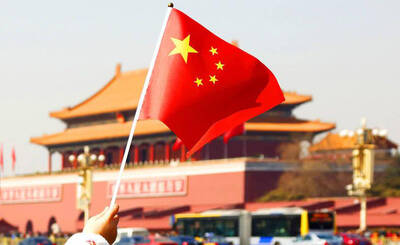
TRADE-OFF: Beijing seeks to trade a bowl of tempura for a Chinese delicacy, an official said, while another said its promises were attempts to interfere in the polls The government must carefully consider the national security implications of building a bridge connecting Kinmen County and Xiamen, China, the Public Construction Commission (PCC) said yesterday. PCC Commissioner Derek Chen (陳金德), who is also a minister without portfolio, made the remarks in a meeting of the legislature’s Transportation Committee, after Democratic Progressive Party Legislator Hsu Fu-kuei (徐富癸) asked about China’s proposal of new infrastructure projects to further connect Kinmen and Lienchiang (Matsu) counties with Xiamen. China unveiled the bridge plan, along with nine other policies for Taiwan, on Sunday, the last day of Chinese Nationalist Party (KMT) Chairwoman Cheng Li-wun’s (鄭麗文) visit


 RSS
RSS