


Minister of the Interior Jiang Yi-huah (江宜樺) and several ministry officials yesterday inspected Taijiang National Park (台江國家公園) a day ahead of its inauguration.
The park covers 4,905 hectares of coastal land in Tainan City and Tainan County and 34,405 hectares of sea. It features tidal flats, sandbanks and wetlands that are habitat for diverse flora and fauna, including mangrove forests and the endangered black-faced spoonbill.
“Taijiang National Park is the country’s eighth national park and its creation carries very special meaning,” Jiang said outside of a wildlife observation deck inside the national park. “This national park tries to preserve not only the landscape, but also the wildlife, the historic relics and the traditional economic activities here.”
It also includes the place where the Chinese military commander Koxinga (鄭成功)anded in his successful campaign to defeat the Dutch, who occupied parts of southern Taiwan in the 17th century.
Although Koxinga swore allegiance to the Ming Dynasty after it was overthrown by the Qing Dynasty, he created his own de facto independent kingdom in Tainan and established the first Han Chinese settlements in Taiwan.
In addition to its natural and historic values, Jiang said the traditional economic activities in the area, mainly fish farms and salt fields, were also to be protected by the national park administration.
“Contrary to most other national parks that aim to reduce human activities within, we specifically designated zones inside the national park in which traditional economic activities would be allowed and even encouraged,” Taijiang National Park Headquarters director Leu Teng-yuan (呂登元) said. “We will also help the people to sell their products.”
Although most parts of Jiang’s inspection tour went smoothly, an unexpected snag in the proceedings occurred when officials were on a boat tour on one of the lagoons in the park.
Tainan City Mangroves Protection Association Chief Executive Director Lee Chin-tien (李進添), who served as a guide during the boat trip, complained about the government’s decision to sign an economic cooperation framework agreement (ECFA) when showing local fishing techniques.
“Fishing nets made in Taiwan cost about NT$3,000 each, but guess how much one made in China would cost? It’s less than NT$400,” Lee said. “I don’t understand why the government wants to sign an ECFA with China.”
“We should sign a trade agreement with a country where we can sell a NT$10 product for NT$11 there,” he said.
Jiang and other ministry officials smiled as Lee talked, but did not respond.
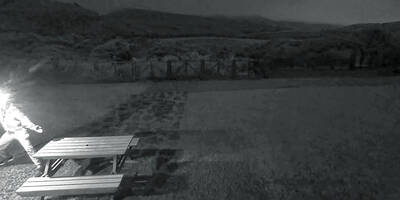
Yangmingshan National Park authorities yesterday urged visitors to respect public spaces and obey the law after a couple was caught on a camera livestream having sex at the park’s Qingtiangang (擎天崗) earlier in the day. The Shilin Police Precinct in Taipei said it has identified a suspect and his vehicle registration number, and would summon him for questioning. The case would be handled in accordance with public indecency charges, it added. The couple entered the park at about 11pm on Thursday and began fooling around by 1am yesterday, the police said, adding that the two were unaware of the park’s all-day live
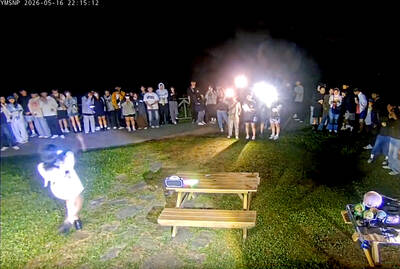
Yangmingshan National Park’s Qingtiangang (擎天崗) nature area has gone viral after a park livestream camera observed a couple in the throes of intimate congress, which was broadcast live on YouTube, drawing large late-night crowds and sparking a backlash over noise, bright lights and disruption to wildlife habitat. The area’s livestream footage appeared to show a couple engaging in sexual activity on a picnic table in the park on Friday last week, with the uncensored footage streamed publicly online. The footage quickly spread across social media, prompting a tide of visitors to travel to the site to “check in” and recreate the
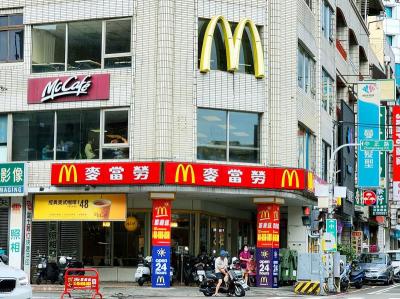
Fast food chain McDonald's is to raise prices by up to NT$5 on some products at its restaurants across Taiwan, starting on Wednesday next week, the company announced today. The prices of all extra value meals and sharing boxes are to increase by NT$5, while breakfast combos and creamy corn soup would go up by NT$3, the company said in a statement. The price of the main items of those meals, if ordered individually, would remain the same. Meanwhile, the price of a medium-sized lemon iced tea and hot cappuccino would rise by NT$3, extra dipping sauces for chicken nuggets would go up

Minister of Digital Affairs Lin Yi-ching (林宜敬) yesterday cited regulatory issues and national security concerns as an expert said that Taiwan is among the few Asian regions without Starlink. Lin made the remarks on Facebook after funP Innovation Group chief executive officer Nathan Chiu (邱繼弘) on Friday said Taiwan and four other countries in Asia — China, North Korea, Afghanistan and Syria — have no access to Starlink. Starlink has become available in 166 countries worldwide, including Ukraine, Malaysia, the Philippines and Vietnam, in the six years since it became commercial, he said. While China and North Korea block Starlink, Syria is not


 RSS
RSS