


Premier Wu Den-yih (吳敦義) yesterday praised state-owned Taiwan Tobacco & Liquor Corp (TTL, 台灣菸酒公司) for sponsoring the 2010 Asian Games in Guangzhou, China, to the tune of NT$400 million (US$12.29 million).
“When I heard about the plan, I approved without hesitation because it offers tremendous benefits: The tasty Taiwan Beer will sweep the mainland and the brand will promote the ‘Taiwan concept’ and Taiwan’s excellence. It could also generate extra revenue of NT$30 billion a year,” Wu said.
TTL president Duan Wei (韋伯韜) signed the sponsorship deal with the 16th Guangzhou Asian Games Organizing Committee in Beijing on Monday and announced the launch of corporate offices in Beijing and Shanghai.
The Games are scheduled for next November.
Wei and a group of businesspeople awarded for their excellent performance met the premier.
TTL has sought to register the Taiwan Beer brand as a trademark in China since 1999, but Beijing did not approve the registration until in May, objecting to the use of the word “Taiwan.”
TTL’s operations are expected to contribute approximately NT$20 billion in tax revenue this year, Wei said, and attributed the growth in sales to the Chinese market.
“Tax revenue from sales of tobacco and alcohol between January and September this year fell 7.2 percent, but exports soared, especially in China, where sales grew 30-fold in July and August compared with previous months,” Wei said.
Wei said that exploring the Chinese market would help TTL double its annual revenue and create 1,000 job opportunities in Taiwan.
The Democratic Progressive Party lashed out at TTL for sponsoring the Games with NT$400 million, after it gave only NT$400,000 to the Deaflympics in Taipei and nothing to the World Games in Kaohsiung.

The military has spotted two Chinese warships operating in waters near Penghu County in the Taiwan Strait and sent its own naval and air forces to monitor the vessels, the Ministry of National Defense (MND) said. Beijing sends warships and warplanes into the waters and skies around Taiwan on an almost daily basis, drawing condemnation from Taipei. While the ministry offers daily updates on the locations of Chinese military aircraft, it only rarely gives details of where Chinese warships are operating, generally only when it detects aircraft carriers, as happened last week. A Chinese destroyer and a frigate entered waters to the southwest

A magnitude 6.1 earthquake struck off the coast of Yilan County at 8:39pm tonight, the Central Weather Administration (CWA) said, with no immediate reports of damage or injuries. The epicenter was 38.7km east-northeast of Yilan County Hall at a focal depth of 98.3km, the CWA’s Seismological Center said. The quake’s maximum intensity, which gauges the actual physical effect of a seismic event, was a level 4 on Taiwan’s 7-tier intensity scale, the center said. That intensity level was recorded in Yilan County’s Nanao Township (南澳), Hsinchu County’s Guansi Township (關西), Nantou County’s Hehuanshan (合歡山) and Hualien County’s Yanliao (鹽寮). An intensity of 3 was

Japanese Prime Minister Sanae Takaichi’s comment last year on Tokyo’s potential reaction to a Taiwan-China conflict has forced Beijing to rewrite its invasion plans, a retired Japanese general said. Takaichi told the Diet on Nov. 7 last year that a Chinese naval blockade or military attack on Taiwan could constitute a “survival-threatening situation” for Japan, potentially allowing Tokyo to exercise its right to collective self-defense. Former Japan Ground Self-Defense Force general Kiyofumi Ogawa said in a recent speech that the remark has been interpreted as meaning Japan could intervene in the early stages of a Taiwan Strait conflict, undermining China’s previous assumptions
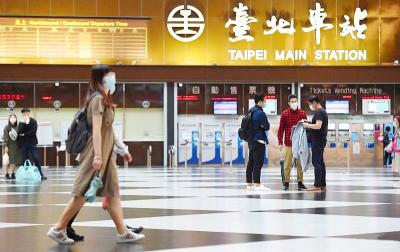
Taiwan Railways Corp (TRC) today announced that Shin Kong Mitsukoshi has been selected as the preferred bidder to operate the Taipei Railway Station shopping mall, replacing the current operator, Breeze Development Co Ltd. Among eight qualified firms that delivered presentations and were evaluated by a review committee, Shin Kong Mitsukoshi was ranked first, while Breeze was named the runner-up, the rail company said in a statement. Contract negotiations are to proceed in accordance with regulations, it said, adding that if negotiations with the top bidder fail, it could invite the second-ranked applicant to enter talks. Breeze in a statement today expressed doubts over


 RSS
RSS