


Concerned about president-elect Ma Ying-jeou (馬英九) and premier-designate Liu Chao-shiuan’s (劉兆玄) choice of former Taiwan Solidarity Union (TSU) legislator Lai Shin-yuan (賴幸媛) as Mainland Affairs Council (MAC) chairwoman, the Chinese Nationalist Party (KMT) caucus yesterday urged their leaders to give priority to the party “faithful” when making future Cabinet appointments.
Approached for comment, KMT caucus acting secretary-general Hsieh Kuo-liang (謝國樑) said the caucus did not oppose the Cabinet lineup Liu had made public so far.
“But we would like to remind them again that the KMT is full of talented people,” he said.
“Over the past eight years, these loyal KMT members worked hard to supervise the Democratic Progressive Party (DPP) [government]. They also did their best to campaign for the KMT during legislative and presidential elections,” he said.
Hsieh said the caucus respected Ma’s authority to nominate Cabinet officials, but the reaction to Lai’s nomination was “unavoidable.”
Hsieh urged Lai to endorse Ma’s platform of commencing direct weekend charter flights between Taiwan and China on July 4 before she assumes office.
He also called on Lai to specify what supplementary measures she would propose if the cap on Taiwanese listed firms’ investment in China were to be lifted.
“If the two issues could be resolved, we would feel relieved [about Lai’s nomination],” he said.
Some KMT legislators expressed reservations about Ma’s choice of Lai as MAC head after Liu unveiled a second round of Cabinet appointees on Monday.
Some questioned whether having a pan-green MAC chairwoman would have a negative impact on cross-strait negotiations.
Ma defended his decision on Monday, saying that Lai’s appointment would help the incoming administration find common ground with the more than 5 million people who did not vote for him in last month’s election.
However, KMT Legislator Lee Chia-chin (李嘉進) said that Lai’s nomination had cast a cloud on cross-strait relations, adding that KMT members would have felt more “warmth” if Ma and Liu had had consulted them prior to “such an important appointment.”
In response to the criticism, Ma said he had appointed Lai to seek social consensus on cross-strait issues, urging the public to reserve judgment until they have seen Lai’s performance.
“Ms Lai has said that she agrees with my cross-strait stance. I think the public should give her a chance and not reject her before she has assumed the post,” Ma told reporters after attending an activity in Taipei County yesterday.
He also dismissed allegations that Lai was recommended by former president and TSU spiritual leader Lee Teng-hui (李登輝).
“It was my decision to appoint Ms Lai and it did receive Mr Lee’s approval,” Ma said.
“But Mr Lee did not recommend Ms Lai to me,” he said.
After pushing for the development of cross-strait relations for more than 20 years, Ma said he realized that consensus was key to negotiating cross-strait issues.
“[Lai’s appointment] was my attempt to forge social consensus on cross-strait issues,” Ma said.
ADDITIONAL REPORTING BY MO YAN-CHIH
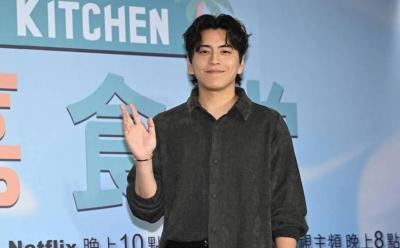
Actor Darren Wang (王大陸) was sentenced to six months in prison, commutable to a fine, by the New Taipei District Court today for contravening the Personal Data Protection Act (個人資料保護法) in a case linked to an alleged draft-dodging scheme. Wang allegedly paid NT$3.6 million (US$114,380) to an illegal group to help him evade mandatory military service through falsified medical documents, prosecutors said. He transferred the funds to Chen Chih-ming (陳志明), the alleged mastermind of a draft-evasion ring, although he lost contact with him as he was already in detention on fraud charges, they said. Chen is accused of helping a

SECURITY: Starlink owner Elon Musk has taken pro-Beijing positions, and allowing pro-China companies to control Taiwan’s critical infrastructure is risky, a legislator said Starlink was reluctant to offer services in Taiwan because of the nation’s extremely high penetration rates in 4G and 5G services, the Ministry of Digital Affairs said yesterday. The ministry made the comments at a meeting of the legislature’s Transportation Committee, which reviewed amendments to Article 36 of the Telecommunications Management Act (電信管理法). Article 36 bans foreigners from holding more than 49 percent of shares in public telecommunications networks, while shares foreigners directly and indirectly hold are also capped at 60 percent of the total, unless specified otherwise by law. The amendments, sponsored by Chinese Nationalist Party (KMT) Legislator Ko

The eastern extension of the Taipei MRT Red Line could begin operations as early as late June, the Taipei Department of Rapid Transit Systems said yesterday. Taipei Rapid Transit Corp said it is considering offering one month of free rides on the new section to mark its opening. Construction progress on the 1.4km extension, which is to run from the current terminal Xiangshan Station to a new eastern terminal, Guangci/Fengtian Temple Station, was 90.6 percent complete by the end of last month, the department said in a report to the Taipei City Council's Transportation Committee. While construction began in October 2016 with an

NON-RED SUPPLY: Boosting the nation’s drone industry is becoming increasingly urgent as China’s UAV dominance could become an issue in a crisis, an analyst said Taiwan’s drone exports to Europe grew 41.7-fold from 2024 to last year, with demand from Ukraine’s fight against Russian aggression the most likely driver of growth, a study showed. The Institute for Democracy, Society and Emerging Technology (DSET) in a statement on Wednesday said it found that many of Taiwan’s uncrewed aerial vehicle (UAV) sales were from Poland and the Czech Republic. These countries likely transferred the drones to Ukraine to aid it in its fight against the Russian invasion that started in 2022, it said. Despite the gains, Taiwan is not the dominant drone exporter to these markets, ranking second and fourth


 RSS
RSS