

The Media Monitor Alliance yesterday demanded that two editors-in-chief at CTI TV and ETtoday step down for their mishandling of the rumored extramarital affair between TV anchorpersons, seeking to undo the damage wrought by the scandal's report on the entire journalism profession.
Coming on the heels of the tabloid Next Magazine's report at the end of last month, CTI TV, ETtoday, and other cable TV news stations started relentlessly reporting on former TVBS sportscaster Cheng Sheng-hung (陳勝鴻) and TVBS-N news channel anchorwoman Pan Yen-fei (潘彥妃).
Last Saturday, Pan quit her job and published a remorseful confession in several newspapers, saying that she will go abroad for a long time.
Media hype
The media hype on celebrity gossip brought back to the fore the longstanding problem of Taiwan's news network, the alliance said.
"Profit-minded media usually chase news of no public interest at the expense of people's privacy," the alliance's secretary-general Connie Lin (林育卉) said at a press conference yesterday.
The alliance estimated that the frivolous reporting may help ETtoday cash in on advertising revenue estimated at NT$44,064,000.
CTI TV, which devoted between 20 to 40 percent of its prime time to coverage on the love affair, may also reap NT$26,928,000 in a single day.
Newsworthy
The alliance demanded that ETtoday's editor-in-chief Chen Kuao-jun (陳國君) and CTI TV's news chief inspector Liao Fu-shun (廖福順) openly profess how they had judged the event to be newsworthy, apologize for wrongdoing, and tender their resignations.
"It [the damage done] is a rude wake-up call for the press," Lin said.
The media watchdog group also sent letters of accusation to the Taipei City Government about the Chinese-language newspapers China Times and Apple Daily's coverage of the sex scandal.
"It is about time that Taiwan's erratic media holds a mirror to itself and does some introspection," she said.
Despite agreeing on the necessity of the media's self-restraint, media experts also voiced differing opinions on how to build a more ethical media.
"The government can push ahead with legislation to govern the media," said Lu Shih-hsiang (盧世祥), founder of the Foundation for the Advancement of Media Excellence.
"Also, the Government Information Office can fine unscrupulous TV stations under the Broadcasting and Television Law (廣電法)," Lu added.
Press freedom
"Freedom of the press does not take precedence over the public interest and personal privacy. What's more significant, the freedom of the press cannot be used as an excuse to harm people with impunity," Lu said, referring to the ferocious media pursuit of the kidnap victim Pai Hsiao-yen (白曉燕) in 1997 and Chu Mei-feng's (璩美鳳) sex VCD scandal in 2002.
While some suggested that the government take a more active role, others urged caution in negotiating the minefield of the often-opposing interests of the media and the government.
"Freedom of speech is the core value of journalism. The government should not be in the position to impose stricter regulations just because the media has performed badly," said Ku Lin-lin (谷玲玲), associate professor at National Taiwan University's Graduate School of Journalism.
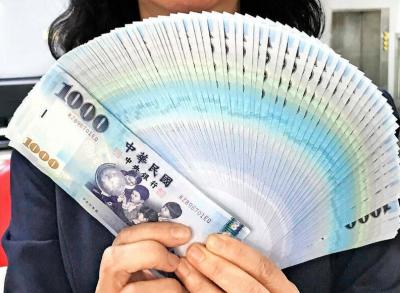
The first batch of individual income tax refunds for this tax season is to be deposited on Friday, covering more than 3.65 million cases and totaling NT$61.24 billion (US$1.89 billion), with an average refund of NT$16,745 per case, the National Taxation Bureau of Kaohsiung said. After the annual individual income tax filing deadline, regional tax bureaus process refunds in three batches based on the filing method used by taxpayers, the bureau said, adding that the three batches are scheduled for Friday, Oct. 30, and Jan. 20 next year. The first batch covers taxpayers who completed online filing before June 1, those who

NEW AND IMPROVED: The N700ST is based on Japan’s N700S Shinkansen, and features a lighter design, better energy efficiency and upgraded accessibility facilities The first set of N700ST high-speed rail carriages, scheduled to arrive in Taiwan next month, would begin service on July 1 next year, Taiwan High Speed Rail Corp (THSRC) said yesterday. THSRC chairman Shih Che (史哲) made the remarks during a ceremony in Hitachi Ltd’s Kasado Works in Yamaguchi Prefecture, Japan, where he and Hitachi Railway Systems Business Unit CEO Giuseppe Marino unveiled the locomotive of the first N700ST train. More than 200 guests attended the unveiling. “The first set of N700ST trains will soon be shipped to Taiwan from the prefecture’s Kasado Port. Hopefully, all the required tests will be completed successfully
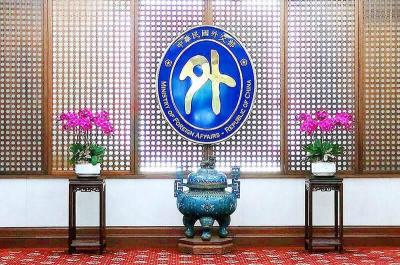
Taiwan has suspended visa processing for Moroccan nationals in response to Morocco halting visa applications for Taiwanese travelers worldwide, the Ministry of Foreign Affairs said today. The Moroccan embassy in Japan on Thursday last week informed Taiwanese travel agencies that it would suspend its visa confirmation letter application service for Taiwanese seeking to travel to Morocco, the ministry said in a statement. Taiwanese are required to obtain a visa confirmation letter before traveling to Morocco, the Bureau of Consular Affairs Web site says. Applications are submitted through the Moroccan Embassy in Japan, which forwards them to authorities in Morocco for review. Once approved,

RELIGIOUS GROUNDS: Followers of the I-Kuan Tao are especially advised not to travel to China, following a 50 percent surge in religious detentions in three months Nineteen people have been detained in China in the past three months because of their religious beliefs, representing a 50 percent surge from the previous three months, Straits Exchange Foundation Secretary-General Lo Wen-chia (羅文嘉) said yesterday. The Legislative Yuan’s Internal Administration Committee invited the foundation, Mainland Affairs Council (MAC) and other agencies to deliver a report on the government’s response to the growing number of missing Taiwanese citizens in China. From Jan. 1, 2024, to Wednesday last week, 402 people have gone missing, been detained for questioning or imprisoned in China, MAC data showed. Of the total cases, 154 are missing, 32 have


 RSS
RSS