


Beginning today, the Ministry of Transportation and Communica-tions' Department of Motor Vehic-les will begin issuing driver's licenses and vehicle registration for motorcycles and scooters with engines larger than 150cc.
The ministry has divided all of the motorcycles and scooters on the market into three categories, it said in a Friday press release.
The first is the "light mopeds" category, comprised of those scooters whose engines are smal-ler than 50cc. The second is the "regular, heavy-duty motorcycles and scooters" category, whose engines are between 51cc to 250cc. Anything larger than 250cc will be in the third "super-heavy-duty motorcycles and scooters" category.
License to drive
In the "light mopeds" category, driver's license applicants must be 18 or older. They will only be required to take a written test on traffic laws. Those who pass the exam can receive their licenses the same day.
In the second category, applicants must also be 18 or older and will have to take a driving test in addition to the written test. Those who pass both exams can also receive their licenses the same day.
People who already possess second-category licenses will be allowed to drive bikes up to 250cc without having to apply for a new license.
The requirements for a license to drive a category three bike -- those over 250cc -- are far more stringent.
Applicants must be at least 20 years old, must have held a valid license for a "regular heavy-duty motorcycle or scooter" for more than a year and must complete a 32-hour training course and pass a driving test.
They will not, however, have to retake the written test that was required of their previous license.
Those who meet all of the requirements for a category-three license will receive their licenses a week after they submit their applications.
Rules of the road
According to the National Police Administration (NPA), all motorcycle and scooter drivers will be required to adhere to the same traffic laws, regardless of the size of their vehicles' engines.
That means that motorcycles and scooters will continue to be banned from freeways, expressways and car-only lanes.
Also, riders must continue to make left turns by crossing an intersection twice -- a process that forces drivers to wait for two signal changes.
The speed limit for all motorcycles and scooters will continue to be 50kmph in downtown areas, 60kmph in suburban areas and 40kmph in motorcycle-only lanes.
The only exception to those rules will be for on-duty police officers who can travel on police scooters or motorcycles on any road as required on the job, a senior officer at the NPA told the Taipei Times.
As far as parking is concerned, those motorcycles and scooters that are larger than 250cc will be allowed to park in traditional motorcyle and scooter spaces or in spaces for cars. Parking in a space for a car, however, will mean they will have to pay the same parking fees as a car.
The bikes
The ministry's inspection process on the new larger scooters and motorcycles also begins today. The ministry expects that emissions and engine durability testing will take a week.
Only after the tests are completed -- and passed -- will dealerships be able to begin selling the bikes.
An engine-durability test measures the quality of the engine. The ministry requires that the engines must run continually for the equivalent of 15,000km without any defects in order to pass the test.
Tag fees for these larger motorcycles and scooters will vary with engine volume.
Those with engines between 151cc and 250cc will be NT$1,650.
The steepest annual fee -- NT$23,040 -- will be charged for bikes with engines larger than 600cc.
How to tame a big one
Taipei Traffic Police Corps (TTPC) Third Division Captain Chan Shu-hsiung (
"In our experience, if the driver is too short or too weak, it will be very difficult for the driver to park and maneuver the bike and it can be very dangerous as well," Chan said.
He said that it's essential to to practice stopping and parking.
"Before you stop a big bike, make sure the handlebars are straight forward or it will be very easy for the driver to lose his balance and fall down," he said.
In addition, Chan also said that drivers must also practice how to push a big motorcycle before they ride it.
"Usually, a big bike is more than 200kg. Other than how to stop it and park it, how to physically push it is the third important thing a rider must learn. Otherwise, it will become just like a heavy stone when the engine doesn't work," Chan said.
"Practice makes perfect," he added.
The TTPC said that they usually train their officers on 125cc manual motorcycles before they put any of them on a police BMW 850cc motorcycle.
"Most people ride automatic scooters these days," Chan said.
"We have to train our young officers to shift gears on smaller motorcycles before they begin to learn the BMWs. It's standard procedure."
Before today, the officers were riding those 850cc motorcycles without a special license.
But now 282 officers have all completed the 32-hour training course, passed the driving test and will receive their licenses today.

Fast food chain McDonald's is to raise prices by up to NT$5 on some products at its restaurants across Taiwan, starting on Wednesday next week, the company announced today. The prices of all extra value meals and sharing boxes are to increase by NT$5, while breakfast combos and creamy corn soup would go up by NT$3, the company said in a statement. The price of the main items of those meals, if ordered individually, would remain the same. Meanwhile, the price of a medium-sized lemon iced tea and hot cappuccino would rise by NT$3, extra dipping sauces for chicken nuggets would go up

Yangmingshan National Park’s Qingtiangang (擎天崗) nature area has gone viral after a park livestream camera observed a couple in the throes of intimate congress, which was broadcast live on YouTube, drawing large late-night crowds and sparking a backlash over noise, bright lights and disruption to wildlife habitat. The area’s livestream footage appeared to show a couple engaging in sexual activity on a picnic table in the park on Friday last week, with the uncensored footage streamed publicly online. The footage quickly spread across social media, prompting a tide of visitors to travel to the site to “check in” and recreate the

Minister of Digital Affairs Lin Yi-ching (林宜敬) yesterday cited regulatory issues and national security concerns as an expert said that Taiwan is among the few Asian regions without Starlink. Lin made the remarks on Facebook after funP Innovation Group chief executive officer Nathan Chiu (邱繼弘) on Friday said Taiwan and four other countries in Asia — China, North Korea, Afghanistan and Syria — have no access to Starlink. Starlink has become available in 166 countries worldwide, including Ukraine, Malaysia, the Philippines and Vietnam, in the six years since it became commercial, he said. While China and North Korea block Starlink, Syria is not
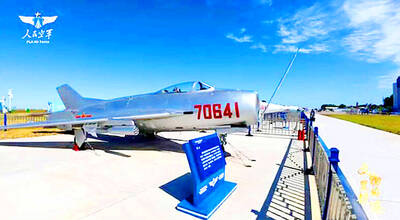
GROUNDED: A KMT lawmaker proposed eliminating drone development programs and freezing funding for counterdrone systems, despite China’s adoption of the technology China has deployed attack drones at air bases near the Taiwan Strait in a strategy aimed at overwhelming Taiwan’s air defense systems through saturation attacks, the Mainland Affairs Council (MAC) said. The council’s latest quarterly report on China said that satellite imagery and open-source intelligence indicate that the Chinese People’s Liberation Army (PLA) had converted retired J-6 fighter jets into J-6W drones, which the PLA has stationed at six air bases near Taiwan, five in China’s Fujian Province and one in Guangdong Province. The report cited J. Michael Dahm, a senior fellow at the US-based Mitchell Institute, as saying that China has


 RSS
RSS