


Independent lawmakers Lo Fu-chu (羅福助) and Chen Chin-ting (陳進丁) yesterday said they have decided to put on hold a plan for the establishment of a new political party.
Lo and Chen said the decision was made partly because they think political issues should be downplayed for the time being, when improvement to the economy is what most people seek.
The lawmakers, meanwhile, admitted that they are watching the development of another new political party aligned with former president Lee Teng-hui (
Lo, who had previously expressed an intention to leave his constituency in Taipei County to run in Taipei City, said he has not made a final decision as to whether to seek re-election.
"I'm now taking a wait-and-see attitude. As economic conditions are worsening, working to save the economy should come before politics," Lo said.
Lo and Chen originally planned to established their party later this month.
Expected members of the party are all from the National Non-Party League (
In addition to Lo and Chen, the other four are Tsai Hau (
The organization of the new party has been going on for months, and KMT legislator and business tycoon Gary Wang (王令麟) has reportedly planned to work with the League to organize the new party.
Wang, however, announced in June that he would not seek re-election and denied plans to join any new political party. The new party's reputation as a union of "black-gold" politicians is believed to be a reason for Wang's withdrawal.
While organizers of the new party said that they would continue their plans despite Wang's decision, the work is taking place in a more low-profile manner than before.
Chen Chin-ting yesterday said that the new party will definitely be founded, but the date of its establishment might be postponed until the next legislative session reopens in September.
Chen said lawmakers from the league, making use of the time during which the legislature is adjourned, are too busy with the year-end legislative election campaigns to meet and finalize their work.
Chen said that the preparatory work for the party's organization has been completed, and a total of 27 politicians, including a number of former deputies to the National Assembly and Taiwan Provincial Assembly, are potential members of the party and will represent it when running in the year-end elections.
None of the 27 have thus far expressed any intention of joining Huang's party.
Many politicians have reportedly been in contact with both of the new party groupings and are comparing the campaign funds offered by the two.
Campaign costs can range from NT$10 million to NT$100 million per candidate.

CREDIT-GRABBER: China said its coast guard rescued the crew of a fishing vessel that caught fire, who were actually rescued by a nearby Taiwanese boat and the CGA Maritime search and rescue operations do not have borders, and China should not use a shipwreck to infringe upon Taiwanese sovereignty, the Coast Guard Administration (CGA) said yesterday. The coast guard made the statement in response to the China Coast Guard (CCG) saying it saved a Taiwanese fishing boat. The Chuan Yu No. 6 (全漁6號), a fishing vessel registered in Keelung, on Thursday caught fire and sank in waters northeast of Diaoyutai Islands (釣魚台). The vessel left Keelung’s Badouzih Fishing Harbor (八斗子漁港) at 3:35pm on Sunday last week, with seven people on board — a 62-year-old Taiwanese captain surnamed Chang (張) and six
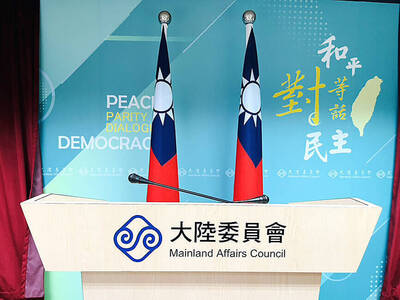
RISKY BUSINESS: The ‘incentives’ include initiatives that get suspended for no reason, creating uncertainty and resulting in considerable losses for Taiwanese, the MAC said China’s “incentives” failed to sway sentiment in Taiwan, as willingness to work in China hit a record low of 1.6 percent, a Ministry of Labor survey showed. The Directorate-General of Budget, Accounting and Statistics (DGBAS) also reported that the number of Taiwanese workers in China has nearly halved from a peak of 430,000 in 2012 to an estimated 231,000 in 2024. That marked a new low in the proportion of Taiwanese going abroad to work. The ministry’s annual survey on “Labor Life and Employment Status” includes questions respondents’ willingness to seek employment overseas. Willingness to work in China has steadily declined from

The Legislative Yuan’s Finance Committee yesterday approved proposed amendments to the Amusement Tax Act (娛樂稅法) that would abolish taxes on films, cultural activities and competitive sporting events, retaining the fee only for dance halls and golf courses. The proposed changes would set the maximum tax rate for dance halls and golf courses at 50 and 20 percent respectively, with local governments authorized to suspend the levies. Article 2 of the act says that “amusement tax shall be levied on tickets sold or fees charged by amusement places, facilities or activities” in six categories: “Cinema; professional singing, story-telling, dancing, circus, magic show, acrobatics

Tainan, Taipei and New Taipei City recorded the highest fines nationwide for illegal accommodations in the first quarter of this year, with fines issued in the three cities each exceeding NT$7 million (US$220,639), Tourism Administration data showed. Among them, Taipei had the highest number of illegal short-term rental units, with 410. There were 3,280 legally registered hotels nationwide in the first quarter, down by 14 properties, or 0.43 percent, from a year earlier, likely indicating operators exiting the market, the agency said. However, the number of unregistered properties rose to 1,174, including 314 illegal hotels and 860 illegal short-term rental


 RSS
RSS