


On July 21, 1985, the center of power in Taiwan at the time, Taipei's Chungshan Hall (
The late Ku Cheng-kang (谷正綱), a staunchly anti-communist political protege of presidents Chiang Kai-shek (蔣介石) and Chiang Ching-kuo (蔣經國), was then serving as chairman of the Chinese Refugees Relief Association (CRRA, 中國災胞救助總會), and gathered a number of influential political and social celebrities to the meeting.
The CRRA was the official agency dealing with affairs concerning Chinese (including Tibetan) refugees from China. It hoped to build a grand Tibetan monastery (
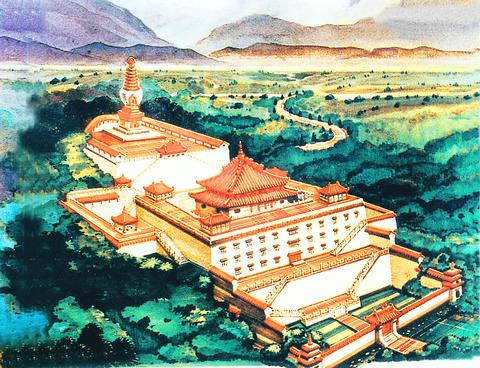
ILLUSTRATION: FRIENDS OF TIBET MAGAZINE
How to manipulate Tibetan politics in Taiwan's favor had always been a hotly-debated and sticky issue for the KMT government.
Although the KMT repeatedly proclaimed Tibet to be "an integral part of the Republic of China," adopting the same stance as its communist antagonist in Beijing, few Tibetans, exiled or not, agreed with this Chinese stance.
Ku, nicknamed the "anti-Communist Godfather," was a hard-line supporter of the KMT's unification policies and planned to set up a Tibetan power center in Taipei to compete with that of the exiled Dalai Lama in the northern Indian town of Dharamsala. A Tibetan monastery in Taipei, it was thought, would serve his purpose well.
Another important figure involved with the scheme was the head of the Mongolian and Tibetan Affairs Commission (MTAC,
Luring the Tibetans
Tung believed that, with the construction of a great monastery outside Tibet, the KMT would be able to come to terms with the Dalai Lama and, he hoped, lure him one day to Taiwan to turn the monastery into a center of worship for the Tibetan Buddhist diaspora.
Besides Ku and Tung, also present at this rare religious event, were Minister of the Interior Wu Poh-hsiung (吳伯雄), Legislator Lin Yu-hsiang (林鈺祥), Control Yuan member Lee Shen-yi (
Ku was elected chairman of the Tibetan Monastery Construction Committee and stated that the CRRA had agreed to offer 5,000 ping (approximately 16,000m2) of its own land at Wuchih Mountain (五指山) in Neihu, Taipei, to build the monastery.
Wu was elected vice-chairman of the committee.
Tung served as executive vice-chairman to work with Master Hsing Yun on fund-raising, with 18 others elected as standing committee members to oversee construction.
Sixteen years have passed and nothing seems to have come out of that religious gathering. A beautiful sketch map of the Tibetan Monastery, with a full report on the proceedings of the meeting, did, however, appear in the first issue (August 1985) of a now out-of-print magazine called Friends of Tibet (西藏之友), an official MTAC publication.
What went wrong with this apparently guaranteed construction project? More importantly, what happened to the construction funds?
According to Lee Hung-lieh (李鴻烈), the project's liaison officer and former director of the Tibetan Department of the MTAC, the Chinese Han-Tibet Culture Association, under the MTAC and chaired by Master Hsing Yun, was responsible for all fund-raising after Tung died from a sudden stroke in 1986, soon after the original meeting.
Lee was quoted in the media as saying: "Due to the fact that the committee failed to come up with enough funds to purchase the land offered by the CRRA, it had to leave all the fund-raising for Master Hsing Yun to generate through his social contacts. Unfortunately, he did not succeed and the project ran aground."
The CRRA thus decided to kill the plan when Ku died in 1993.
One interesting question is how much money the CRRA had asked for from the Monastery Construction Committee for the land at Neihu. Nobody, it seems, has an answer to that question.
The CRRA official's explanation might be just half the story. The other half seems to be that, after Tung's untimely death, a Mongolian, Wu Hua-peng (
Millions of
dollars missing
Other questions remain, however. How much money did the Monastery Construction Committee raise and where did the money go? Liu Hsu-tuan (
In March 1997, while the Dalai Lama was making his historic first visit to Taiwan, an official working for the MTAC told the Win Win Weekly (今周刊) that he understood that the total amount raised by the committee exceeded NT$16 million.
The actual amount raised and how the fund was managed have never been officially made public. It is troubling to note that the reported amount appears to have diminished with time.
About four years ago, Master Hsing Yun's secretary, Yung Chuang (永莊法師), said that Lama Tien had been in charge of the entire affair from the very beginning.
Yung Chuang further said that although Master Hsing Yun was the chairman of the Chinese Han-Tibetan Association, he did not actually know very much about the issue. Lama Tien would know best, he said.
When interviewed in 1997, Lama Tien said that the total amount raised for the project was slightly more than NT$5 million. The money had been deposited in bank and post office accounts, with the accounts specifically registered in the name "Tibetan Monastery." Lama Tien confirmed that the Construction Committee held a meeting in 1995, participants at which included representatives from the MTAC, and at which Tien was elected chairman.
Tien then offered his own explanation for the failure to build the monastery.
He said it was mainly tied to the land acquisition problem. The MTAC under Wu had instructed the Committee to organize a Mongolian and Tibetan Culture Center before Wu could ask the CRRA to release the designated land. He did exactly what was asked, but the application to acquire the land failed.
When the Taipei Times tried recently to contact Lama Tien again, he could no longer be reached. The office of the Chinese Han-Tibetan Association moved a few years ago from the Pumen Temple (普門寺) in Taipei and left no contact phone or address. The phone number of the association provided by the MTAC is not correct and there is no listed number for the association.
Since the Dalai Lama is on his second trip to Taiwan, the issue of the plan to build a Tibetan monastery is bound to come into focus as the relationship between Taipei and Dharamsala becomes more cordial.
There may be no need to sift through the old records to look for possible illegality. Nevertheless, the more than NT$5 million which has been sitting idly in the bank and post office for so many years deserves wiser management than to be left to be eroded by inflation or malpractice. Lama Tien cannot be reached and nobody seems to know of any new plan to allocate the unused funds.
The time for a new effort to construct a Tibetan Monastery in Taiwan seems ripe when one witnesses the overwhelmingly warm reception given to the Dalai Lama by the Taiwan public.
For the thousands of Tibetan Buddhist followers in Taiwan, a common worship center without the entanglement of Chinese politics is a sensible approach that would right the wrongs created when the monastery was bogged down in government red tape and, perhaps, the ill intention from certain individuals.

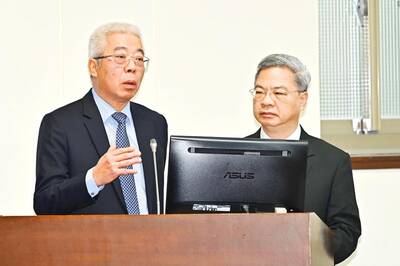
Taiwan has arranged for about 8 million barrels of crude oil, or about one-third of its monthly needs, to be shipped from the Red Sea this month to bypass the Strait of Hormuz and ease domestic supply pressures, CPC Corp, Taiwan (CPC, 台灣中油) said yesterday. The state-run oil company has worked with Middle Eastern suppliers to secure routes other than the Strait of Hormuz, through which about 20 percent of the world’s oil and liquefied natural gas typically passes, CPC chairman Fang Jeng-zen (方振仁) said at a meeting of the legislature’s Economics Committee in Taipei. Suppliers in Saudi Arabia have indicated they
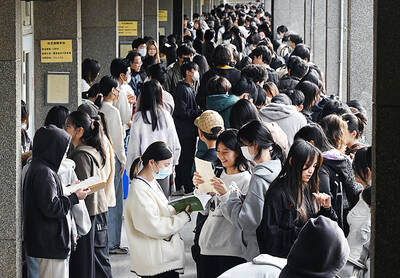
A global survey showed that 60 percent of Taiwanese had attained higher education, second only to Canada, the Ministry of the Interior said. Taiwan easily surpassed the global average of 43 percent and ranked ahead of major economies, including Japan, South Korea and the US, data from the Organisation for Economic Co-operation and Development (OECD) for 2024 showed. Taiwan has a high literacy rate, data released by the ministry showed. As of the end of last year, Taiwan had 20.617 million people aged 15 or older, accounting for 88.5 percent of the total population, with a literacy rate of 99.4 percent, the data
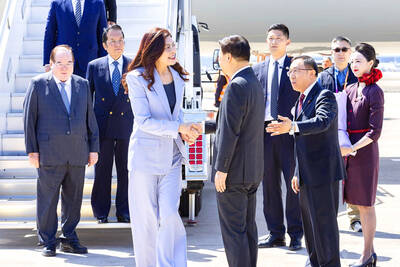
CCP ‘PAWN’? Beijing could use the KMT chairwoman’s visit to signal to the world that many people in Taiwan support the ‘one China’ principle, an academic said Chinese Nationalist Party (KMT) Chairwoman Cheng Li-wun (鄭麗文) yesterday arrived in China for a “peace” mission and potential meeting with Chinese President Xi Jinping (習近平), while a Taiwanese minister detailed the number of Chinese warships currently deployed around the nation. Cheng is visiting at a time of increased Chinese military pressure on Taiwan, as the opposition-dominated Legislative Yuan stalls a government plan for US$40 billion in extra defense spending. Speaking to reporters before going to the airport, Cheng said she was going on a “historic journey for peace,” but added that some people felt uneasy about her trip. “If you truly love Taiwan,

NEW LOW: The council in 2024 based predictions on a pessimistic estimate for the nation’s total fertility rate of 0.84, but last year that rate was 0.69, 17 percent lower An expected National Development Council (NDC) report expects the nation’s population to drop below 12 million by 2065, with the old-age dependency ratio to top 100 percent sooner than 2070, sources said yesterday. The council is slated to release its latest population projections in August, using an ultra-low fertility model, the sources said. The previous report projected that Taiwan’s population would fall to 14.37 million by 2070, but based on a new estimate of the total fertility rate (TFR) — the average number of children born to a woman over her lifetime — the population is expected to reach 12 million by


 RSS
RSS