


Relatives of children orphaned in the 921 earthquake have been fighting over who has guardianship of the orphans and is therefore eligible to receive relief payments or insurance compensation, the Child Welfare League Foundation (兒童福利聯盟文教基金會) said yesterday.
In addition to an estimated NT$14,000 per month in subsidies paid out by the government to families taking in the orphans, a financial aid program for orphans of the quake launched by Aetna Life Insurance Co. offers an additional NT$10,000 per child in subsidies.
"Many families have fought over guardianship, and some have already brought their cases to court," said Shih Ching-fang (施靜芳), chief of the foundation's family reconstruction center,.
Children who lost their parents in the earthquake are also beneficiaries of a government-issued relief payment worth millions of NT dollars. Since they have not reached adulthood, their legal guardians are entitled to receive the money on their behalf. However, the legal guardians are not necessarily the ones taking care of the children.
In view of this problem, the Civil Code was revised recently to empower the court to assign proper guardians for orphans and children whose parents are incapable of taking care of them.
The government has also encouraged the guardians to put the children's property in trust to safeguard their interests.
A recent survey, conducted by the foundation between Nov. 15 and Dec. 20, 1999 targeted the 167 children who had been registered for financial aid under the Aetna plan
The survey, released yesterday, showed that only 20 percent of the orphans have joined the trust management system, while 44 percent have not. The situation with the remaining 36 percent is unknown.
"If the money isn't managed by a trust, it may just be spent by the foster families in cases of financial difficulty. In that case, there wouldn't be much left when the children reach adulthood," said Joyce Feng (馮燕), executive director of the foundation
Feng said her foundation will continue to keep track of the orphans to ensure they are properly taken care of.
Meanwhile, Feng said the foundation is currently working with other charity groups to offer psychological support for the children.
Foundation officials said that, of the 167 children registered under the Aetna plan, successful evaluations were made on 145, consisting of 73 boys and 72 girls. Their ages ranged from six months to 21 years old, with 84 percent being under 18 years old.
The survey showed that all of them were being taken care of by relatives -- 27 percent by paternal uncles, 17 percent by paternal grand parents, 14 percent by paternal aunts and 12 percent by adult siblings.
In four cases, siblings had been split up and were living with different families.
Feng called such separation cruel and said her foundation is evaluating the psychological impact it might have on them.
"They have to face the pain of separation from their siblings almost immediately after they have lost their parents," Feng said.
Even if siblings lived under the same roof, foundation officials said that questions remained as to whether these foster families have the ability to take care of the children placed in their care.
In one case, for example, four orphans were being taken care of by one family that already had four young children of its own.
"It is a great challenge to raise eight children, both in term of care and education," Feng said.
Shih said that it is a common problem with most families in Taiwan that their houses are too small to provide space for additional children.
The foundation called for great concern be dedicated to quake orphan-related issues.
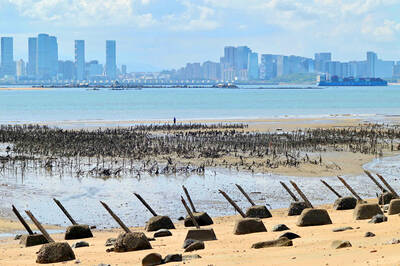
THREATS: Naval facilities have been built in Shanghai and Zhejiang, while airbases have been expanded in Xiamen, Fuzhou and Zhangpu, across the Strait from Taiwan The Chinese Communist Party (CCP) is building large-scale military infrastructure at five sites along the eastern coast of China, the Mainland Affairs Council (MAC) said in a recent report. The latest issue of the council’s Mainland China Situation Quarterly said satellite photos showed military infrastructure such as air force and naval bases being constructed along the eastern coast of China. That means the CCP might be preparing for potential conflict in Taiwan, it said, adding that there are five such construction sites from north to south. A naval base has been built in Shanghai’s Pudong New Area, with underground oil storage tanks, railway
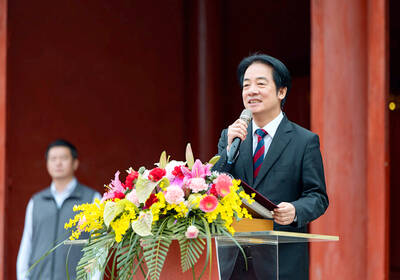
GIVE BACK: The president thanked immigrants, recounting heartwarming stories, from a gymnast helping athletes shine internationally to a spouse helping the disadvantaged There is no need to amend the law to exempt Chinese spouses from single allegiance to the Republic of China (ROC), President William Lai (賴清德) said yesterday, adding that such changes would only increase the public’s doubts toward new residents from China and would not improve social harmony. Taiwan is a democratic, diverse and free country, he said. “No matter which ethnic group you belong to, where you come from or when you arrive, as long as you identify with Taiwan, you are masters of this country,” he said. Taiwan is a democratic nation that follows the rule of law, where immigrants are

A trial run of the north concourse of Taiwan Taoyuan International Airport’s new Terminal 3 is to commence today, the Ministry of Transportation and Communications said yesterday. The eight additional boarding gates would allow for more aircraft parking spaces that are expected to boost the airport’s capacity by 5.8 million passengers annually, Deputy Minister of Transportation and Communications Lin Kuo-shian (林國顯) said. The concourse, designed by a team led by British architect Richard Rogers, provides a refreshing space, Lin said, adding that travelers would enjoy the tall and transparent design that allows sunshine to stream into the concourse through glass curtain walls. The
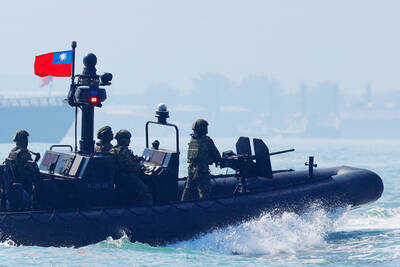
LOOPHOLES: The defense ministry’s proposed amendments to the military criminal code harm security interests and set the evidentiary threshold too high, an expert said Democratic Progressive Party (DPP) lawmakers have proposed revising military laws to stipulate that any active-duty military personnel who express allegiance to the enemy could face two to seven years in prison, adding that soldiers’ loyalty to the nation means “no freedom of expression.” In the past few years some military personnel have pledged allegiance to China through videos and documents, but it is not punishable under the law. In its draft amendment to Article 24 of the Criminal Code of the Armed Forces (陸海空軍刑法), the Ministry of National Defense proposed only making actions that “harm the military’s interests” punishable, citing freedom of


 RSS
RSS