


Everyone knows how to do the cleaning, but how do you get the most out of cleaning equipment and cleaning products? And what’s the best method for getting the job done? The Hualien County branch of the Taiwan Fund for Children and Families (TFCF) has designed a special “Happy mothers domestic management course” to provide training for single-parent mothers to gain proficiency in cleaning. The course gives guidance to dozens of single mothers, in order to provide them with some pointers for employment in the future.
Hualien’s TFCF says Hualien has a large number of tourist hotels and many single-parent mothers make a living from cleaning, but sweeping away stubborn stains and grime requires not only the right cleaning products and equipment, but also the correct methods. Therefore, the TFCF has invited Tsao Sheng-chao, an expert from the cleaning industry, to take up duties as a lecturer. Tsao has worked in the cleaning industry since 1981 and has been employed as a cleaner at many famous hotels.
Tsao personally brings a multitude of products to his lectures and explains how each range of products is used. Taking glass as an example, Tsao says many people believe a simple wipe is fine, but mistakenly use a cleaning cloth which may make the glass more dirty the more it is wiped. Tsao says cleaning appears simple but in fact every process requires its own technique. One often sees a black ring around hotel lavatories — this is not dirt, but is caused by the incorrect use of cleaning products, says Tsao, and demonstrates the importance of using both the correct product and the correct technique.

Photo: Wang Chin-yi, Liberty Times
照片:自由時報記者王錦義
(Liberty Times, translated by Edward Jones)
清潔工作人人會,但如何有效運用工具、用品,還需要對的方法。花蓮家扶中心為培訓十多名單親媽媽一技之長,特地開設「幸福媽媽家事管家課程」,為其提供未來就業方向。
花蓮家扶指出,花蓮觀光飯店林立,許多單親媽媽以打掃為業,但要讓頑垢的髒汙一掃而空,除適當的清潔品及工具,還需要對的方法。因此邀請清潔業達人曹勝兆擔任講師,他自一九八一年即投入該行業,承接多加知名飯店清潔工作。
曹勝兆親自準備眾多用品,介紹各種品項的使用,他以玻璃為例,許多人認為簡單好擦拭,但錯誤的拿抹布,很可能會導致愈擦愈髒。他說,清潔工作看似簡單,但每一項都具技巧,常看到飯店廁所有一條黑汙,這並非髒垢,而是不當清潔品的使用導致,因此用對清潔品及方法很重要。
(自由時報記者王錦義)

A: The Danjiang Bridge in New Taipei City is to open on May 12, and the MRT Sanying Line (Light Blue Line) will also open in June. Isn’t that great? B: Is that the bridge connecting the city’s Tamsui and Bali Districts? What’s so special about this new landmark spanning the Tamsui River? A: The Danjiang Bridge will become the world’s longest-span single-mast asymmetric cable-stayed bridge — with a total river-crossing section of 920 meters and main span of 450 meters. B: The news says there are sidewalks and bike lanes on both sides. Watching the sunset from the
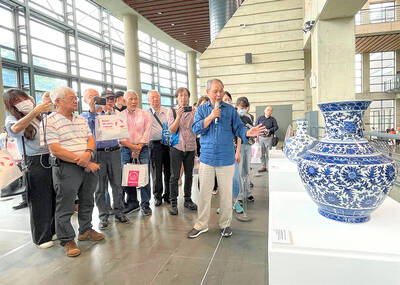
A: Apart from the Danjiang Bridge in New Taipei City, the MRT Sanying Line (Light Blue Line) will open in June. B: Is that the new line leading to Yingge District, the ceramic town? A: Yup, the line will connect the Yingge Ceramics Museum and the Old Streets in Sanxia and Yingge Districts. B: The eastward extension of the Tamsui-Xinyi Line (Red Line) that goes through Taipei’s Xinyi District will also open in June. A: Plus, Taoyuan’s Aerotropolis Line (Green Line) will partially open by the end of the year. In the future, it will connect the
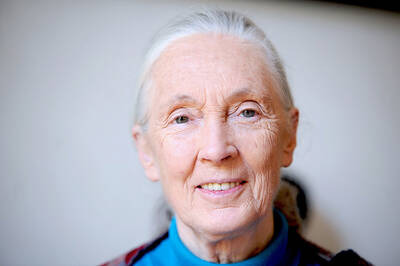
In the dense forests of Tanzania, a young researcher sat quietly among the trees, her gaze fixed on a troop of chimpanzees. It was 1960, and Jane Goodall, armed with nothing but a notebook and endless curiosity, was about to change science forever. Inspired by childhood stories like the Dr. Dolittle series, she had dreamed of Africa — and now, thanks to the encouragement of anthropologist Louis Leakey, she was there, face-to-face with the wild. What Jane discovered shocked the world. Chimpanzees weren’t mere creatures of instinct; they were individuals with emotions, families, and even the capacity for tool
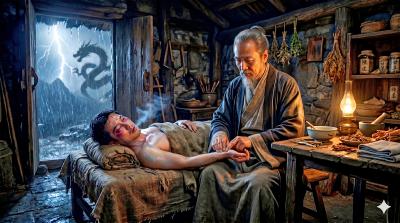
★ Bilingual Story is a fictionalized account. 雙語故事部分內容純屬虛構。 Rain hammered the roof in hard, uneven bursts. “Hold him still!” Baosheng pressed one hand against the stranger’s brow as the man twisted on the wooden bed. His left eye was swollen shut. The right one burned red like a coal. “It feels like fire,” the man gasped. “Like something is clawing inside.” Thunder rolled across the mountain. Baosheng leaned closer. The man’s skin was cold, but heat rose from his face. A strange smell hung in the air. He began the four methods of diagnosis: looking, listening/smelling,


 RSS
RSS