


Former minister of education Yeh Jiunn-rong (葉俊榮) yesterday defended his decision to approve the appointment of National Taiwan University (NTU) president-elect Kuan Chung-ming (管中閔) as “the right thing” to do “at the right time” after resigning amid a flurry of criticism over his handling of the issue.
Yeh, who took office on July 16, became the third minister of eduction to step down over the NTU presidential election controversy following former ministers Pan Wen-chung (潘文忠) and Wu Maw-kuen (吳茂昆).
“I could have left the ministry without resolving the issue, but I chose to bravely take responsibility for that,” he told reporters at the ministry.
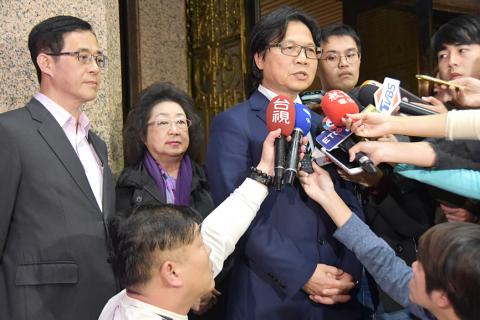
Photo: Wo Po-hsuan, Taipei Times
“I did not just resolve the issue, but I did it in a manner that was in line with university autonomy and legal procedures, and based on my conscience,” he said. “I believe I did the right thing at the right time.”
Although he had to step down, he said he was glad for being “the one who resolved the issue.”
He had done his best in handling the issue knowing it would be impossible to keep everyone happy, he said.
“I hope that my decision to take responsibility and carry the cross would bring things back to normal and allow education to function again,” he said, adding that he could not bear seeing education being stalled at the expense of social opposition.
He said the controversy had led to social opposition beyond the university and he hoped his departure would bring relief to all.
“If my colleagues and I could confront such a difficult issue, can our society please let things go too?” he added
The former minister offered his resignation letter to Premier William Lai (賴清德) at the Executive Yuan at 1pm, saying he was sorry for the criticism his decision has drawn, Executive Yuan Secretary-General Cho Jung-tai (卓榮泰) told a news conference.
Lai did not ask him to stay, but “reluctantly approved” his resignation, Cho said.
The Executive Yuan respects any decision the ministry makes regarding the NTU election, but it must be informed in advance, Cho said.
Yeh only briefly informed Lai via a text message about an hour before he made the announcement to appoint Kuan, and although Lai asked him to carefully reconsider his decision, Yeh did not report back, Cho said.
“I personally believe the process should have been more cautious,” Cho said, adding that respecting each other is essential.
Before Yeh visited the Executive Yuan, President Tsai Ing-wen (蔡英文) had discussed with Lai the ministry’s handling of the NTU controversy at the Presidential Office Building, Presidential Office spokesman Sidney Lin (林鶴明) said before the Executive Yuan news conference.
“Tsai believed the way the matter was handled yesterday was too abrupt. In particular, ruling party legislators were not aware of the decision,” he said.
Tsai had asked the Executive Yuan to handle the matter properly, he said.
Meanwhile, NTU said it is in the process of arranging Kuan’s appointment.
Asked to comment on his appointment, Kuan told reporters waiting outside his office at NTU that he has “no special feelings,” because the school has not yet informed him of its decision.
Additional reporting by Su Yung-yao
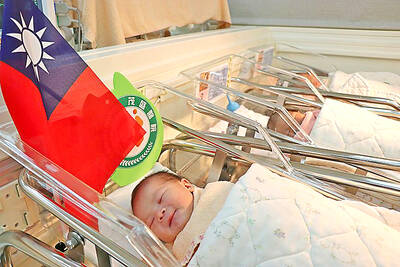
AGING: As of last month, people aged 65 or older accounted for 20.06 percent of the total population and the number of couples who got married fell by 18,685 from 2024 Taiwan has surpassed South Korea as the country least willing to have children, with an annual crude birthrate of 4.62 per 1,000 people, Ministry of the Interior data showed yesterday. The nation was previously ranked the second-lowest country in terms of total fertility rate, or the average number of children a woman has in her lifetime. However, South Korea’s fertility rate began to recover from 2023, with total fertility rate rising from 0.72 and estimated to reach 0.82 to 0.85 by last year, and the crude birthrate projected at 6.7 per 1,000 people. Japan’s crude birthrate was projected to fall below six,
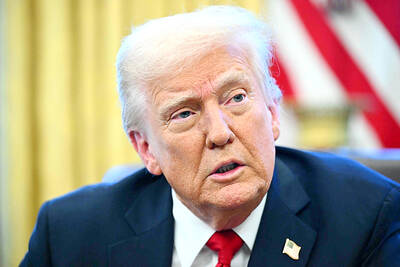
US President Donald Trump in an interview with the New York Times published on Thursday said that “it’s up to” Chinese President Xi Jinping (習近平) what China does on Taiwan, but that he would be “very unhappy” with a change in the “status quo.” “He [Xi] considers it to be a part of China, and that’s up to him what he’s going to be doing, but I’ve expressed to him that I would be very unhappy if he did that, and I don’t think he’ll do that. I hope he doesn’t do that,” Trump said. Trump made the comments in the context
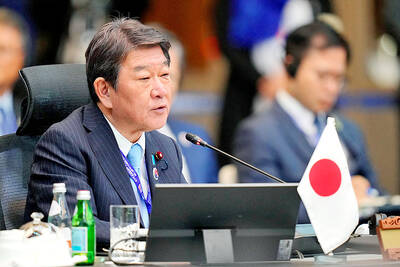
SELF-DEFENSE: Tokyo has accelerated its spending goal and its defense minister said the nation needs to discuss whether it should develop nuclear-powered submarines China is ramping up objections to what it sees as Japan’s desire to acquire nuclear weapons, despite Tokyo’s longstanding renunciation of such arms, deepening another fissure in the two neighbors’ increasingly tense ties. In what appears to be a concerted effort, China’s foreign and defense ministries issued statements on Thursday condemning alleged remilitarism efforts by Tokyo. The remarks came as two of the country’s top think tanks jointly issued a 29-page report framing actions by “right-wing forces” in Japan as posing a “serious threat” to world peace. While that report did not define “right-wing forces,” the Chinese Ministry of Foreign Affairs was

PREPAREDNESS: Given the difficulty of importing ammunition during wartime, the Ministry of National Defense said it would prioritize ‘coproduction’ partnerships A newly formed unit of the Marine Corps tasked with land-based security operations has recently replaced its aging, domestically produced rifles with more advanced, US-made M4A1 rifles, a source said yesterday. The unnamed source familiar with the matter said the First Security Battalion of the Marine Corps’ Air Defense and Base Guard Group has replaced its older T65K2 rifles, which have been in service since the late 1980s, with the newly received M4A1s. The source did not say exactly when the upgrade took place or how many M4A1s were issued to the battalion. The confirmation came after Chinese-language media reported


 RSS
RSS