


The UN Security Council on Friday unanimously approved a resolution endorsing an international road map for a Syria peace process, a rare show of unity among major powers on a conflict that has claimed more than 250,000 lives.
The resolution gives a UN blessing to a plan negotiated previously in Vienna that calls for a ceasefire, talks between the Syrian government and opposition, and a roughly two-year timeline to create a unity government and hold elections.
The obstacles to ending the nearly five-year civil war remain daunting, with no side in the conflict able to secure a clear military victory. Despite their agreement, the major powers are bitterly divided on who might represent the opposition as well as on the future of Syrian President Bashar al-Assad.
“This council is sending a clear message to all concerned that the time is now to stop the killing in Syria and lay the groundwork for a government that the long-suffering people of that battered land can support,” US Secretary of State John Kerry told the 15-nation council after the vote.
The resolution also calls for the UN to present the council with options for monitoring a ceasefire within one month.
Talks between Syria’s government and opposition should begin early next month, the resolution said, although Kerry said mid-to-late next month was more likely. It also endorsed the continued battle to defeat Islamic State group militants, who have seized large swaths of both Syria and neighboring Iraq.
It was one of the strongest appeals for peace by the council, divided for years on the issue of Syria’s war, since Russia and China began vetoing a series of Western-drafted resolutions on the conflict in Oct. 2011.
The resolution came after Moscow and Washington clinched a deal on a text. The two powers have had different views on what should happen in Syria, where Islamic State group militants control considerable territory that Western governments suspect has been a launch pad for attacks on Western nations and Russia.
Kerry made clear that there were still differences on the future of al-Assad, a close ally of Russia and Iran who Western countries want ousted, as well as on the question of which Syrian opposition groups would have a seat at the table in talks with the government.
“We are under no illusions about the obstacles that exist,” Kerry said. “There obviously remain sharp differences within the international community, especially about the future of President Assad.”
The resolution does not address al-Assad’s fate.
Russian Minister of Foreign Affairs Sergei Lavrov said that the resolution “is a clear response to attempts to impose a solution from the outside on Syrians on any issues, including those regarding its president.”
Diplomats said the main problem in the negotiations on the resolution involved Russian and Iranian concerns about how to refer to a bloc of opposition groups that would join UN-led peace talks with the Syrian government.
Western officials said that a recent meeting of opposition figures in Saudi Arabia made significant headway in coming up with an opposition bloc, although Russia and Iran have questioned the legitimacy of the Saudi-hosted discussions.

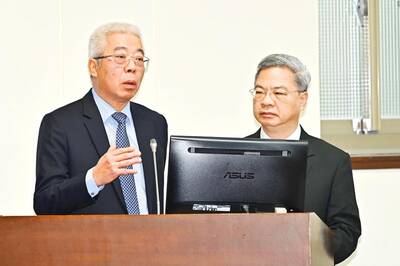
Taiwan has arranged for about 8 million barrels of crude oil, or about one-third of its monthly needs, to be shipped from the Red Sea this month to bypass the Strait of Hormuz and ease domestic supply pressures, CPC Corp, Taiwan (CPC, 台灣中油) said yesterday. The state-run oil company has worked with Middle Eastern suppliers to secure routes other than the Strait of Hormuz, through which about 20 percent of the world’s oil and liquefied natural gas typically passes, CPC chairman Fang Jeng-zen (方振仁) said at a meeting of the legislature’s Economics Committee in Taipei. Suppliers in Saudi Arabia have indicated they
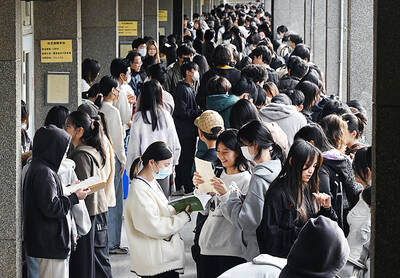
A global survey showed that 60 percent of Taiwanese had attained higher education, second only to Canada, the Ministry of the Interior said. Taiwan easily surpassed the global average of 43 percent and ranked ahead of major economies, including Japan, South Korea and the US, data from the Organisation for Economic Co-operation and Development (OECD) for 2024 showed. Taiwan has a high literacy rate, data released by the ministry showed. As of the end of last year, Taiwan had 20.617 million people aged 15 or older, accounting for 88.5 percent of the total population, with a literacy rate of 99.4 percent, the data
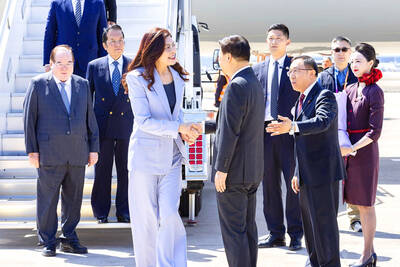
CCP ‘PAWN’? Beijing could use the KMT chairwoman’s visit to signal to the world that many people in Taiwan support the ‘one China’ principle, an academic said Chinese Nationalist Party (KMT) Chairwoman Cheng Li-wun (鄭麗文) yesterday arrived in China for a “peace” mission and potential meeting with Chinese President Xi Jinping (習近平), while a Taiwanese minister detailed the number of Chinese warships currently deployed around the nation. Cheng is visiting at a time of increased Chinese military pressure on Taiwan, as the opposition-dominated Legislative Yuan stalls a government plan for US$40 billion in extra defense spending. Speaking to reporters before going to the airport, Cheng said she was going on a “historic journey for peace,” but added that some people felt uneasy about her trip. “If you truly love Taiwan,

NEW LOW: The council in 2024 based predictions on a pessimistic estimate for the nation’s total fertility rate of 0.84, but last year that rate was 0.69, 17 percent lower An expected National Development Council (NDC) report expects the nation’s population to drop below 12 million by 2065, with the old-age dependency ratio to top 100 percent sooner than 2070, sources said yesterday. The council is slated to release its latest population projections in August, using an ultra-low fertility model, the sources said. The previous report projected that Taiwan’s population would fall to 14.37 million by 2070, but based on a new estimate of the total fertility rate (TFR) — the average number of children born to a woman over her lifetime — the population is expected to reach 12 million by


 RSS
RSS