

The Democratic Progressive Party (DPP) and the Taiwan Solidarity Union (TSU) are manipulating students and are the source of discontent in schools nationwide in ongoing controversy surrounding the Ministry of Education’s planned adjustments to high-school curriculum guidelines, Chinese Nationalist Party (KMT) Legislator Chen Shu-hui (陳淑慧) said.
Chen was referring to students in more than 200 senior-high schools nationwide who have petitioned against the ministry’s decision to make changes that students said reflect a “China-centric” view.
The students also said the planned changes are illegal, referring to a Feb. 12 High Administrative Court ruling that the ministry must make its information more transparent and complete for public scrutiny.
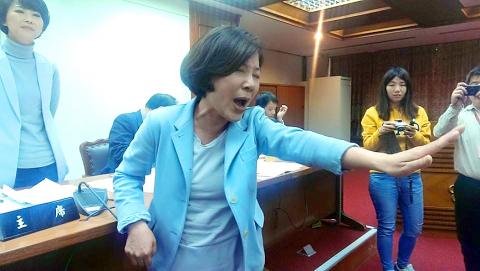
Photo: Chen Yen-ting, Taipei Times
Chen on Friday said the opposition parties and pro-Taiwanese independence groups are manipulating and misleading the students because students lack sufficient information about the current affairs of the educational system.
“Complaints on materials listing the Himalayas as the nation’s highest peak are false and we are offering an award of NT$5,000 to anyone who can find any mention [in the adjusted curricula] that the Himalayas are the Republic of China’s highest peak,” she added.
Chen also defended the ministry in its appeal against the Taipei High Administrative Court.
While the court ruled that the ministry should make public the members of the Committee of Curriculum Review, the ministry has released other information, such as meeting records, and has not conducted any so-called “black box” meetings, Chen said.
KMT Legislator Yang Li-huan (楊麗環) suggested that the ministry abandon the proposed changes, adding that it should negotiate with students about the content of the curriculum guidelines.
The process of learning is supposed to go both ways, after all, she said, with students learning from teachers and the teachers benefiting from students’ questions.
The approaching summer vacations might cause concerned parents to take to the streets in protest, and the nation could ill afford any accidents, Yang said, adding that as the ministry has taken a step back and not insisted on the exclusive use of new textbooks, the issue is not as pressing as it might appear.
“We should all sit down and talk about the matter,” Yang said.
DPP Legislator Cheng Li-chun (鄭麗君) rejected the accusations of misleading students.
The KMT government and Chen are attempting to escalate the issue to a confrontation of pro-localization and pro-unification camps, Cheng said.
The issue is a question of the confrontation between truth and falsity, and the confrontation of education and politics, she said.
However, without full disclosure, the case should be considered as lacking transparency, Cheng said, adding that the ministry was afraid of making the list of members public because whether the ministry “cheated” would be easy to discern once the list is disclosed.
Lack of transparency is the very definition of a “black-box” operation and infringes on procedural justice, Cheng said, adding that the ministry is withholding information to keep the public in the dark and to buy time until the changes go into effect in August, creating a de facto victory.

Taiwan, which accounts for more than half of the global outsourced semiconductor assembly and testing market, is well-positioned to develop copackaged optics (CPO) and manufacture precision silicon photonics chips, the Ministry of Economic Affairs said yesterday. Silicon photonics are emerging as a mainstream optical communications technology and is seen as key to overcoming bottlenecks in AI computing power. The technology is a key project under the government’s New 10 Major AI Infrastructure Projects, with industry, government, academia and research institutions working to overcome critical technological hurdles and build a self-reliant silicon photonics supply chain, the ministry said. Nvidia Corp in March invested US$4
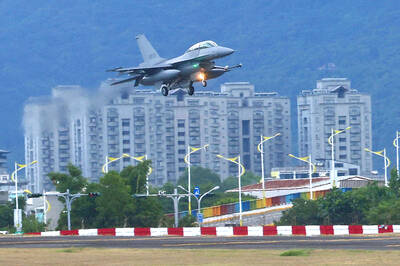
The air force plans to build 26 more hardened aircraft shelters as the number of F-16Vs stationed along Taiwan’s east coast is expected to reach 120 when the final shipment of 66 jets procured from the US arrives. The incoming jets would be stationed at Chihhang Air Base in Taitung County, augmenting the F-16V Block 20s operated by the 5th Tactical Fighter Wing in Hualien County, officials said yesterday. The air force plans to allocate more than NT$6.88 billion (US$218.1 million) from next year to 2031 to build the shelters in Hualien and Taitung as part of the implementation of a “one
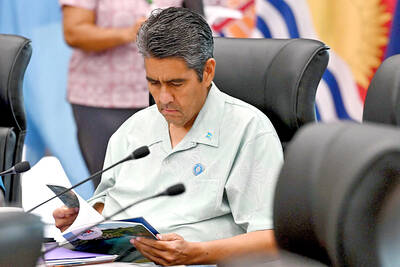
Palau’s president yesterday called for a “unified” Pacific response to a missile test by China in July, while Taiwan and its Pacific allies a day earlier at the Pacific Islands Forum (PIF) reaffirmed their commitment to peace, stability and prosperity. China gave only a handful of nations short notice before test-firing an intercontinental ballistic missile in July, sparking condemnation from several Pacific leaders. The 18-member PIF being held in Palau was expected to release a communique after press time last night, with a formal response to the test possibly included. Palau, which invited Taiwan to attend sideline events as an aid partner, urged
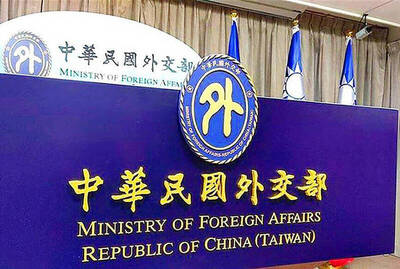
China’s continued efforts to inject geopolitical rivalry into the region and disrupt Pacific nations’ discussions of regional issues warrant greater international attention, a foreign affairs official said yesterday. Minister of Foreign Affairs Lin Chia-lung (林佳龍) last week led a delegation to diplomatic ally Palau to attend events related to the 55th Pacific Islands Forum (PIF) summit. However, the absence of some member-state leaders has been interpreted by some people as a sign of fracturing in Pacific unity. Thirteen PIF members were represented by their heads of state or government, while Fiji, New Caledonia, Vanuatu and Samoa sent ministerial-level representatives, a diplomatic official


 RSS
RSS