


Amid efforts to strengthen laws to protect children from sexual abuse, the Supreme Court yesterday announced that effective immediately, offenses involving sexual assault on children under the age of seven will result in a minimum sentence of seven years in prison.
The ruling was made at the conclusion of a criminal courts’ conference, the highest authority on criminal matters.
The seven-year sentence will apply regardless of whether the offense is believed to have been made against the victim’s will or not, the court said.
Sexual assault on children between the ages of seven and 14 will result in sentences of three to 10 years if the act is judged to have been consensual, it said.
The Supreme Court said that the decision would set a precedent, which the Supreme Court and lower courts must follow suit.
Meanwhile, on the legislative front, Chinese Nationalist Party (KMT) and Democratic Progressive Party (DPP) lawmakers agreed to prioritize a number of bills in the fall legislative session aimed at providing children with better protection against sexual abuse.
KMT caucus chief deputy secretary-general Hsieh Kuo-liang (謝國樑) said he was in favor of the proposals topping the agenda when legislators reconvene for the fall session, which is scheduled to resume on Sept. 24.
However, Hsieh, who serves as head of the Judiciary and Organic Laws and Statutes Committee, said legislators would have to spend more time deliberating on the degree of punishment for child molesters.
DPP Legislator Huang Wei-cher (黃偉哲) said the DPP caucus would prioritize a proposed amendment to the Sexual Abuse Prevention Act (性侵害防治法) to introduce a minimum of 20 years jail without parole and lifelong therapy and surveillance for offenders who abuse children under the age of 14.
The discussions came in response to a string of recent cases involving sexual assault on children that sparked public outrage after the offenders were given controversially light sentences.
In one case, a district court in Kaohsiung handed down a 38-month sentence — less than half of the sentence sought by prosecutors — for an offender on the grounds that the six-year-old victim “did not show strong will” in fighting off her attacker.
About 280,000 people have joined an online campaign on Facebook to demand that the judges in the cases be relieved.
In a separate case, the Supreme Court last week asked the Taiwan High Court to re-open the case of 55-year-old Wu Chin-yi (吳進義), who was sentenced to seven years and two months in prison by the High Court for sexually assaulting a three-year-old girl.
The Supreme Court said the High Court should consider whether Wu “had sex with a person under the age of 14” rather than committed “sexual assault” because the young girl did not resist the offender.
DPP Legislator Tien Chiu-chin (田秋堇) and KMT Legislator Yang Li-huan (楊麗環) have also proposed that the personal information of child sex predators made public after they get out of jail.
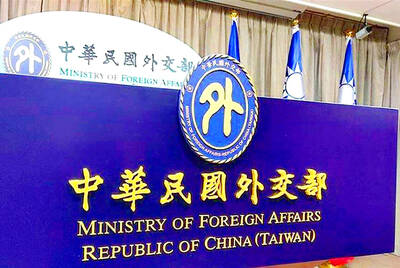
The Ministry of Foreign Affairs (MOFA) yesterday said it is closely monitoring developments in Venezuela, and would continue to cooperate with democratic allies and work together for regional and global security, stability, and prosperity. The remarks came after the US on Saturday launched a series of airstrikes in Venezuela and kidnapped Venezuelan President Nicolas Maduro, who was later flown to New York along with his wife. The pair face US charges related to drug trafficking and alleged cooperation with gangs designated as terrorist organizations. Maduro has denied the allegations. The ministry said that it is closely monitoring the political and economic situation

Conflict with Taiwan could leave China with “massive economic disruption, catastrophic military losses, significant social unrest, and devastating sanctions,” a US think tank said in a report released on Monday. The German Marshall Fund released a report titled If China Attacks Taiwan: The Consequences for China of “Minor Conflict” and “Major War” Scenarios. The report details the “massive” economic, military, social and international costs to China in the event of a minor conflict or major war with Taiwan, estimating that the Chinese People’s Liberation Army (PLA) could sustain losses of more than half of its active-duty ground forces, including 100,000 troops. Understanding Chinese

UNRELENTING: China attempted cyberattacks on Taiwan’s critical infrastructure 2.63 million times per day last year, up from 1.23 million in 2023, the NSB said China’s cyberarmy has long engaged in cyberattacks against Taiwan’s critical infrastructure, employing diverse and evolving tactics, the National Security Bureau (NSB) said yesterday, adding that cyberattacks on critical energy infrastructure last year increased 10-fold compared with the previous year. The NSB yesterday released a report titled Analysis on China’s Cyber Threats to Taiwan’s Critical Infrastructure in 2025, outlining the number of cyberattacks, major tactics and hacker groups. Taiwan’s national intelligence community identified a large number of cybersecurity incidents last year, the bureau said in a statement. China’s cyberarmy last year launched an average of 2.63 million intrusion attempts per day targeting Taiwan’s critical

‘SLICING METHOD’: In the event of a blockade, the China Coast Guard would intercept Taiwanese ships while its navy would seek to deter foreign intervention China’s military drills around Taiwan this week signaled potential strategies to cut the nation off from energy supplies and foreign military assistance, a US think tank report said. The Chinese People’s Liberation Army (PLA) conducted what it called “Justice Mission 2025” exercises from Monday to Tuesday in five maritime zones and airspace around Taiwan, calling them a warning to “Taiwanese independence” forces. In a report released on Wednesday, the Institute for the Study of War said the exercises effectively simulated blocking shipping routes to major port cities, including Kaohsiung, Keelung and Hualien. Taiwan would be highly vulnerable under such a blockade, because it


 RSS
RSS