


The US, the UK and the EU protested a decision by a Chinese court to uphold the 11-year prison sentence for Liu Xiaobo (劉曉波), a political dissident convicted last year on subversion charges after promoting a manifesto calling for China to become a democracy.
“We are disappointed by the Chinese government’s decision to uphold Liu Xiaobo’s sentence of 11 years in prison on the charge of ‘inciting subversion of state power,’” US ambassador to China Jon Huntsman said in a statement yesterday. “We believe that he should not have been sentenced in the first place and should be released immediately.”
Liu’s December conviction was upheld by a Beijing court yesterday, AFP reported, citing one of Liu’s lawyers.
The EU delegation in China said in a statement that the verdict against Liu is “entirely incompatible with his right to freedom of expression” and also called for his release.
“We are very disappointed that Liu Xiaobo’s appeal has been unsuccessful,” a British Foreign Office spokesman said.
“The decision once again calls into question freedom of expression in China,” he said, adding that the decision had “rightly been condemned” by the EU.
Liu’s case is one of several issues straining ties between China and the US and EU. China considers the diplomatic protests an affront to its sovereignty.
“China brooks no interference in its internal judicial affairs,” Foreign Ministry spokesman Ma Zhaoxu (馬朝旭) told reporters yesterday in Beijing. “China has no dissidents.”
The former Columbia University visiting scholar had been in police custody since December 2008 for his role in organizing Charter 08.
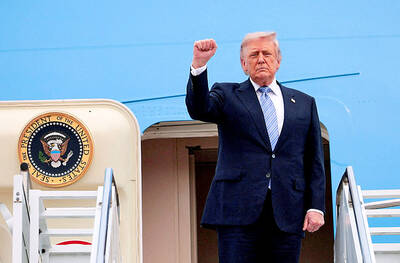
US-CHINA SUMMIT: MOFA welcomed US reassurance of no change in its Taiwan policy; Trump said he did not comment when Xi talked of opposing independence US President Donald Trump yesterday said he has not made a decision on whether to move forward with a major arms package for Taiwan after hearing concerns about it from Chinese President Xi Jinping (習近平). Trump’s comments on Taiwan came as he flew back to Washington after wrapping up critical talks in which both leaders said important progress was made in stabilizing US-China relations even as deep differences persist between the world’s two biggest powers on Iran and Taiwan. “I will make a determination,” Trump said, adding: “I’ll be making decisions. But, you know, I think the last thing we need right
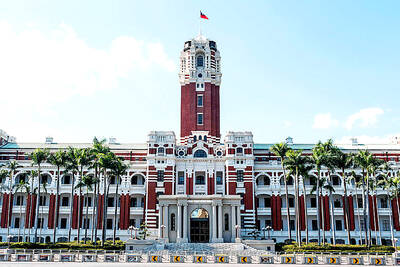
SECURITY: Taipei presses the US for arms supplies, saying the arms sales are not only a reflection of the US security commitment to Taiwan but also serve as a mutual deterrent against regional threats Taiwan is committed to preserving the cross-strait “status quo” and contributing to regional peace and stability, the Presidential Office said yesterday. “It is an undeniable fact that the Republic of China is a sovereign and independent democratic nation,” Presidential Office spokeswoman Karen Kuo (郭雅慧) reiterated, adding that Beijing has no right to claim sovereignty over Taiwan. The statements came after US President Donald Trump warned against Taiwanese independence. Trump wrapped up a state visit to Beijing on Friday, during which Chinese President Xi Jinping (習近平) had pressed him not to support Taiwan. Taiwan depends heavily on US security backing to deter China from carrying
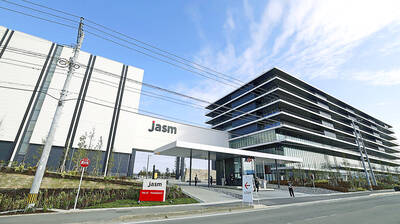
The subsidiary of Taiwan Semiconductor Manufacturing Co (TSMC, 台積電) in Kumamoto, Japan, turned a profit in the first quarter of this year, marking the first time the first fab of the unit has become profitable since mass production started at the end of 2024. According to the contract chipmaker’s financial statement released on Friday, Japan Advanced Semiconductor Manufacturing Inc (JASM), a joint venture running the fab in Kumamoto, posted NT$951 million (US$30.19 million) in profit in the January-to-March period, compared with a loss of NT$1.39 billion in the previous quarter, and a loss of NT$3.25 billion in the first quarter of
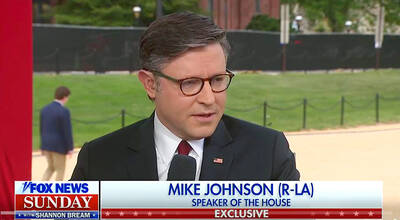
RESOLUTE BACKING: Two Republican senators are planning to introduce legislation that would impose immediate sanctions on China if it attempts to invade Taiwan US House of Representatives Speaker Mike Johnson on Sunday reaffirmed US congressional support for Taiwan, saying the US and “all freedom-loving people” have a stake in preventing China from seizing Taiwan by force. Johnson made the remarks in an interview with Fox News Sunday on US President Donald Trump’s summit with Chinese President Xi Jinping (習近平) last week. In an interview that aired on Friday on Fox News, just as Trump wrapped up a high-stakes visit to China, he said he has yet to green-light a new US$14 billion arms package to Taiwan and that it “depends on China.” “It’s a very good


 RSS
RSS