


Steve Shieh (謝壽夫), chairman of the First Financial Holding Co, yesterday gained the media spotlight after a verbal fight with a pan-blue lawmaker in which he used an English-language expletive.
Lawmakers asked Shieh for an apology, and demanded that the Ministry of Finance reconsider keeping Shieh, 66, as the head of the state-run bank First Financial.
HEATED WORDS
The senior banker -- who spent the past 10 years at Taishin Commercial Bank before becoming chairman of First Financial in August 2003 -- was taking part in a regular question-and-answer session at the legislature's Finance Committee when he told Legislator Alex Fai (
"If you don't like coming here, then just resign," Fai, a member of the Chinese Nationalist Party (KMT), told Shieh.
Standing next to Shieh, Minister of Finance Lin Chuan (
But as Shieh turned away from the microphone, he uttered the four-letter English-language expletive "shit," which was audible throughout the chamber.
Fai immediately stopped his questioning and demanded that Shieh repeat the word.
Committee chairman Liao Pen-yen (
The Legislative Yuan has been the scene of numerous brawls, fistfights and incidents of rival lawmakers hurling objects such as lunch boxes and books at each other.
`SHIT'-STORM
Regarding this storm in the teacup, First Financial executive vice president and spokesman Huang Hsien-chuan (
"He [Shieh] was simply very angry at the false rumors circulating around, thereby he burst out with something that people think was inappropriate," Huang said, referring to speculation that Shieh was intending to enter into merger talks with Taishin Financial.
As for Shieh's position at First Financial, Huang said that Shieh is employed by the government and that he would try his best to do his job.
Whether he would have to leave the post regarding the "shit" incident is not something Shieh can decide, Huang said on behalf of Shieh.
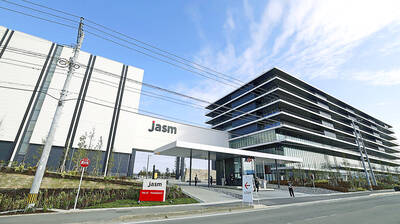
The subsidiary of Taiwan Semiconductor Manufacturing Co (TSMC, 台積電) in Kumamoto, Japan, turned a profit in the first quarter of this year, marking the first time the first fab of the unit has become profitable since mass production started at the end of 2024. According to the contract chipmaker’s financial statement released on Friday, Japan Advanced Semiconductor Manufacturing Inc (JASM), a joint venture running the fab in Kumamoto, posted NT$951 million (US$30.19 million) in profit in the January-to-March period, compared with a loss of NT$1.39 billion in the previous quarter, and a loss of NT$3.25 billion in the first quarter of
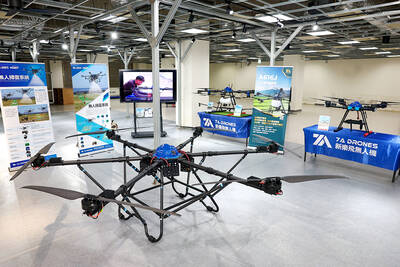
DRONE CENTRAL: Taiwan aims to become Asia’s democratic hub for drones, with most exports focused on high-quality military-grade models, an official said Taiwan’s drone industry is expected to expand significantly by 2030, producing 100,000 units per month and exporting half of them, the Ministry of Economic Affairs said yesterday. Current drone production capacity is about 15,000 units per month, but the industry can quickly scale up as demand increases, Industrial Development Administration Director-General Chiou Chyou-huey (邱求慧) told a news conference in Taipei. Taiwan’s drone output grew 2.5-fold last year to NT$12.9 billion (US$408.3 million) under a government program to develop the uncrewed vehicle sector, he said. The Executive Yuan in October last year approved plans to invest NT$44.2 billion into domestic production of uncrewed aerial
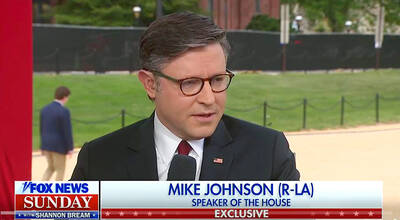
RESOLUTE BACKING: Two Republican senators are planning to introduce legislation that would impose immediate sanctions on China if it attempts to invade Taiwan US House of Representatives Speaker Mike Johnson on Sunday reaffirmed US congressional support for Taiwan, saying the US and “all freedom-loving people” have a stake in preventing China from seizing Taiwan by force. Johnson made the remarks in an interview with Fox News Sunday on US President Donald Trump’s summit with Chinese President Xi Jinping (習近平) last week. In an interview that aired on Friday on Fox News, just as Trump wrapped up a high-stakes visit to China, he said he has yet to green-light a new US$14 billion arms package to Taiwan and that it “depends on China.” “It’s a very good
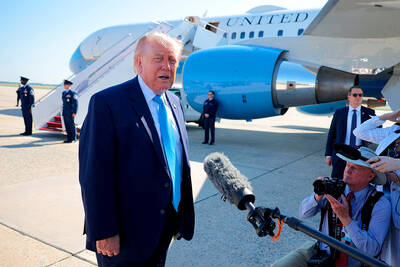
US President Donald Trump yesterday said he would speak to President William Lai (賴清德) as his administration considers whether to move ahead with a US$14 billion weapons sale to Taiwan — a potential arms deal that has drawn criticism from China. “Well, I’ll speak to him. I speak to everybody,” Trump told reporters yesterday when asked if he had any plans to call his counterpart, although he did not offer a time frame for when such a conversation could take place. Trump previously said he would speak to the person “that’s running Taiwan,” without specifying who he meant. “We have that situation very


 RSS
RSS