


Before she was the director of the Women Make Waves Film Festival, Pecha Lo (羅珮嘉) worked at the Public Television Service. There, she experienced sexism and witnessed sexual harassment.
“I realized that male employees would use many methods to threaten the girls, whether it was something as small as making them get meals, or as big as sexual harassment,” Lo, now 40, tells the Taipei Times.
Lo and her colleagues traded notes on predatory behavior, such as when a male producer insisted that a female assistant share a hotel room with him during an overnight shoot.
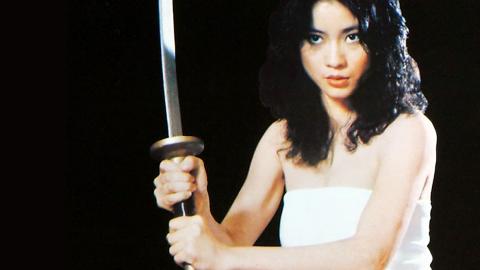
Photo courtesy of Women Make Waves Film Festival
The “very masculine” environment of the television station also meant that regardless of their qualifications or ambitions, female employees were not allowed to touch the cameras. But with their jobs at stake, there were few courses of action.
“Either you left, or you just quietly tolerated it. Those felt like the only two options,” says Lo.
That was almost two decades before the #MeToo movement exposed an epidemic of sexual harassment and abuse around the world. The reckoning brought by that movement is central to the program of this year’s film festival, which opens Friday.
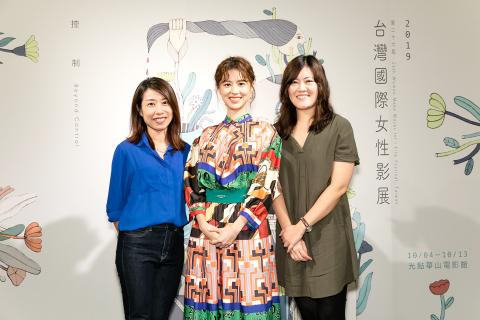
Photo courtesy of Women Make Waves Film Festival
“After #MeToo” — one of the festival’s 11 sections — will delve into divisive issues such as victim-blaming, doubts about women’s testimonies and ambiguous situations that can amount to sexual harassment.
With Hollywood forming part of the epicenter of the #MeToo movement, the festival’s “Rocking Cinema History” section is particularly timely. Four documentaries will dissect workplace sexism and women’s on-screen representation in recent American, Australian and European cinema.
Even the festival’s overarching theme, “Beyond Control,” is a nod to how the #MeToo movement has prioritized women regaining control over their bodies and experiences.

Photo courtesy of Women Make Waves Film Festival
BREAKTHROUGHS
Although the decision to focus on #MeToo was obvious to Lo, who is also Director-General of the Taiwan Women’s Film Association, she is aware that the festival risks operating in a bubble of feminism.
The #MeToo movement has so far failed to gain mainstream momentum in Taiwan, despite the work of many women’s rights organizations and the existence of a high-profile offender — Golden Horse-nominated film director Doze Niu (鈕承澤), who in February was charged with sexually assaulting a female crew member.
Lo theorizes that this might be because Taiwan still lacks a public face to the movement, in the sense of a sexual assault survivor who can tell her story in a way that resonates with the wider public.
She adds that although sexual harassment and assault do happen here, “generally, the pressure could be relatively less” than in other countries, resulting in less “aggressive” efforts to end such behaviors.
Wary of building an echo chamber, the festival organizers conduct outreach through community screenings around the country. In post-screening discussions, Lo has had sobering encounters with other, usually older women.
“They will say, ‘Don’t come and influence my daughter-in-law and tell her that if her husband hits her, he’s wrong. Husbands are going to hit their wives, because when we were younger, we were also hit. Since we could bear it, why can’t my daughter-in-law?’” she says.
While the cause of gender equality remains pressing, Lo welcomes the fact that not everyone attends the festival for such principled reasons. Some audiences are primarily interested in the artistic and historic value of the films, she says.
EMBRACING DIVERSITY
The festival is learning to embrace this group of viewers, who have also contributed to its longevity. Now in its 26th year, Women Make Waves is the second-oldest film festival in Taiwan, behind only the Golden Horse Film Festival.
A case in point is this year’s “Lady Avengers: Asia, Women, and Chainsaws” section showcasing films from Hong Kong, Japan, South Korea and Taiwan, in which female protagonists revel in exacting murderous revenge for various forms of injustice. Three of the five films are directed by men.
Lo says that “Lady Avengers,” which consists of films originally released between 1960 and 1981, would have been unimaginable when she first started directing the festival seven years ago.
Back then, the program followed a formula of low-budget indie films that dealt squarely with social issues affecting women. There was staunch resistance to screening any works by male directors, and an emphasis on premieres.
The vast majority of directors featured at this year’s festival continue to be female. They include the Lebanese journalist and filmmaker Jocelyne Saab and American lesbian visual artist Barbara Hammer, both of whom have been given their own retrospectives.
But as the festival matures, Lo anticipates moving away from the latest releases and exclusively female line-up to explore film history and more diverse perspectives, including that of select male directors.
“It’s important to break the rules of the game when necessary,” she says.
As a single working woman, this newfound sense of confidence also extends from Lo’s professional to her personal life.
“Since turning 40 I feel super-confident,” she says. “Like I’ve found the right of control over my own body.”

What was the population of Taiwan when the first Negritos arrived? In 500BC? The 1st century? The 18th? These questions are important, because they can contextualize the number of babies born last month, 6,523, to all the people on Taiwan, indigenous and colonial alike. That figure represents a year on year drop of 3,884 babies, prefiguring total births under 90,000 for the year. It also represents the 26th straight month of deaths exceeding births. Why isn’t this a bigger crisis? Because we don’t experience it. Instead, what we experience is a growing and more diverse population. POPULATION What is Taiwan’s actual population?
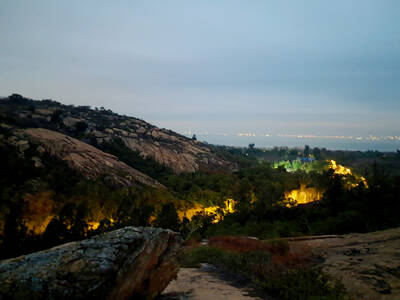
For the past five years, Sammy Jou (周祥敏) has climbed Kinmen’s highest peak, Taiwu Mountain (太武山) at 6am before heading to work. In the winter, it’s dark when he sets out but even at this hour, other climbers are already coming down the mountain. All of this is a big change from Jou’s childhood during the Martial Law period, when the military requisitioned the mountain for strategic purposes and most of it was off-limits. Back then, only two mountain trails were open, and they were open only during special occasions, such as for prayers to one’s ancestors during Lunar New Year.
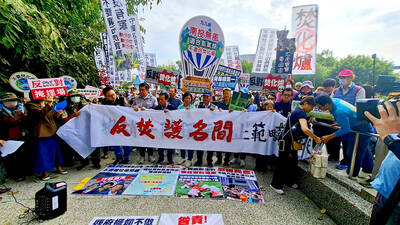
A key feature of Taiwan’s environmental impact assessments (EIA) is that they seldom stop projects, especially once the project has passed its second stage EIA review (the original Suhua Highway proposal, killed after passing the second stage review, seems to be the lone exception). Mingjian Township (名間鄉) in Nantou County has been the site of rising public anger over the proposed construction of a waste incinerator in an important agricultural area. The township is a key producer of tea (over 40 percent of the island’s production), ginger and turmeric. The incinerator project is currently in its second stage EIA. The incinerator

It sounded innocuous enough. On the morning of March 12, a group of Taichung political powerbrokers held a press conference in support of Deputy Legislative Speaker Johnny Chiang’s (江啟臣) bid to win the Chinese Nationalist Party (KMT) primary in the Taichung mayoral race. Big deal, right? It was a big deal, one with national impact and likely sent shivers down the spine of KMT Chairwoman Cheng Li-wun (鄭麗文). Who attended, who did not, the timing and the messaging were all very carefully calibrated for maximum impact — a masterclass in political messaging. In October last year, the Democratic Progressive Party (DPP)


 RSS
RSS