


Notorious MRT slasher Cheng Chieh (鄭捷) shocked the nation with his callousness when he told police, “I have been aspiring to do something huge since I was little (我從小就立志-做一件大事).”
The killer in the drama The World Between Us (我們與惡的距離) repeats the exact same phrase.
Taking inspiration from Cheng’s 2014 stabbing rampage that left four dead and 24 injured, the social realist drama, concluding in April, deviates from the over-idealized storylines with annoyingly flawless characters that plague Taiwanese shows. It delves straight into reality.

photo courtesy of Public Television Service
Providing a breath of fresh air from the heavily romance-oriented usual productions, The World Between Us depicts the aftermath of a mass shooting from the perspectives of the various parties involved, including the killer and his family, the victims and their families, the defense teams, the media, as well as the public’s reception.
The rom-coms are mostly geared toward a local female audience between the ages of 15 and 25, according to a 2010 survey conducted by Chinese Communication Society (中華傳播學會).
However, in recent years, the Taiwanese drama industry has begun to explore other themes and genres, most notably social realism, releasing series such as The World Between Us and On Children (你的孩子不是你的孩子), both of which have received critical acclaim at an international level.
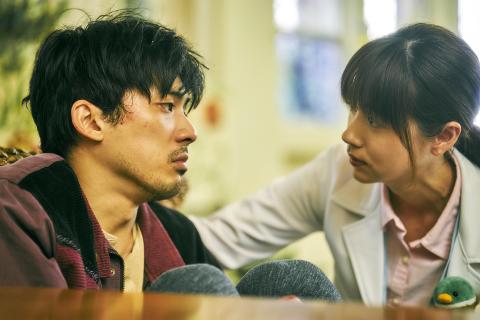
photo courtesy of Public Television Service
What makes The World Between Us so powerful is not just the engaging plot, complex character development, and the actors’ great performances; it is that the drama has opened up conversations about the gray areas of morality, prompting the audience to rethink the line separating good and evil: Is a criminal defense lawyer so unforgivable? Is it morally justified to hate on a criminal’s family members? Does media weaponize opinion?
With a rating of 9.3 out of 10 on IMDb as of press time, The World Between Us has demonstrated wide global appeal, particularly among millennials. It epitomizes the rising trend of quality Taiwanese dramas that distinguish themselves from romcoms targeting local audiences, paving the way for Taiwan’s entry into the international market.
Similarly, On Children is a PTS production with a social realist theme. It centers around the potential negative effects of credentialism and extreme parental control on children’s psychological state.
Inspired by British science fiction television series Black Mirror, the drama takes an anthology approach and has a futuristic and sci-fi quality to it. The series is jointly distributed by PTS+, Netflix, and Line TV.
Both The World Between Us and On Children examine contemporary social issues that exist globally and aim to inspire thoughtful reflection. They may be outliers for Taiwanese dramas, but the incorporation of social issues is common in Western television series.
In an interview with Punchline (娛樂重擊), the writer of The World Between Us, Lu Shih-yuan (呂蒔媛), said that while addressing social issues through television series is not a groundbreaking idea in Western societies, the key issue in the lack of social realist productions in Taiwan lies in the fact that most Taiwanese broadcasting platforms are not prepared to show dramas with a serious subject.
In the case of The World Between Us, PTS willingly stepped up and offered to produce the series, kicking off the rising global visibility of the Taiwanese drama industry.
The social realism genre is particularly popular among millennials around the world — as a generation familiar with the use of social media and the sharing of information, ideas, and perspectives, they tend to be socially conscious and willing to engage in conversations about social justice.
Having ventured out of the typical romance narrative, the Taiwanese drama industry has successfully attracted international streaming services such as HBO Asia and Netflix, making great progress in expanding into foreign markets.
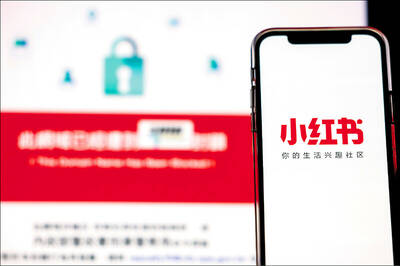
This month the government ordered a one-year block of Xiaohongshu (小紅書) or Rednote, a Chinese social media platform with more than 3 million users in Taiwan. The government pointed to widespread fraud activity on the platform, along with cybersecurity failures. Officials said that they had reached out to the company and asked it to change. However, they received no response. The pro-China parties, the Chinese Nationalist Party (KMT) and Taiwan People’s Party (TPP), immediately swung into action, denouncing the ban as an attack on free speech. This “free speech” claim was then echoed by the People’s Republic of China (PRC),

Exceptions to the rule are sometimes revealing. For a brief few years, there was an emerging ideological split between the Democratic Progressive Party (DPP) and Chinese Nationalist Party (KMT) that appeared to be pushing the DPP in a direction that would be considered more liberal, and the KMT more conservative. In the previous column, “The KMT-DPP’s bureaucrat-led developmental state” (Dec. 11, page 12), we examined how Taiwan’s democratic system developed, and how both the two main parties largely accepted a similar consensus on how Taiwan should be run domestically and did not split along the left-right lines more familiar in

Specialty sandwiches loaded with the contents of an entire charcuterie board, overflowing with sauces, creams and all manner of creative add-ons, is perhaps one of the biggest global food trends of this year. From London to New York, lines form down the block for mortadella, burrata, pistachio and more stuffed between slices of fresh sourdough, rye or focaccia. To try the trend in Taipei, Munchies Mafia is for sure the spot — could this be the best sandwich in town? Carlos from Spain and Sergio from Mexico opened this spot just seven months ago. The two met working in the
Many people in Taiwan first learned about universal basic income (UBI) — the idea that the government should provide regular, no-strings-attached payments to each citizen — in 2019. While seeking the Democratic nomination for the 2020 US presidential election, Andrew Yang, a politician of Taiwanese descent, said that, if elected, he’d institute a UBI of US$1,000 per month to “get the economic boot off of people’s throats, allowing them to lift their heads up, breathe, and get excited for the future.” His campaign petered out, but the concept of UBI hasn’t gone away. Throughout the industrialized world, there are fears that


 RSS
RSS