


Before even mentioning the well-crafted, tear-jerking story and the whimsical, colorful animations, the most impressive part of On Happiness Road (幸福路上) is how it manages to condense four decades of Taiwanese politics, economics, traditional and pop culture as well as everyday life into 109 minutes without mucking up the narrative.
Of course, the viewer probably needs to have grown up in Taiwan or have a decent understanding of its turbulent recent history to catch all the minute details, but even so, it’s a pretty solid drama following the past and present of a Chi (Gwei Lun-mei, 桂綸鎂), a Taiwanese woman in her 30s who returns home to Happiness Road from the US following the death of her grandmother. There’s so much to explore here, including parental expectations, childhood dreams, fear of having children and the pursuit of happiness. Again, some themes will speak louder to 30- and 40-somethings who went through Taiwan’s education system, but they are still universal enough for foreign audiences.
Somehow, all of this nicely fits into one movie — although the resulting emotional rollercoaster does leave the audience a bit exhausted at the end. It is an impressive debut from Sung Hsin-ying (宋欣穎), who started making this film after winning the NT$1 million top prize for the Golden Horse Film Project Promotion in 2013.
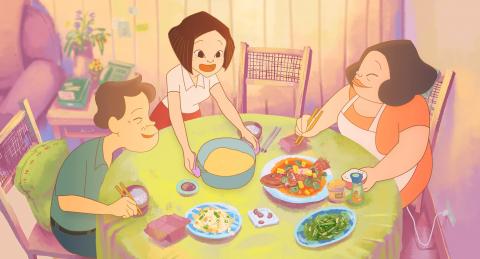
Photo courtesy of ifilm
Born on April 5, 1975, the day former president Chiang Kai-shek (蔣介石) died, Chi experienced the entire transition from martial law and autocratic rule to democracy. Her early experiences encapsulate the era perfectly, from being forced to speak Mandarin in school, to her father being addicted to buying Patriotic Lottery (愛國獎卷) tickets. Chiang was still hailed as a “great man” back then, and Chi wanted to follow his example as a child. The references are very detailed, down to using the old translation for Disneyland (迪士奈, dishinai) instead of the current dishini (迪士尼).
Chi’s friends represent a cross-section of Taiwanese society, from the mayor’s son to the daughter of a US serviceman who abandoned her mother to a child who moonlights as a “spirit medium” that predicts the Patriotic Lottery’s winning numbers. They all have different backgrounds, dreams and fates, but it’s all part of the Taiwanese experience.
Almost no stone is left unturned, as Sung even gives Chi an Aboriginal grandmother to highlight the diversity of Taiwanese culture that was suppressed back then. Her personal experiences reflect the larger picture as she is bullied due to the controversial Wu Feng (吳鳳) story in the textbooks that painted Aborigines as bloodthirsty savages that were only “reformed” through Wu’s sacrifice. This story brought shame to many Aboriginal children and would be a focal point of the later Aboriginal rights movement.
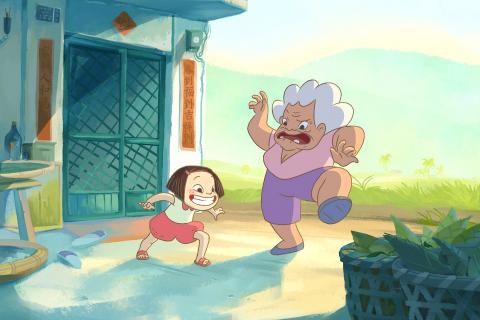
Photo courtesy of ifilm
As society changes, Chi’s world view does too, especially when her older cousin is arrested and tortured for reading the banned book by historian and independence activist Su Beng (史明), Taiwan’s 400-Year History (台灣人四百年史). The entire story follows this vein, seamlessly incorporating the social and political changes in Taiwan as Chi’s life progresses into present day. Even her time in the US coincides with major events such as the 9/11 attacks, which can make things feel a bit systematic or formulaic, but it works for the most part as the audience knows what to expect, creating a sense of order of all the underlying elements between each sequence.
The dialogue will be immediately relatable to most Taiwanese as Chi struggles to fulfill her parents’ expectations well into her 30s. But connecting the Taiwanese perspective to the world is the general theme of happiness, hence the film name. Chi has gone from a poor family who believes that having enough to eat equals happiness to achieving the American Dream, but she is still not happy. As she looks back at all the influences that shaped her life, things begin to make some sense.
Even though rooted in reality, the animation is playful as we frequently visit Chi’s dreams, imaginations and fears. The captivating illustrations are the finishing touches to the excellent story and history lesson, adding a sense of the magical to the tale that might otherwise fall a bit on the gloomy side. Her dead grandmother also frequently appears to help her out at times, topping off the fantastical elements that make this film truly a gem.

Just after 6am, I walked up to the ticket gate at Taipei Main Station and entered the Taiwan Railway platform without scanning any ticket; instead, I flashed the Sanrio Fun Rail pass on my phone to the gate worker and was admitted. I found my train and prepared to board. My destination? This very same station. I was embarking on a 13-hour journey on one of two round-the-island trains operated by ezTravel. They run each day, one counterclockwise around the island and one clockwise. They differ in a number of ways from an ordinary Taiwan Railway train and can make for
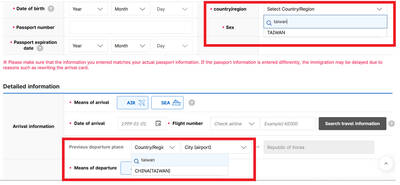
Jason Han says that the e-arrival card spat between South Korea and Taiwan shows that Seoul is signaling adherence to its “one-China” policy, while Taiwan’s response reflects a reciprocal approach. “Attempts to alter the diplomatic status quo often lead to tit-for-tat responses,” the analyst on international affairs tells the Taipei Times, adding that Taiwan may become more cautious in its dealings with South Korea going forward. Taipei has called on Seoul to correct its electronic entry system, which currently lists Taiwan as “China (Taiwan),” warning that reciprocal measures may follow if the wording is not changed before March 31. As of yesterday,
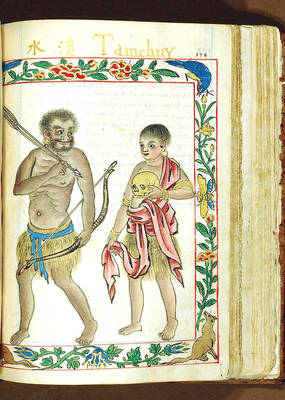
The Portuguese never established a presence on Taiwan, but they must have traded with the indigenous people because later traders reported that the locals referred to parts of deer using Portuguese words. What goods might the Portuguese have offered their indigenous trade partners? Among them must have been slaves, for the Portuguese dealt slaves across Asia. Though we often speak of “Portuguese” ships, imagining them as picturesque vessels manned by pointy-bearded Iberians, in Asia Portuguese shipping between local destinations was crewed by Asian seamen, with a handful of white or Eurasian officers. “Even the great carracks of 1,000-2,000 tons which plied

On Thursday, former Taipei mayor and founder of the Taiwan People’s Party (TPP) Ko Wen-je (柯文哲) was sentenced to 17 years in prison and had his civil rights suspended for six years over corruption, embezzlement and other charges. Seven others related to the case were also handed prison sentences, while two were found not guilty. It has been a bad week for the TPP. On Tuesday, prosecutors charged Chinese immigrant Xu Chunying (徐春鶯) with suspicion of taking part in Beijing-directed election interference. Xu has strong links to the TPP, which once offered her a party list legislator nomination. Tuesday also


 RSS
RSS