


The first half of The Tag Along 2 (紅衣小女孩2) has all the elements of an iconic Taiwanese horror movie: spine-tingling scenes of anticipation, jump scares, interpersonal drama and a healthy dose of traditional Taoist elements, including worship of the Tiger Lord (虎爺). Oh, and lots of gore. The entire movie is shot in dark, subdued and cold tones, heightening the feeling of despair.
We’ll get to the second half in a bit.
Like the previous film, the main antagonist here is the “little girl in red,” who became a popular legend in Taiwan when a video of her following a family of hikers was shown during a paranormal television show in 1988. None of the hikers knew who she was, or recalled seeing her that day. The first film builds on the legend while leaving much to the audience’s imagination, but this one completely blows it open by revealing the girl’s backstory and fate.
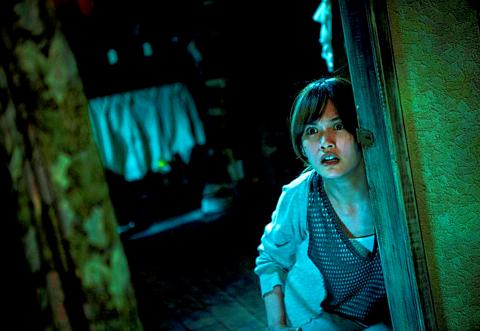
Photo courtesy of atmovies.com
Those left puzzled after the first film will find many answers in this one — but at the same time, it’s a let down because the answers are pretty standard ghost movie fare. And by revealing everything, the mystery is gone and the producer is stuck with a pretty bland premise to complete the promised trilogy. What would there be left to say?
Despite her eternally youthful appearance, Rainie Yang (楊丞琳) manages to convincingly play a single mother whose pregnant teenage daughter goes missing. Her bid to rescue her daughter from the evil forces featured in the previous film becomes the main plot of the film.
However, Tiffany Ann Hsu’s (許瑋甯) superb performance as a tortured woman who lost her husband and grandmother to the demons in the first film is mostly wasted in the second half as things start to get chaotic (even for a horror film) and the story becomes lost in plot holes the size of the Pacific Ocean — one of them being her character’s purpose in the film. Did the director just write her into the story to appeal to fans of part one? She’s also involved in some of the major plot holes — how does she just waltz into a children’s home and leave with one of the kids without anyone noticing?
Sometimes horror films should stay straightforward and stick to scaring people. Instead, The Tag-Along 2 suffers from a common problem Taiwanese films seem to have: trying to do too much. Most notably, there’s too much sap that continues to build as the touching family drama reaches a boiling point and everybody reaches an overly-emotional grand catharsis, letting go of the past and looking forward.
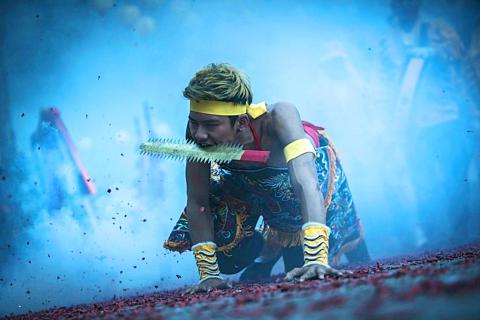
At several points it even ventures into borderline superhero territory (Taiwanese Tiger-man, anyone?), especially with the sort-of-epic battle scenes that are plagued by cheesy special effects, which is very disappointing given the director’s masterful lighting and mood setting techniques.
And on top of everything, it explores the theme of teen pregnancy and motherhood, which culminates in a bizarre abortion sequence that wouldn’t look out of place in an anti-abortion campaign video.

With so much going on, the viewer ends up overloaded and hoping that the next scene concludes the movie. Sorry, it doesn’t. Ambition is good, but it cannot be said enough that less is more in most cases.
For those who enjoy tearful, feel-good dramas as well as horror, The Tag-Along 2 actually provides a unique cinematic experience, as you will likely end up being immensely moved, grossed out and frightened at the same time. Just ignore the parts that don’t make sense.

The small platform at Duoliang Train Station in Taitung County’s Taimali Township (太麻里) served villagers from 1992 to 2006, but was eventually shut down due to lack of use. Just 10 years later, the abandoned train station had become widely known as the most beautiful station in Taiwan, and visitors were so frequent that the village had to start restricting traffic. Nowadays, Duoliang Village (多良) is known as a bit of a tourist trap, with a mandatory, albeit modest, admission fee of NT$10 giving access to a crowded lane of vendors with a mediocre view of the ocean and the trains
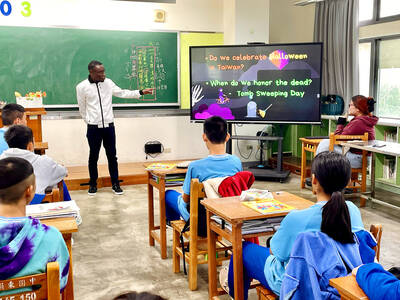
For many people, Bilingual Nation 2030 begins and ends in the classroom. Since the policy was launched in 2018, the debate has centered on students, teachers and the pressure placed on schools. Yet the policy was never solely about English education. The government’s official plan also calls for bilingualization in Taiwan’s government services, laws and regulations, and living environment. The goal is to make Taiwan more inclusive and accessible to international enterprises and talent and better prepared for global economic and trade conditions. After eight years, that grand vision is due for a pulse check. RULES THAT CAN BE READ For Harper Chen (陳虹宇), an adviser

Traditionally, indigenous people in Taiwan’s mountains practice swidden cultivation, or “slash and burn” agriculture, a practice common in human history. According to a 2016 research article in the International Journal of Environmental Sustainability, among the Atayal people, this began with a search for suitable forested slopeland. The trees are burnt for fertilizer and the land cleared of stones. The stones and wood are then piled up to make fences, while both dead and standing trees are retained on the plot. The fences are used to grow climbing crops like squash and beans. The plot itself supports farming for three years.

President William Lai (賴清德) on Nov. 25 last year announced in a Washington Post op-ed that “my government will introduce a historic US$40 billion supplementary defense budget, an investment that underscores our commitment to defending Taiwan’s democracy.” Lai promised “significant new arms acquisitions from the United States” and to “invest in cutting-edge technologies and expand Taiwan’s defense industrial base,” to “bolster deterrence by inserting greater costs and uncertainties into Beijing’s decision-making on the use of force.” Announcing it in the Washington Post was a strategic gamble, both geopolitically and domestically, with Taiwan’s international credibility at stake. But Lai’s message was exactly


 RSS
RSS