


May 15 to May 21
He was born exactly 85 years before farmers traveled to Taipei on May 20, 1988 to participate in what is considered Taiwan’s largest peasant movement since World War II. It’s probably a coincidence that they marched on his birthday, but Chien Chi (簡吉) was a notable peasants’ rights organizer during the Japanese colonial era, also leading a group of farmers to Taipei in 1926 to protest the government’s agricultural policy.
SEEDS OF DISCONTENT
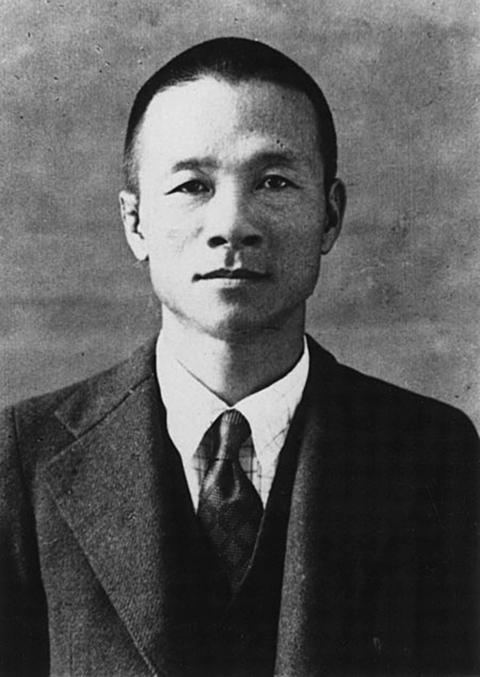
Photo courtesy of Wikimedia Commons
Chien grew up in a farming family in what is today’s Fengshan District (鳳山) in Kaohsiung. He recalls that his parents had to “work like cows and horses,” and that his younger brother had to quit school to help in the fields. Chien was lucky enough to graduate from Tainan Normal School (台南師範學校) and became a local schoolteacher.
It was a respected position, but Chien’s discontent grew as he saw that many of his students suffered from lethargy after toiling in the fields after school, often missing class during the busy season.
“Although these children attend school, they are too exhausted for any education to be effective,” he told a judge while on trial years later for violating a publishing law. “I felt that I was a thief, earning a monthly salary for achieving nothing.”
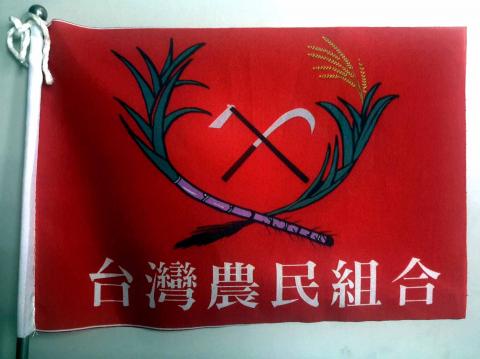
Photo courtesy of Wikimedia Commons
Chien further detailed the hardships dealt to peasants in the Fengshan area by the Japanese government. Yang Du (楊渡) provides an overview of these injustices in his biography of Chien, The Man who Led Peasants (簡吉: 台灣農民運動史詩).
Starting around 1905, all arable land where the farmer could not prove ownership went to the state, causing them to lose their means of survival. Much of this land was later offered to retired Japanese officials to entice them to remain in Taiwan. The government also wanted to promote sugar production in Taiwan, intimidating peasants into selling the land at unreasonable prices to both Japanese and Taiwanese sugar manufacturers.
The government also seized land by dubious means. Chien mentions a case when the government forcefully purchased Fengshan farmland in 1906 to set up a “demonstration farm.” Yang Pi-chuan (楊碧川) writes in History of Taiwanese Resistance During Japanese Rule (日據時代台灣人反抗史) that by 1945, the colonial government had made public about 21 percent of Taiwan’s arable land.
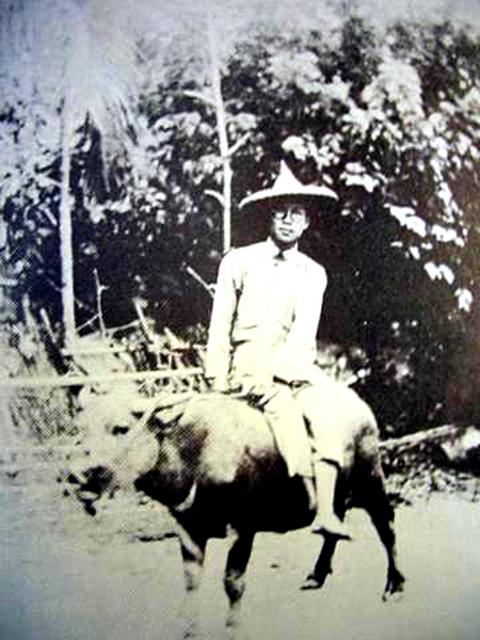
Photo courtesy of Wikimedia Commons
The authorities encouraged farmers to grow sugarcane for the sugar factories, and they essentially became tenant farmers. As their only buyers, the factory owners exploited the farmers, who barely made enough to survive.
“I felt an infinite sadness watching this happen around me and decided to fight for their rights,” Chien concluded in his court statement.
TAKING UP THE FIGHT
Shortly after he left his teaching post, Chien became head of the Fengshan Peasants Union (鳳山農民組合). The first battle was against the local sugar factory, which had taken back land rented to tenant farmers to expand its facilities. With Chien leading the charge, the union convinced the factory to allow the peasants to farm for seven more years.
It was the first peasant victory in Taiwan, and Chien became a hero. He began touring the country’s farming villages, sharing his experiences and encouraging them to fight for their rights.
“He was the only ‘professional peasant revolutionary’ during Japanese rule, meaning that he had no other job,” Yang writes.
The government’s decision to offer land without clear ownership to retired officials in 1925 was the key event that would unite Taiwan’s farmers. Clashes between peasants and police broke out in several locations, and on June 28, 1926, five regional unions merged into the Taiwan Peasants Union with Chien in charge. A month later, Chien and fellow activist Chao Kang (趙港) led a group of farmers to Taipei to protest at the Governor-General’s office, but to no avail.
Activity intensified over the next few years, with more than 400 incidents between 1927 and 1928. Chien, a skilled orator, continued touring, sometimes attracting more than 1,000 people. By the end of 1928, the union boasted 27 branches.
Chang Hsien-tang (張獻堂) writes in The Study of Chien Chi and the Taiwan Peasant Movement (論簡吉與農民運動) that Chien’s rhetoric started to lean toward the left after he visited Japan in early 1927, when he won the support of Japanese socialist peasant revolutionaries.
For example, he wrote in a 1927 Taiwan Minpao (台灣民報) editorial, “We need to raise our class consciousness, unite and fight! Everyone should join the struggle for survival. Japanese capitalism is about to collapse, and so is global capitalism. We shall liberate everyone from oppression.”
Things started going downhill after 1928. The newly-formed Taiwan Communist Party (台灣共產黨) also had an interest in peasant rights, and the Japanese became wary of the collaboration between the two organizations. Chien earned his first jail sentence during a government crackdown on the union in 1929, but there was no evidence that he was a communist.
In 1931, the Japanese carried out another communist raid, and Chien received 10 years this time. Chien Chung-jen (簡炯仁) writes in an article for Taiwan Culture (台灣文化) magazine that in addition to the leaders being arrested, the peasant movement had stagnated since a large number of farmers had moved to cities after losing their land. Also, the government improved the tenant farming system, reducing the number of suffering farmers and their cause to rebel.
That was the same year Japan invaded Manchuria, and as its imperialism intensified, the government became less tolerant of unrest. The peasant movement fizzled out shortly after.
Taiwan in Time, a column about Taiwan’s history that is published every Sunday, spotlights important or interesting events around the nation that have anniversaries this week.

Michael slides a sequin glove over the pop star’s tarnished legacy, shrouding Michael Jackson’s complications with a conventional biopic that, if you cover your ears, sounds great. Antoine Fuqua’s movie is sanctioned by Jackson’s estate and its producers include the estate’s executors. So it is, by its nature, a narrow, authorized perspective on Jackson. The film ends before the flood of allegations of sexual abuse of children, or Jackson’s own acknowledgment of sleeping alongside kids. Jackson and his estate have long maintained his innocence. In his only criminal trial, in 2005, Jackson was acquitted. Michael doesn’t even subtly nod to these facts.
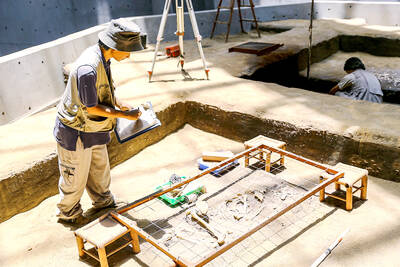
Writing of the finds at the ancient iron-working site of Shihsanhang (十 三行) in New Taipei City’s Bali District (八里), archaeologist Tsang Cheng-hwa (臧振華) of the Academia Sinica’s Institute of History and Philology observes: “One bronze bowl gilded with gold, together with copper coins and fragments of Tang and Song ceramics, were also found. These provide evidence for early contact between Taiwan aborigines and Chinese.” The Shihsanhang Web site from the Ministry of Culture says of the finds: “They were evidence that the residents of the area had a close trading relation with Chinese civilians, as the coins can be
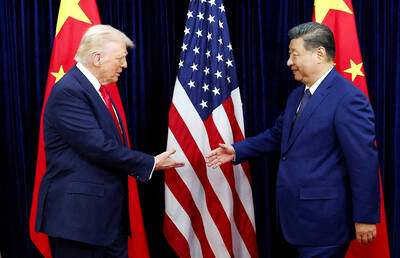
The March/April volume of Foreign Affairs, long a purveyor of pro-China pablum, offered up another irksome Beijing-speak on the issues and solutions for the problems vexing the People’s Republic of China (PRC) and the US: “America and China at the Edge of Ruin: A Last Chance to Step Back From the Brink” rang the provocative title, by David M. Lampton and Wang Jisi (王緝思). If one ever wants to describe what went wrong with US-PRC relations, the career of Wang Jisi is a good place to start. Wang has extensive experience in the US and the West. He was a visiting
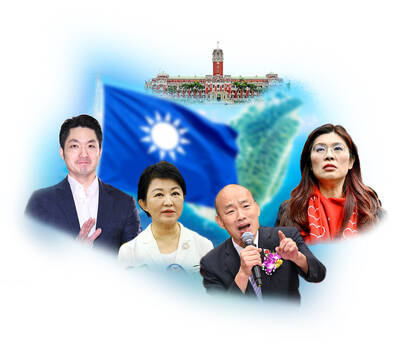
The January 2028 presidential election is already stirring to life. In seven or eight months, the primary season will kick into high gear following this November’s local elections. By this point next year, we will likely know the Democratic Progressive Party (DPP) candidate and whether the Taiwan People’s Party (TPP) will be fielding a candidate. Also around this time, the Chinese Nationalist Party (KMT) will either have already completed their primary, or it will be heading into the final stretch. By next summer, the presidential race will be in high gear. The big question is who will be the KMT’s


 RSS
RSS