


It was over a couple flights of kumquat ales in the middle of the rice fields that my friend mentioned something that got me thinking — Yilan doesn’t promote itself enough. We were drinking these ales outside of Jim & Dad’s Brewing Company in Yuanshan Township (員山), close to a kumquat farm. Next to us is a river that leads to a hiking trail and eventually, a waterfall.
In the 18 months that I’ve been back in Taiwan, Yilan has been my escape from the city. Every weekend before the hordes of excitable movie-goers and shoppers overtake Taipei’s Xinyi District (信義) where I live, I’m already on the 8:40am bus to Yilan because I’ll trade malls and skyscrapers for beaches and mountains any day.
Sometimes I’ll go with friends, but usually, this day or weekend trip is one that I’ll undertake on my own. As the other passengers draw their window curtains shut in an effort to evade sunlight, I keep mine open, letting my face bask in the sun as I take in the lush green mountain range rolling past me. I can finally breathe again when I see Turtle Island (龜山島) hovering in the background of Waiao Beach (外澳) and hear the waves lapping on the hot black sand.
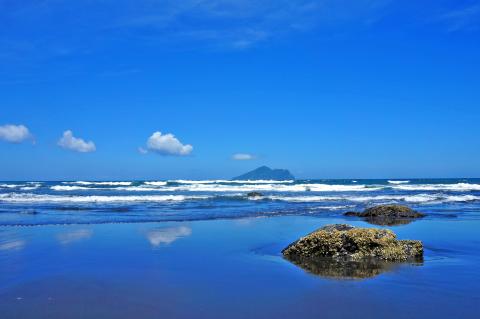
Photo: Dana Ter, Taipei Times
In a way, I’m glad that Yilan doesn’t promote itself. But it’s also selfish to say I like feeling that I have this entire slice of pristine Pacific coastline to myself, so I’m sharing a couple of my favorite things to do in Yilan. Of course, it’s not a comprehensive list, and if you really want to explore this vast stretch of largely untamed nature, get out there yourself and don’t be afraid of getting lost.
SURF: WAIAO
Waiao Train Station
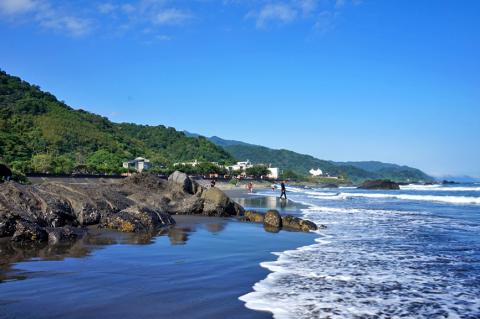
Photo: Dana Ter, Taipei Times
Home to a small but growing bohemian surf community, Waiao Beach in Toucheng Township (頭城) is just an hour bus ride followed by a 12-minute train ride from Taipei. Opposite Waiao Train Station (外澳火車站) is a pier overlooking the black sand beach.
Here, you’ll find tan surfer boys and girls hosing down their surfboards next to rows of crops such as chili and cabbage that local farmers have planted. Board and wetsuit rentals are available at the Rising Sun Surf Inn. Surf lessons are offered in both English and Chinese. However, the increasing numbers of paragliders jumping off the nearby mountains and landing on the sand next to sunbathers is becoming somewhat of a nuisance.
Near the train station is Drifters Pizza Pub, which serves delectable margarita and meat lovers pizzas. The pub also invites local and overseas bands to play live music every Saturday night — but just be sure you get on the last bus back to Taipei if you don’t plan on spending the night.
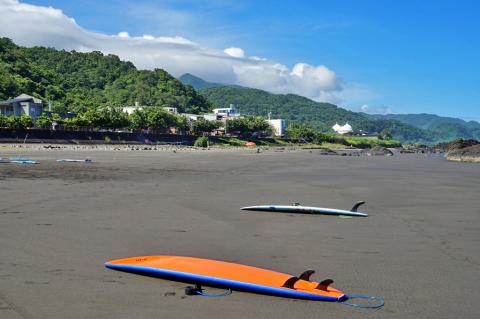
Photo: Dana Ter, Taipei Times
My favorite spot, however, is tucked away from the main stretch of beach where surf lessons are held. Walk a couple meters to the left of the surf inn along the beach and you’ll find a cluster of rocks. The rocky path leads to another beach with far fewer people. Though it’s mainly where the pros surf, it’s also a good, unobstructed sunbathing spot.
HOT SPRINGS: JIAOSI
Jiaosi Train Station/ Jiaosi Bus Station
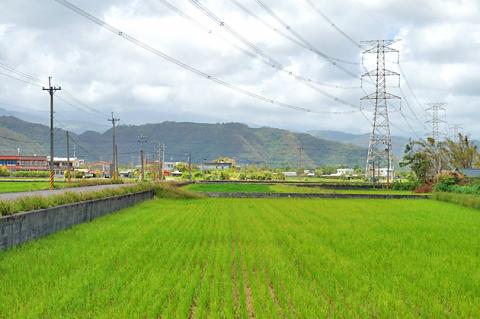
Photo: Dana Ter, Taipei Times
A 12-minute train ride south of Waiao will take you to the hot springs at Jiaosi Township (礁溪). The main attraction is Jiaosi Hot Spring Park (礁溪溫泉公園), which includes a number of public baths nestled in the middle of hiking trails.
Another option is to check out the main town where you’ll find beer gardens serving local brews next to fish spas — it’s an odd combination, beer and hot springs. Just don’t drink too much if you plan on soaking in the hot springs to avoid dehydration. Dozens of signs (all in Chinese) indicate hot spring hotels (and even drive-in love motels) with private hot springs, but don’t expect anything fancy.
Though Jiaosi is in some ways a watered down, cheap version of Beitou (北投), it retains its local flavor. You won’t find exorbitant restaurants with unpronounceable Japanese names and kimono-clad waitresses serving you at Jiaosi. Instead, vendors sell deep-fried food on skewers.
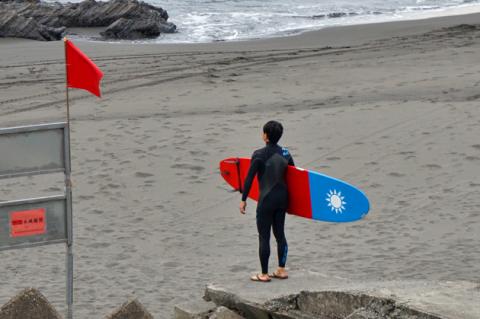
Photo: Dana Ter, Taipei Times
Food-wise, hot pot has my vote. The numerous hot pot restaurants that dot the road from Jiaosi train station to the bus station make their soup using water from the hot springs. The noodles and fish cakes soaked in the boiling soup make for a hearty dinner after an afternoon of surf.
DRINK: YUANSHAN
Yilan Train Station/ Yilan Bus Station
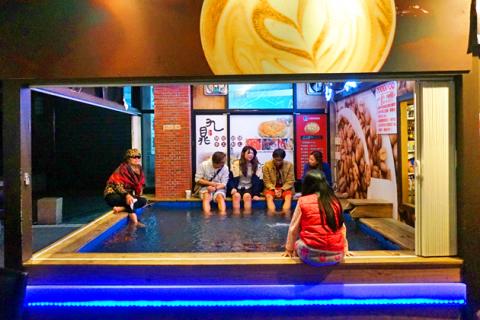
Photo: Dana Ter, Taipei Times
Those who enjoy an afternoon tipple should head to Yuanshan just south of Jiaosi. This sleepy rural township is known as Taiwan’s “hometown of water” (水的故鄉) because it is said to boast the freshest water in the country. In the middle of the sprawling rice fields and fruit farms is where the world’s best single malt whiskey, the Kavalan Solist Vinho Barrique, is made.
Kavalan Distillery, which won top awards last year for its woody, caramel-and-vanilla infused whiskies, provides tours in English and Chinese. Visitors get an inside look into how whisky is made, from the first step, importing the Scandinavian barley and French yeast, to the last, storing the whisky in American oak barrels, before sampling a couple of whiskies at the “spirit castle.”
A 7-minute walk from Kavalan Distillery is Jim & Dad’s Brewing Company. The brewery, which opened in September of last year, is still in its teething stage — the upstairs is being renovated into a larger dining and tasting area — though you can still stop by for some flights. Their bar with 12 taps contains regular brews as well as seasonal ones such as the kumquat ale and ginger porter, all brewed with ingredients sourced from nearby farms.
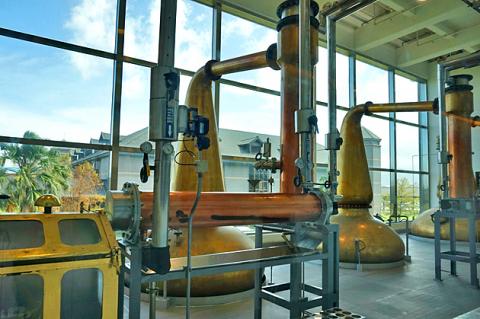
Photo: Dana Ter, Taipei Times
Behind the brewery is a serene river which leads to a hiking path. Follow that path for about two hours and you’ll eventually end up at a waterfall.
SASHIMI AND COLD SPRINGS: SUAO
Suao Train Station

Photo: Dana Ter, Taipei Times
The cold springs at Suao (蘇澳) are one of the few natural cold springs in the world. In the past, this coastal township, which lies southeast of Yuanshan, was known mostly as a transit point between Taipei and Hualien.
Nowadays, Suao is drawing more visitors to its cold spring resorts. The resorts are honestly nothing to get excited about, but it’s worth an overnight stay if you’re passing through and wish to take a dip in the cold springs.
Suao Cold Spring Park (蘇澳冷泉公園) is a short walk from Suao Train Station (蘇澳火車站). Though the infrastructure of the park is a little run down, the 22°C water during summer can be quite refreshing.
You can’t go wrong walking into any mom-and-pop seafood shop in Suao. Located near Nanfangao fishing harbor (南方澳), the fresh sashimi and crabs sold at these restaurants do not disappoint.
TREK: NANAO
Nanao Train Station
Probably one of Yilan’s best kept secrets is Nanao (南澳), south of Suao and bordering Hualien County. This mountainous county will appeal to adventure seekers.
Though a little out of the way (you’ll definitely need a car), check out the 20-hectare wide Cueifong Lake (翠峰湖) between Taiping (太平) and Dayuan (大園) mountains. Located 1,900m above sea level, the vast alpine lake is supposed to be one of the most pristine, unspoiled places in Taiwan (though 13 types of PFCs were recently found there). Several hiking trails dot the area around the lake.
Nanao also offers river tracing near Jinyue Waterfall (金岳瀑布), an upstream course which takes about four hours to complete. Although it’s a difficult trek, the waterfall splashing into a turquoise-colored pool waiting for you at the end makes it worth it.
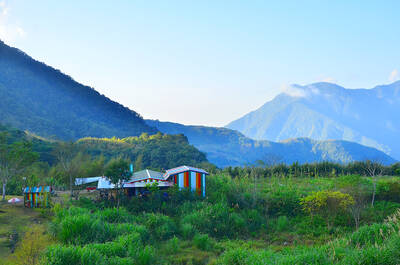
If you prefer to relax, swing by Nanao Recreation Farm (南澳農場), a free camping ground where visitors can set up tents.
If one asks Taiwanese why house prices are so high or why the nation is so built up or why certain policies cannot be carried out, one common answer is that “Taiwan is too small.” This is actually true, though not in the way people think. The National Property Administration (NPA), responsible for tracking and managing the government’s real estate assets, maintains statistics on how much land the government owns. As of the end of last year, land for official use constituted 293,655 hectares, for public use 1,732,513 hectares, for non-public use 216,972 hectares and for state enterprises 34 hectares, yielding
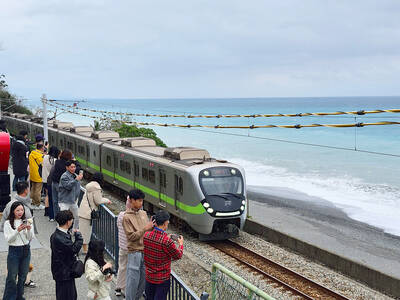
The small platform at Duoliang Train Station in Taitung County’s Taimali Township (太麻里) served villagers from 1992 to 2006, but was eventually shut down due to lack of use. Just 10 years later, the abandoned train station had become widely known as the most beautiful station in Taiwan, and visitors were so frequent that the village had to start restricting traffic. Nowadays, Duoliang Village (多良) is known as a bit of a tourist trap, with a mandatory, albeit modest, admission fee of NT$10 giving access to a crowded lane of vendors with a mediocre view of the ocean and the trains

One of the challenges with the sheer availability of food in today’s world is that lots of us end up spending many of our waking hours eating. Whether it’s full meals, snacks or desserts, scientists have found that it’s not uncommon for us to be mindlessly grazing at some point during all of our 16 or so waking hours. The problem? As soon as this food hits the bloodstream in the form of glucose, it initiates the release of the hormone insulin. This in turn activates a switch present in every one of our cells, which is responsible for driving cell

President William Lai (賴清德) on Nov. 25 last year announced in a Washington Post op-ed that “my government will introduce a historic US$40 billion supplementary defense budget, an investment that underscores our commitment to defending Taiwan’s democracy.” Lai promised “significant new arms acquisitions from the United States” and to “invest in cutting-edge technologies and expand Taiwan’s defense industrial base,” to “bolster deterrence by inserting greater costs and uncertainties into Beijing’s decision-making on the use of force.” Announcing it in the Washington Post was a strategic gamble, both geopolitically and domestically, with Taiwan’s international credibility at stake. But Lai’s message was exactly


 RSS
RSS