


Featuring sadomasochism and two protagonists, one young and one old, it’s quite easy, as many have already done, to call Bradley Winterton’s first novel a gay version of Fifty Shades of Grey. Now this reviewer didn’t make it very far into E.L. James’ wildly popular book because the writing was absolutely atrocious, but the story is well known and it’s obvious that the parallels between Fifty Shades and Mystery Religions of Gladovia are purely superficial. Besides, Winterton’s prose is poetic and evocative, a mostly enjoyable read even without any specific interest in the subject matter.
Oftentimes, erotic novels, often of the pulp variety, become too graphic and campy for the average reader who doesn’t get turned on by the contents. Those who get turned on often can’t wait to skip straight to the sex scenes. This book, however, is more than just a vehicle for sexual self-expression and satisfies both literature lovers and those who like gay bondage, the action not happening until much later in the book.
While the book is full of vivid descriptions, philosophical musings, classical references and existential pursuits, be assured that there is sex and discussion of sex -— lots of it. But much of it focuses on the passion, the pleasure, the process and the mentality behind the characters’ numerous encounters. When it gets graphic, it’s not vulgar, and Winterton doesn’t overdo things.
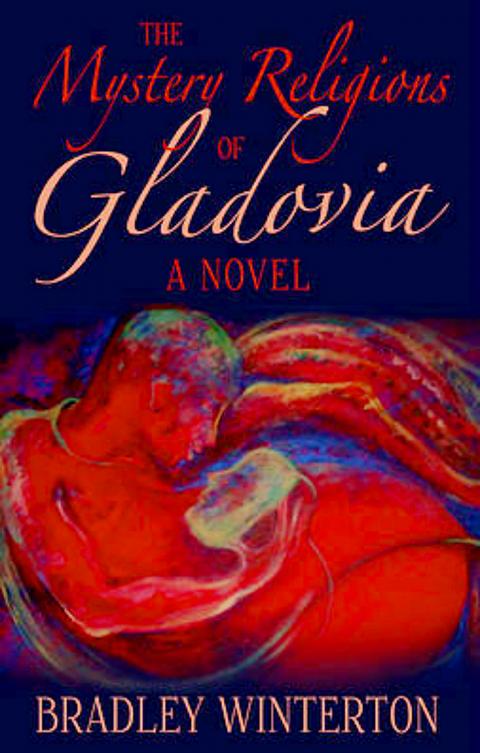
Narration moves between third person and first person through the eyes of Matthew, who starts out as a pure, young student secretly in love, and Lily, his stern and prudish headmaster, who secretly seeks out the company of young men during his annual trips abroad.
Winterton takes his time setting each scene, describing the environment and the characters’ mindsets and concerns, throwing in some literary references and musings before slowly building to a significant event — which is often brief but dramatic, such as when Matthew discovers the pleasures of caning after a long chapter on his various sexual encounters or Lily’s abrupt fall from grace after a pleasure trip to Spain.
Matthew and Lily’s encounter is also short. Even though they existed in the same school, they don’t actually meet until the second half of the book when both end up in Gladovia, a fictional South American country, and end up participating in a caning session together.
We learn about the gay scene through Matthew’s eyes — from his musings on the social dynamics of a gay sauna in Amsterdam to his detailed descriptions of the endless encounters in the Royal Gardens of Gladovia, a gathering place for gay men. He’s the more analytical one, providing his own take on how gay sexual patterns differ from straight ones and other deductions. He ponders his pursuit of youth, its value and his place in it.
In contrast, while Lily is more experienced, he seems like the more innocent one with his observations on the meaning of beauty, both in young men and in his surroundings. He exhibits an almost childlike quality when finding a canine companion or simply by being in the beautiful countryside away from his dreary existence as headmaster. Though he also visits the Gardens, he looks for something more long-term and is more introspective about his actions. He’s haunted by a lost young love, finds another one, and is also constantly worried about time running out and getting old. Both men are obsessed with youth, but in different ways.
One thing about the book is that there are no significant straight characters nor women as the gay characters almost exclusively interact with other gays, and at times it seems like the entire Gladovia is gay. It’s obviously not the case, but Matthew does mention at some point that it’s hard to maintain a meaningful relationship with a straight friend. You also wonder how the characters are able to maintain their lifestyle while living such a Bohemian existence, as they don’t seem to do anything but read books, talk about art, listen to music and have sex.
There are parts of the book that seem a bit superfluous and meandering, such as a seemingly randomly inserted history of circumcision and philosophical musings and literary references that bog down the story’s flow. At first it’s enjoyable as a unique device, but at many points this reviewer started wondering when the story would move on — which it often did, curiously right before impatience settled in.
The dialogue in the pub when we first see Lily in Gladovia seems unnatural and almost pretentious, as intellectual phrases and names are thrown out just to make a point about, well, the pursuit of young men. But maybe that just serves to illustrate the people Lily hangs out with, and he does have other encounters throughout the book that are more symbolic than realistic. In other places the references do work, and especially when they’re directly related to the subject matter such as Swinburne’s flagellation poems.
Even though it’s billed as a BDSM novel, it doesn’t play a large part in it, although the major scene itself provides an interesting look into what a session is like. Instead, the book touches more on the existential crisis of being gay, notably the constant moving on from one lover to another, the endless pursuit of the young and beautiful with a fear of growing old, as well as the difficulty to find love and live a worthwhile existence while being unable to bear children to further one’s existence.
Both characters find their answers in the end, in very different ways.

Jan. 5 to Jan. 11 Of the more than 3,000km of sugar railway that once criss-crossed central and southern Taiwan, just 16.1km remain in operation today. By the time Dafydd Fell began photographing the network in earnest in 1994, it was already well past its heyday. The system had been significantly cut back, leaving behind abandoned stations, rusting rolling stock and crumbling facilities. This reduction continued during the five years of his documentation, adding urgency to his task. As passenger services had already ceased by then, Fell had to wait for the sugarcane harvest season each year, which typically ran from

It’s a good thing that 2025 is over. Yes, I fully expect we will look back on the year with nostalgia, once we have experienced this year and 2027. Traditionally at New Years much discourse is devoted to discussing what happened the previous year. Let’s have a look at what didn’t happen. Many bad things did not happen. The People’s Republic of China (PRC) did not attack Taiwan. We didn’t have a massive, destructive earthquake or drought. We didn’t have a major human pandemic. No widespread unemployment or other destructive social events. Nothing serious was done about Taiwan’s swelling birth rate catastrophe.

Words of the Year are not just interesting, they are telling. They are language and attitude barometers that measure what a country sees as important. The trending vocabulary around AI last year reveals a stark divergence in what each society notices and responds to the technological shift. For the Anglosphere it’s fatigue. For China it’s ambition. For Taiwan, it’s pragmatic vigilance. In Taiwan’s annual “representative character” vote, “recall” (罷) took the top spot with over 15,000 votes, followed closely by “scam” (詐). While “recall” speaks to the island’s partisan deadlock — a year defined by legislative recall campaigns and a public exhausted

In the 2010s, the Communist Party of China (CCP) began cracking down on Christian churches. Media reports said at the time that various versions of Protestant Christianity were likely the fastest growing religions in the People’s Republic of China (PRC). The crackdown was part of a campaign that in turn was part of a larger movement to bring religion under party control. For the Protestant churches, “the government’s aim has been to force all churches into the state-controlled organization,” according to a 2023 article in Christianity Today. That piece was centered on Wang Yi (王怡), the fiery, charismatic pastor of the


 RSS
RSS