


American food is a concept that always seems to elude diners. Whereas Chinese, Japanese and Italian are now fixtures in Taipei’s culinary scene, American food is consigned to greasy burgers and fries found in big chain restaurants like Chilis or TGI Friday’s. Either that, or it’s cute brunch places like the Diner where people go to be seen.
Noticing this paucity in authentic American food, Taiwanese-American restauranteur Eric Wang (王大洪) decided earlier this year to open a place that served New American cuisine — a somewhat healthier, more upmarket rendition of American cuisine which infuses elements of culinary traditions from other cultures.
Wang, who initially toyed with the idea of opening a Korean restaurant or a brunch place, says that the trend in the restaurant business in Taipei is to go with the grain.
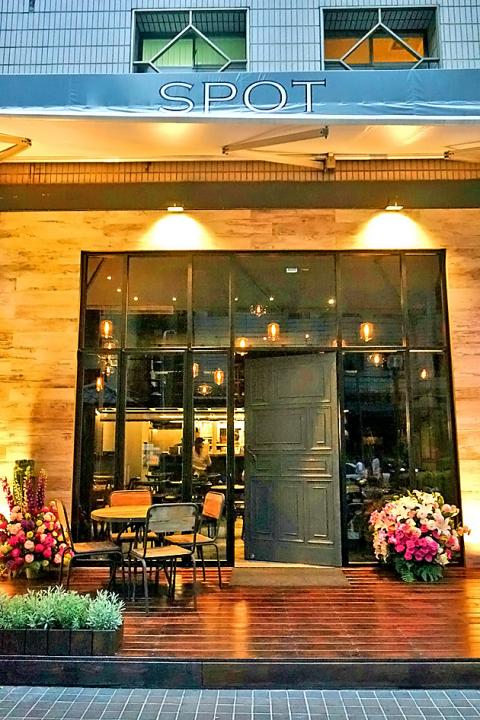
Photo: Dana Ter, Taipei Times
“When we opened Spot, our neighbors kept looking our way, and we were like, ‘don’t worry, we’re not opening another pasta shop,’” Wang says, alluding to the dozens of pasta shops in the Zhongxiao Dunhua (忠孝敦化) area where Spot is located.
The interior of Spot, which evokes a warehouse chic vibe, reflects this unapologetic attitude. Wooden chairs and tables with plush gray cushions add some warmth to the metal rails and mirrors on the mezzanine floor. Lamps dangle from ceiling chains, illuminating the restaurant like lanterns afloat in a night sky.
Wang adds that his goal is to keep the food as authentic as possible. In order to do so, he recruited Taiwanese-American chef Austin Hu (胡正威). Hu, who owns Madison restaurant in Shanghai, has been cooking New American cuisine his entire career. He trained at Gramercy Tavern in New York, where he learned his crazy customer service ethic.
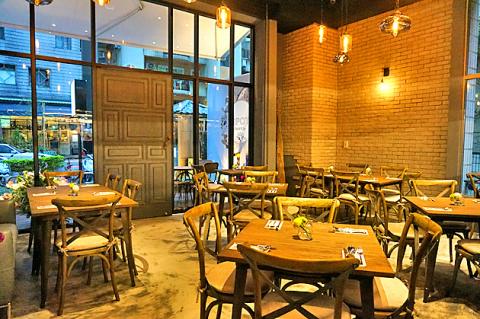
Photo: Dana Ter, Taipei Times
“People in New York know food,” Hu says. “They know what medium well is and they are assholes about it, but they’re often right.”
It’s up to the third member of the team, Taiwanese-Jordanian Khaled Abu Elsamid (艾立德), to ensure that the food at Spot maintains its high standard. Elsamid grows herbs like cilantro, chives, thyme and parsley in hydroponic rooftop farms around Taipei, some of which he brings to Spot to use in their dishes.
Thanks to Elsamid’s sourcing, Spot’s selling point is their garnishing and sauces. Whether it is spicy, tangy or savory, all the dishes have a kick to them. The smoked salmon carpaccio (NT$180) is a solid appetizer to begin with. Neither too dry nor too moist, the thinly-sliced salmon served with delicately cut cucumber is a savory seafood lover’s delight. The fried capers, dills and tiny traces of radish make for aromatic garnishing, and they complement well with the smoother textures of the salmon and cucumber. Yet it’s the citrusy yuzu cream, made from yuzu plant, which ties all the flavors together.
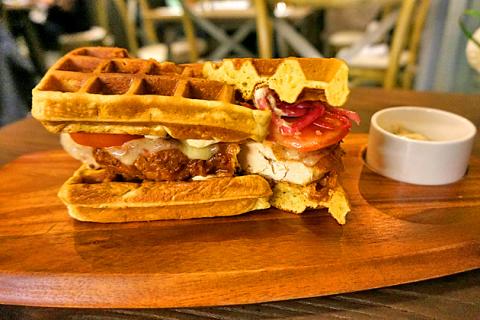
Photo: Dana Ter, Taipei Times
Citrus fruits and savory garnishing seems to be a gastronomical formula that works well at Spot. The torched sashimi (NT$295) is another appetizer that harmoniously blends both elements. Slightly burnt on the outside, warm and soft on the inside, the fresh cobia sashimi is paired with candied ginger crisps, cilantro, micro purple carrot shoots and thin slices of grapefruit. Washed over with a mild vinaigrette sauce, the dish tastes as suave as it looks.
For those seeking a classic American brunch staple, the smoked salmon benedict (NT$295) is a fine choice. Buried under layers of poached egg and runny lemon hollandaise sauce, the salmon itself is only mildly discernable, but it doesn’t matter because the rest of the composition is quite exquisite. The English muffin is warm and toasty, the hollandaise sauce has a rich, silky texture and the sprinkling of fried capers and dill add a pleasant savory kick.
The menu at Spot is also very chicken-based. That being said, a good chicken dish to sample is the chicken wings (NT$180). Spicy and crispy, the wings pair well with home-picked celery leaves. Buttery, pungent and piquant all at the same time, it’s the homemade sriracha sauce mixed with blue cheese sauce that distinguishes Spot’s chicken wings from those served in other restaurants.
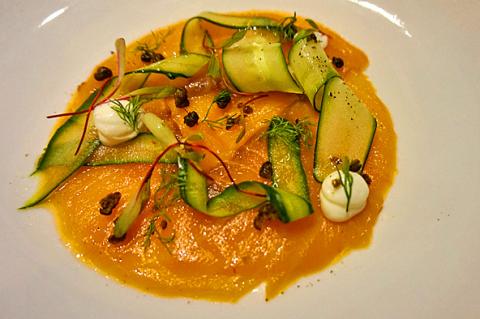
Photo: Dana Ter, Taipei Times
If the spiciness is too much to handle, the pan-roasted chicken (NT$475) is a fine alternative. Served as a half chicken breast and thigh over mashed potatoes and gravy with wilted Chinese kale buried underneath, this hearty concoction is not for the faint-hearted. Like most of Spot’s other dishes, the pan-roasted chicken, especially the skin, is a tad salty, but in an addictive kind of way. The warm gravy adds a nice touch to the palate, adding some runniness to an otherwise dry dish.
The most sinful entree is Spot’s fried chicken and waffle sandwich (NT$405). The spiced rubbed fried chicken is juicy and succulent, while the waffles boast a sweet flavor. Tomatoes and pickled onions add a zesty dimension, but it’s the salty, spicy chipotle aioli dipping sauce that really does it.
If you have room for dessert, the blueberry pancakes (NT$255) is a sweet way to top a savory evening. The homemade pancakes are soft and spongy, blending well with a food coma-inducing mixture of blueberry marmalade, powdered sugar and maple syrup.
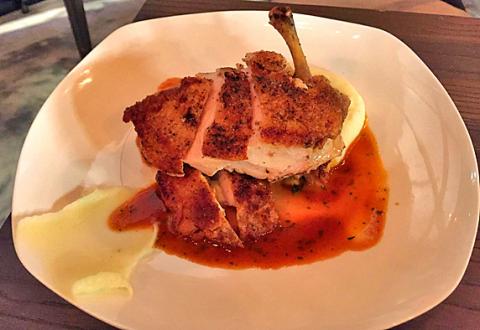
Photo: Dana Ter, Taipei Times
The spicy and savory flavors at Spot may not sit well with patrons who have a sweeter palate, but the restaurant is nevertheless a fine addition to Taipei’s modern dining scene. Wang says that during their various taste testing events, they received largely positive feedback from expat diners who made comments like “it feels like home.” Taiwanese on the other hand, had more criticisms like there were too many flavors or that the food wasn’t sweet enough.
Hu is optimistic though — “Taiwan by nature is an open-minded society, so we’re confident that there’s room for a New American restaurant to do well,” he says.
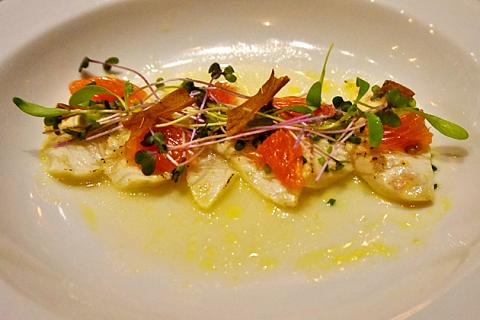
Photo: Dana Ter, Taipei Times

Photo: Dana Ter, Taipei Times

Taiwan’s English education system is being pulled apart by three opposing forces. Bilingual Nation 2030 pulls students toward English and global communication. Artificial Intelligence (AI) readiness pulls them toward digital judgment, verification and AI-mediated work. But Taiwan’s old exam culture pulls them back toward memorization, grammar drills, timed reading and correct answers. If the education system keeps using old exams to define success, it risks producing graduates who are neither genuinely bilingual nor genuinely AI-ready, but trained for tasks machines can already perform. The first force is Bilingual Nation 2030. Launched in 2018, the policy aimed to “help Taiwan’s workforce connect
It seems every few days one bumps into one of those “real man” comments in which Taiwan is urged to “face reality” or similar, and “make a deal,” with the speaker implying that soon it will be too late. “Deal” advocates always present themselves as having a superior grip on reality, and the manly ability to make the “hard choice.” Their testosterone-laden language often echoes that of Taiwan sellout advocates. Note that such commentary always specifies a process (“make a deal, work with, make progress”), never the end state of what occupation by a violent authoritarian colonialist state will entail. In
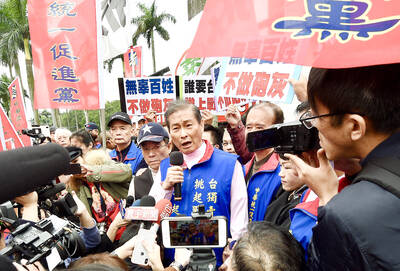
There are shadowy cabals plotting to sell out Taiwan to be annexed by China, by invasion if necessary. Fortunately, they are buffoons. In 2019, former Bamboo Union gangster and founder of the China Unification Promotion Party (CUPP), Chang An-le (張安樂, colorfully known as “White Wolf”), led a protest at the Legislative Yuan against comments made by then-premier Su Tseng-chang (蘇貞昌) that in the event of an attack by China, he would never surrender, but would protect the nation by fighting to the end, even if he only had a broom. Chang had party members bring a wooden casket that they
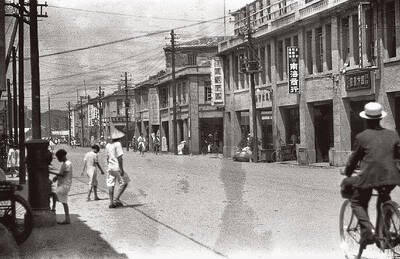
June 1 to June 7 "If all Taiwanese were as afraid of dying as you, then what would happen?” Physician Shih Chiang-nan (施江南) reportedly said this to his wife Chen Chiao-tung (陳焦桐) after she urged him to stop intervening on behalf of Taiwanese soldiers stranded overseas after serving in the Japanese Army during World War II. Shih had clashed with high-ranking officials over the issue, engaged in several heated arguments with Taiwan governor-general Chen Yi (陳儀) and allegedly shouted at general Ko Yuan-fen (柯遠芬), chief of staff of the Taiwan Garrison Command, over


 RSS
RSS