


If you’re bored with sushi and sashimi, then a trip to Miyazaki (宮崎懷石創意料亭) might revive your enthusiasm for Japanese fare.
Part of the Mandarin name of this Zhongshan North Road (中山北路) restaurant translates as “pavilion for creative cuisine” (創意料亭). While not exactly a daring culinary adventure, Miyazaki is worth visiting if you’re in the mood for Japanese with a twist. There is no a la carte menu, only set meals of between six to 10 courses, and the emphasis is on fresh ingredients.
This explains the high prices. Miyazaki’s deluxe set dinners for one person range from NT$1,200 to NT$2,500, which includes expensive seafood items such as bluefin tuna sashimi, king crab and lobster.
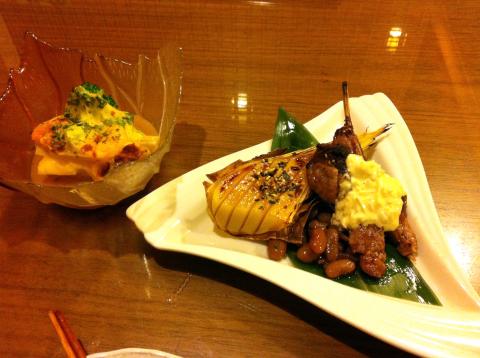
Photo: David Chen, Taipei Times
I wasn’t keen on spending that much, so I tried the “refined” set (雅套餐, NT$880), a pared down version of the above in terms of ingredients. The waitstaff will take general requests — for example I asked to not have any dishes with pork. Vegetarian options are also welcome.
Things got off to a nice start with a trio of bite-sized appetizers that were savory and sweet: a finger-sized piece of crab wrapped in an impossibly thin slice of pickled radish, smoked duck topped with julienned apple and grilled chicken paired with a chunk of candied carrot.
Next arrived a plate of fresh sashimi — two slices each of salmon, swordfish and mackerel, plus a raw shrimp — on a bed of ice. The quality and freshness were apparent (all of it melt-in-your-mouth good) and justified the price of the entire meal. And I loved the house wasabi, which was blended with raw ginger.
At this point, I wondered if something lighter would arrive, like a fresh salad, but that never happened. The dishes only got richer.
The sushi rolls looked run-of-the-mill until I took the first bite. Along with the requisite cucumber and egg, one roll was filled with grilled chicken, the other with grilled tuna. Garnished with a generous dab of sweet, creamy mayonnaise, these rolls were full of soul-food goodness.
The hand roll sushi, which I was instructed to eat right away, was equally pleasing. There was none of the usual shredded cabbage and asparagus here, but rather rice, mayonnaise and an unusual and delicious ingredient: thin crispy strips of burdock (牛蒡), a root vegetable, fried in a tempura batter.
Then came the main course dishes: grilled lamb chop, with a dollop of mayonnaise and raw onion, with a side of sweet red beans and grilled bamboo, and a separate dish of shrimp, asparagus and broccoli on a bed of radish with melted cheese on top.
The lamb chop was perfectly tender and flavorful, and went surprisingly well with the sweet beans and mayonnaise.
The other dish, however, was a spectacular failure and showed just how wrong “creative cuisine” can sometimes be. The cheese looked and tasted like the processed American variety, and its gooey mess ruined the taste of the other ingredients.
However, this cheesy gaffe was a relatively small blemish on the meal. I was already full at this point, but did my best to enjoy the final dishes, a bubbling pot of two fresh scallops, steeped in a buttery broth with mushroom, okra, baby corn and pumpkin, and a bowl of restorative miso soup.
The most economical way to enjoy dinner at Miyazaki is to visit with a larger party. Set meals are NT$2,800 for four and NT$5,800 for nine persons. Lunch set meals range from NT$280 to NT$450.
The atmosphere was lukewarm sitting in the restaurant’s upstairs, which seems to lack the charm of the first floor, where you can sit at the bar and watch the chef and owner Wu Ming-hui (吳明輝) at work.
Sake and beer aren’t on the menu but are available on request. Regulars often bring their own — the shelves behind the sushi bar on the first floor are full of bottles of scotch and wine, marked with customers’ names.

Taiwan’s English education system is being pulled apart by three opposing forces. Bilingual Nation 2030 pulls students toward English and global communication. Artificial Intelligence (AI) readiness pulls them toward digital judgment, verification and AI-mediated work. But Taiwan’s old exam culture pulls them back toward memorization, grammar drills, timed reading and correct answers. If the education system keeps using old exams to define success, it risks producing graduates who are neither genuinely bilingual nor genuinely AI-ready, but trained for tasks machines can already perform. The first force is Bilingual Nation 2030. Launched in 2018, the policy aimed to “help Taiwan’s workforce connect
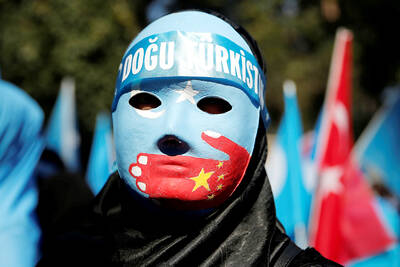
It seems every few days one bumps into one of those “real man” comments in which Taiwan is urged to “face reality” or similar, and “make a deal,” with the speaker implying that soon it will be too late. “Deal” advocates always present themselves as having a superior grip on reality, and the manly ability to make the “hard choice.” Their testosterone-laden language often echoes that of Taiwan sellout advocates. Note that such commentary always specifies a process (“make a deal, work with, make progress”), never the end state of what occupation by a violent authoritarian colonialist state will entail. In
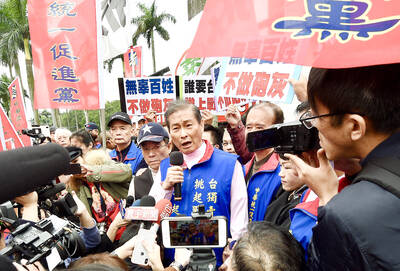
There are shadowy cabals plotting to sell out Taiwan to be annexed by China, by invasion if necessary. Fortunately, they are buffoons. In 2019, former Bamboo Union gangster and founder of the China Unification Promotion Party (CUPP), Chang An-le (張安樂, colorfully known as “White Wolf”), led a protest at the Legislative Yuan against comments made by then-premier Su Tseng-chang (蘇貞昌) that in the event of an attack by China, he would never surrender, but would protect the nation by fighting to the end, even if he only had a broom. Chang had party members bring a wooden casket that they
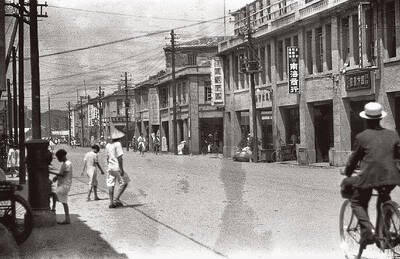
June 1 to June 7 "If all Taiwanese were as afraid of dying as you, then what would happen?” Physician Shih Chiang-nan (施江南) reportedly said this to his wife Chen Chiao-tung (陳焦桐) after she urged him to stop intervening on behalf of Taiwanese soldiers stranded overseas after serving in the Japanese Army during World War II. Shih had clashed with high-ranking officials over the issue, engaged in several heated arguments with Taiwan governor-general Chen Yi (陳儀) and allegedly shouted at general Ko Yuan-fen (柯遠芬), chief of staff of the Taiwan Garrison Command, over


 RSS
RSS