


The cult of the truffle has arrived in Taiwan with La Maison de la Truffe, a branch of the renowned French restaurant that opened in Taipei earlier this year.
This high-end brand was brought to Taiwan by food and beverage entrepreneur Bob Yeh (葉兩傳), who was also behind the opening of several branches of the popular French bakery chain Paul.
La Maison de la Truffe is not likely to draw the same kind of lunchtime crowds that gather at Paul, nor does it intend to.
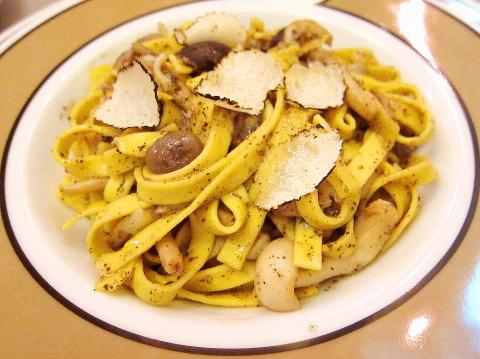
Photo: David Chen, Taipei Times
The restaurant presents itself as the pinnacle of fine dining, with its location at the boutique branch of Sogo Department Store on Dunhua South Road (敦化南路) and its high prices — a five-course set meal for one costs NT$3,880.
To put it crudely, a truffle is just a mushroom that grows underground. But the rarity and mystique of these fungi, especially the European varieties, puts them in a class with other expensive foods such as caviar and oysters.
Truffles are served as a garnish to a meal, often in thin shavings or slices on top of a dish or mixed in a sauce.
Except for desserts, truffles are served with every item on La Maison de la Truffe’s menu: Main courses include grilled lobster with seasonal truffle (NT$2,280), beef filet steak with seasonal truffle mashed potatoes (NT$1,580) or the sea bass with sliced potato and black truffle cream sauce (NT$1,180).
Both my dining companion and I were trying truffles for the first time at La Maison de la Truffe. We left unimpressed.
Not that the food was bad — our meals appeared to have been made with great care and quality ingredients — but nothing in particular made us go “wow.”
Under our waiter’s recommendation, I ordered the tagliatelle with wild mushroom and shaved truffle (NT$880). Truffles are often described as tasting similar to a mushroom and having a pungent and dark flavor. I found that to be true with this dish, and also found the white truffle shavings that garnished the pasta to have a mild garlicky flavor.
My dining companion ordered the vegetarian set menu (NT$1,800 per person), a four-course meal that included risotto with seasonal truffle (NT$980 a la carte) as the main dish. Even though the menu said the risotto was made with Arborio rice, it lacked a certain creaminess, at least judging from the several bites I had. In terms of flavor, it was similar to the tagliatelle: dark mushroom-like tones, subtle.
Perhaps it was too subtle for my dining companion, who wondered if she was missing something: “Maybe I just don’t get it.” I started to wonder the same thing.
As our waitress brought each dish to the table, she explained the ingredients in a rushed manner, as if she were spouting off memorized speeches. Or maybe she was afraid of actually getting into a conversation about the food. But I was grateful for the instructions offered for one of my appetizers, the black truffle wild mushroom chicken soup (NT$450). I was told to enjoy the taste of the soup before breaking the egg yolk, which was covered in a crispy deep-fried coating.
To be fair, the overall service was very good. As you arrive, the waiters unfold your napkin and place it on your lap. If you have a bag or a purse, they bring another plush chair for it to rest upon (definitely a worthy resting place for your LV or Chanel bag). We were disappointed when dessert arrived — we were expecting “wild berries with raspberry sauce” as printed in the menu, but got a plate of wax apple and kiwi instead. The waitstaff failed to inform us of the change; when we told the manager, she offered us another dessert at no additional charge without blinking an eye.
The restaurant, which sports a modern decor with a classical touch and a striking chandelier that hangs several stories high, is located in a cavernous open square inside the Sogo building. Look up and you can see boutique name brands emblazoned above the shop windows. This might appeal to some truffle aficionados, but those looking for a warm and intimate dining experience might come away disappointed.

Taiwan’s English education system is being pulled apart by three opposing forces. Bilingual Nation 2030 pulls students toward English and global communication. Artificial Intelligence (AI) readiness pulls them toward digital judgment, verification and AI-mediated work. But Taiwan’s old exam culture pulls them back toward memorization, grammar drills, timed reading and correct answers. If the education system keeps using old exams to define success, it risks producing graduates who are neither genuinely bilingual nor genuinely AI-ready, but trained for tasks machines can already perform. The first force is Bilingual Nation 2030. Launched in 2018, the policy aimed to “help Taiwan’s workforce connect

It seems every few days one bumps into one of those “real man” comments in which Taiwan is urged to “face reality” or similar, and “make a deal,” with the speaker implying that soon it will be too late. “Deal” advocates always present themselves as having a superior grip on reality, and the manly ability to make the “hard choice.” Their testosterone-laden language often echoes that of Taiwan sellout advocates. Note that such commentary always specifies a process (“make a deal, work with, make progress”), never the end state of what occupation by a violent authoritarian colonialist state will entail. In
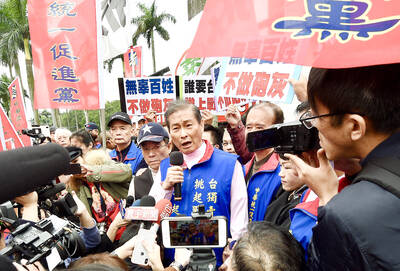
There are shadowy cabals plotting to sell out Taiwan to be annexed by China, by invasion if necessary. Fortunately, they are buffoons. In 2019, former Bamboo Union gangster and founder of the China Unification Promotion Party (CUPP), Chang An-le (張安樂, colorfully known as “White Wolf”), led a protest at the Legislative Yuan against comments made by then-premier Su Tseng-chang (蘇貞昌) that in the event of an attack by China, he would never surrender, but would protect the nation by fighting to the end, even if he only had a broom. Chang had party members bring a wooden casket that they
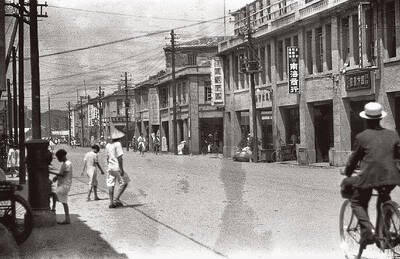
June 1 to June 7 "If all Taiwanese were as afraid of dying as you, then what would happen?” Physician Shih Chiang-nan (施江南) reportedly said this to his wife Chen Chiao-tung (陳焦桐) after she urged him to stop intervening on behalf of Taiwanese soldiers stranded overseas after serving in the Japanese Army during World War II. Shih had clashed with high-ranking officials over the issue, engaged in several heated arguments with Taiwan governor-general Chen Yi (陳儀) and allegedly shouted at general Ko Yuan-fen (柯遠芬), chief of staff of the Taiwan Garrison Command, over


 RSS
RSS