


Big-name stars dominated Saturday evening’s Golden Melody Awards (金曲獎), with Jay Chou (周杰倫) taking home top honors in the Best Mandarin Album and Best Male Mandarin Singer categories for his 10th album, The Era (跨時代).
“I wrote the song Granny (外婆) to criticize the Golden Melody Awards,” the Mando-pop king said after he was crowned Best Singer for the second time. “Now I take it back. The judges are different each year. I like this year’s judges.”
Chou first won the title in 2009.
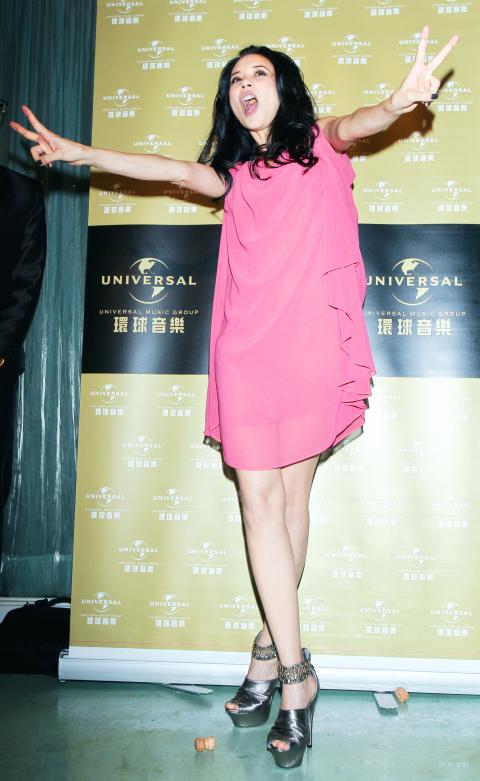
Photo: Taipei Times
But Karen Mok (莫文蔚), another Golden Melody regular, stole the show with an announcement as she picked up her second trophy in the Best Female Mandarin Singer category.
“The more [Golden Melody awards] I get the more I want. I am addicted,” the diva said. “And I’m getting married. I will marry my first love, who I met when I was 17, by the end of this year.”
Forty-one-year old Mok said the lucky man is a German and the wedding is scheduled to be held in Italy, where they first met.
The 22nd Golden Melody Awards took place at Taipei Arena (台北小巨蛋) on Saturday night, with pop music awards handed out in a total of 24 categories chosen from 123 nominees by an 85-member panel of judges after three rounds of jury meetings.
Apart from Chou and Mok, veteran musician Jonathan Lee (李宗盛) was the evening’s biggest winner, picking up Best Song of the Year, Best Composer and Best Lyricist for his Jonathan’s Song (給自己的歌) on Superband’s (縱貫線) Go South (南下專線).
Meanwhile, Jody Chiang (江蕙), the uncontested reigning queen of Taiwanese-language music, walked away with her 11th Golden Melody trophy as her When I Wanted to Marry (當時欲嫁) was named the Best Taiwanese-language Album.
A few new faces also fared well. Twenty-four-year-old William Wei Li-an (韋禮安), aka WeiBird, garnered nominations in four categories and took home the top honor in the Best Newcomer category, beating out strong contenders including Yen-j (嚴爵) and Matzka (瑪斯卡樂團).
Currently serving his military duty, the young Wei burst onto the music scene in 2006 when he won the first season of the now defunct TV talent show Happy Sunday (快樂星期天). After years of honing his skills at live house venues and writing songs for other pop singers, local media is billing him as the next big thing.
The hotly contested Best Band award went to Matzka, an Aboriginal four-piece group from Taitung with reggae-influenced grooves. The band has quickly gained popularity since its inception in 2009.
“This year we didn’t have nominations in musical categories. Hopefully next time we will,” lead singer Matzka of the Paiwan (排灣) tribe said backstage. “Now we just want to go home and spend some time with our families. Music has taken up too much of our time.”
Amis musician Suming received the Best Aboriginal-language Album award from President Ma Ying-jeou (馬英九). “Though I am an Aborigine, I speak Mandarin,” the apparently excited and nervous musician said to Ma on stage. “Aborigines are blue chips, please invest in us.”
Composing himself a little backstage, Suming said that he was surprised to win. “There are Japan and Korea fevers, and I hope one day there will be Aboriginal fever,” he told local media.
The evening had no shortage of surprise winners. Japanese singer Senda Aisa (千田愛紗) appeared in shock when her pop group Da Mouth (大嘴巴) took a second trophy in the Best Singing Group category, beating out strong contender S.H.E.
Up-and-coming Huang Wen-hsing (黃文星) got misty-eyed when he learned that he beat out veterans Chris Hung (洪榮宏) and Wang Shih-hsien (王識賢) to take home the Best Male Taiwanese Singer award.
In a big disappointment for two-time nominee and expected winner Tai Shih-yao (戴士堯), both the Best Hakka Singer and Best Hakka Album awards went to seasoned music producer Luan Ke-yung (欒克勇).
“I am very touched right now,” Luan said. “It is hard for a non-Hakka musician to make Hakka music. It took me three months to write a song because I need to look up one word after another in a Hakka dictionary.”
The recipient of this year’s Special Contribution Award was 84-year-old Huang Min (黃敏, real name Huang Tung-kun, 黃東焜), a prominent Taiwanese songwriter and producer who has written over 1,000 songs in Mandarin and Hoklo (commonly known as Taiwanese) and produced more than 600 albums during his 50-year career. He is best known for writing music for Taiwanese pop singers such as Chris Hung and Jody Chiang during the 1980s when Hoklo-language pop music enjoyed a comeback after years of tight government control.
As for the award ceremony itself, the drawn-out event went on until midnight and was jammed with nine performances, highlighted by Chang Hui-mei (張惠妹, aka A-mei) and Samingad (紀曉君). The crosstalk (相聲) gig by comedians Feng Yi-kang (馮翊綱) and Sung Shao-ching (宋少卿) quickly became awkward when the two performers used derogatory terms in what they thought was a humorous manner. They called Matzka a huan-a (番仔) or “savage” band, and said that the group AKB48, a guest performer from Japan, came from a fanbang (番邦), or “savage country.”
With Ma attending the event as an award presenter and giving a short speech, this year’s ceremony felt more political than usual. Moreover, co-host Jacky Wu (吳宗憲) kept putting in good words for the Government Information Office (GIO), which funded the event, after taking heat for criticizing the GIO’s subsidy policy last week.
22nd Golden Melody Awards winners
■ Best Song of the Year
Jonathan’s Song (給自己的歌) from Go South (南下專線)
■ Best Mandarin Album
The Era (跨時代) by Jay Chou (周杰倫)
■ Best Taiwanese-language Album
When I Wanted to Marry (當時欲嫁) by Jody Chiang (江蕙)
■ Best Hakka Album
One and Only (獨1無2 反串客) by Luan Ke-yung (欒克勇)
■ Best Aboriginal-language Album
Self-titled/Debut Original Album (舒米恩首張個人創作專輯) by Suming
■ Best Music Video
Lonely Is Fine (寂寞寂寞就好) from Hebe Tian’s (田馥甄) To Hebe (信者得愛) Director: Hsu Yun-hsuan (徐筠軒)
■ Best Composer
Jonathan Lee (李宗盛) with Superband (縱貫線) for Jonathan’s Song (給自己的歌) from Go South (南下專線)
■ Best Lyricist
Jonathan Lee (李宗盛) with Superband (縱貫線) for Jonathan’s Song (給自己的歌) from Go South (南下專線)
■ Best Arrangement
Again (蔡科俊) for Free Instructional Video (免費教學錄影帶) from The Era (跨時代)
■ Best Album Producer
Eric Hung (洪敬堯) for Love Flower (戀花)
■ Best Single Producer
Bing Wang (王治平) for Love! from To Hebe
■ Best Male Mandarin Singer
Jay Chou (周杰倫) for The Era (跨時代)
■ Best Male Taiwanese Singer
Huang Wen-hsing (黃文星) for Heaven and Earth (天地)
■ Best Female Mandarin Singer
Karen Mok (莫文蔚) for Baby (寶貝)
■ Best Female Taiwanese Singer
Hung Fei (黃妃) for Miss You Endlessly (相思聲聲)
■ Best Hakka Singer
Luan Ke-yung (欒克勇) for One and Only (獨1無2反串客)
■ Best Aboriginal Singer
Negrenger (林廣財) for 100 Years Paiwan, Magnificent Reconstruction, Paiwanese Leader Negrenger (百年排灣.風華再現.排灣族頭目林廣財專輯)
■ Best Band
Matzka (瑪斯卡樂團) for Matzka
■ Best Singing Group
Da Mouth (大嘴巴) for One Two Three (万凸3)
■ Best Newcomer
William Wei Li-an (韋禮安) for Wei Li-an Debut Eponymous Original Album (韋禮安首張同名全創作專輯)
■ Best Instrumental Album
Timeless Fusion Party (無限融合黨), eponymous
■ Best Instrumental Album Producer
Summer Lei (雷光夏) and Ho Zhi-jian (侯志堅) for the Taipei Exchanges soundtrack (第36個故事電影原聲音樂大碟她的改變)
■ Best Instrumental Composer
Ho Zhi-jian (侯志堅) for This is City (這就是城市)
■ Best Recording Package
Liu Yueh-te (劉悅德) for Kiss Your Eyes
■ Special Contribution Award
Huang Min (黃敏)
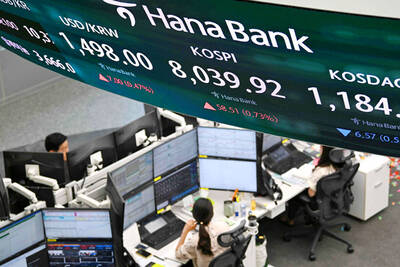
Taiwan’s overtaking of South Korea in GDP per capita is not a temporary anomaly, but the result of deeper structural problems in the South Korean economy says Chang Young-chul, the former CEO of Korea Asset Management Corp. Chang says that while it reflects Taiwan’s own gains, it also highlights weakening growth momentum in South Korea. As design and foundry capabilities become more important in the AI era, Seoul risks losing competitiveness if it relies too heavily on memory chips. IMF forecasts showing Taiwan widening its lead over South Korea have fueled debate in Seoul over memory chip dependence, industrial policy and

And so, in the wake of US President Donald Trump’s trip to the People’s Republic of China (PRC), all the experts on the Strait of Hormuz suddenly became experts on US-China-Taiwan relations. The Internet has certainly expanded human knowledge. Lots of these sudden experts made noise this week about Trump’s words after the meeting with PRC dictator Xi Jin-ping (習近平). Trump is going to sell out Taiwan! Longtime Taiwan commentator J. Michael Cole summed the situation up neatly in the Guardian: “We need to keep in mind that he has a tendency to say many things — sometimes contradicting himself within
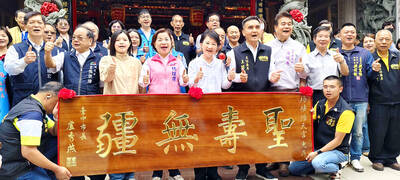
There is considerable frustration and confusion among many, both in Taiwan and abroad — including in Washington — as to why the Chinese Nationalist Party (KMT) seems so dead set on using their legislative leverage to slash defense spending and disrupt the ability of the ruling Democratic Progressive Party (DPP) administration to function. Are they pawns of the Chinese Communist Party (CCP)? Are they traitors? In reality, there are multiple reasons. In the first column in this series on this subject, “Donovan’s Deep Dives: How and why the TPP and KMT help Beijing” (Sat May 16, page 12), we examined three
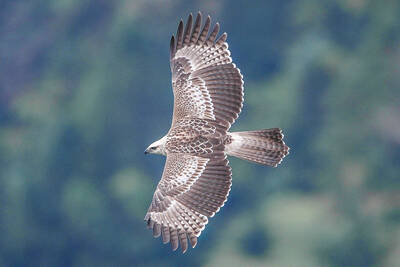
It took 12 years and months of standing in the same mountain location for director Liang Chieh-te (梁皆得) to capture a few seconds of footage: Taiwan’s largest resident raptor locking talons with its mate and spinning through the air in a courtship ritual. With only about 1,000 left in the wild and very short flight windows, the mountain hawk-eagle remains among Taiwan’s most elusive birds. The species generally produces only one offspring per year. Using forest cameras, the film crew and research teams document the arduous process the monogamous pairs go through for the chick to hatch and grow up, weathering


 RSS
RSS