


To some people here, Dean Ackin, 38, with his boyish face, is an inspiration of entrepreneurship, a bearer of this country’s evolving culture. To others, he is a threat to this nation’s most beloved social and cultural treasure: Carnival.
Ackin runs one of the country’s most popular Carnival bands, the groups of people who don costumes and masquerade — or play Mas, as locals call it — in the raucous annual two-day street parade. The roughly 5,000 spots available in Ackin’s band, Tribe, sell out every year almost as fast as they go on sale. Demand has been so high since he started Tribe in 2005 that Ackin started a second band this year.
But some say Ackin and others like him, who have in recent years spun profitable, year-round businesses out of organizing these bands, threaten the existence of Carnival as Trinidadians know it.
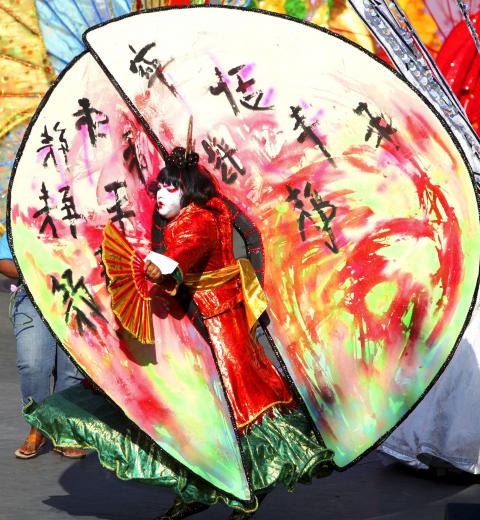
photos: Agencies
By shunning the conservative, traditional costumes for cheaper, skimpier outfits that are sometimes produced outside of Trinidad, these new bands, critics say, are distorting their forebears’ creation and sending work elsewhere at a time when the government and others are trying to turn Trinidadian-style Carnival into a more profitable and exportable industry.
“We call it two-piece and fries, the bikini and the bras,” said Stephen Derek, a traditional costume maker, referring to the skimpy female costumes that have become a staple of the new bands. “The costume comes like a fast food. To them, the bottom line is profit. It has nothing to do about country or culture anymore.”
The entrepreneurial bandleaders counter that they are part of a natural evolution, merely offering what people want.
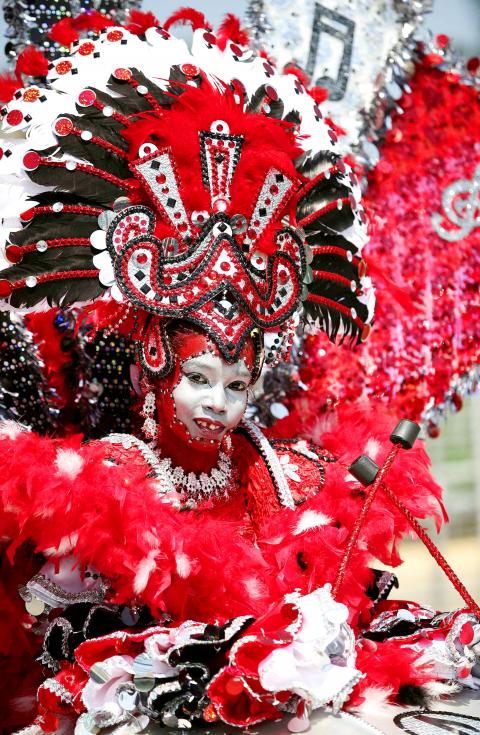
photos: Agencies
“If you really look at those people who play Mas with the younger bands, or if you talk to a visitor abroad and say, ‘Hey, have you ever heard of Trinidad Carnival? What band would you play with?’ they would call Tribe or they would call one of the younger bands,” Ackin said. “That says we are reaching out further than the traditional bands. We are reaching out to the international market.”
With few exceptions, the 1.3 million people living on these twin West Indian islands believe that they do Carnival better than anyone in the world. But the generational clash has raised questions over how today’s Carnival is shaping the country.
Is the reliance on mass-produced bikinis — a far cry from the elaborate, hand-crafted costumes Trinidadians had grown accustomed to — stifling the creative works that have been the hallmark of traditional Carnival, which the government of Prime Minister Kamla Persad-Bissessar has been pressing to revive since she took office last year?
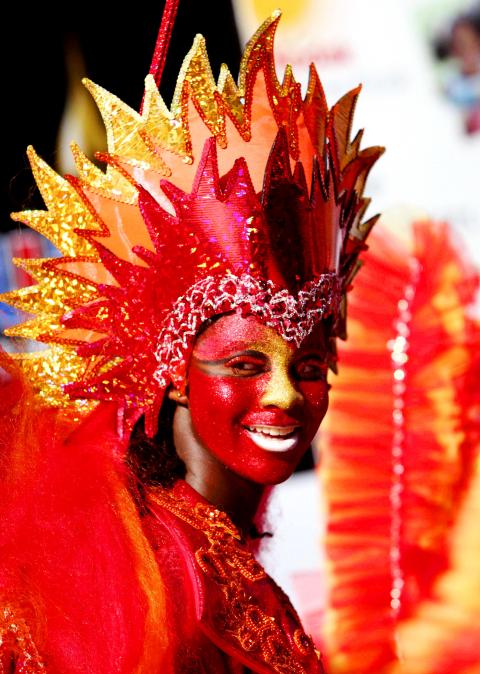
photos: Agencies
Or does it reflect the country’s new energy, representative of a push beyond Trinidad’s reputation for complacency in developing revenue streams beyond oil production?
Carnival festivities here begin in earnest right after Christmas, but the signature parade — or Mas, short for masquerade — was held on Monday and Tuesday, right before Ash Wednesday, adhering to the Catholic tradition of one final period of release before the start of Lent.
The tradition here started with the island’s 19th-century slave masters, and was carried on by the African slaves after they were freed in 1834. To make the custom their own, former slaves took to burning sugar cane, to symbolize their freedom from the plantations here, and in later years residents began wearing well-cloaked costumes that both portrayed folkloric characters from Africa and mimicked their colonizers .Now the event attracts about 40,000 visitors to Trinidad annually, nearly half of them from the US. Estimates on the economic windfall from Carnival vary widely, from just over US$27 million to hundreds of millions.
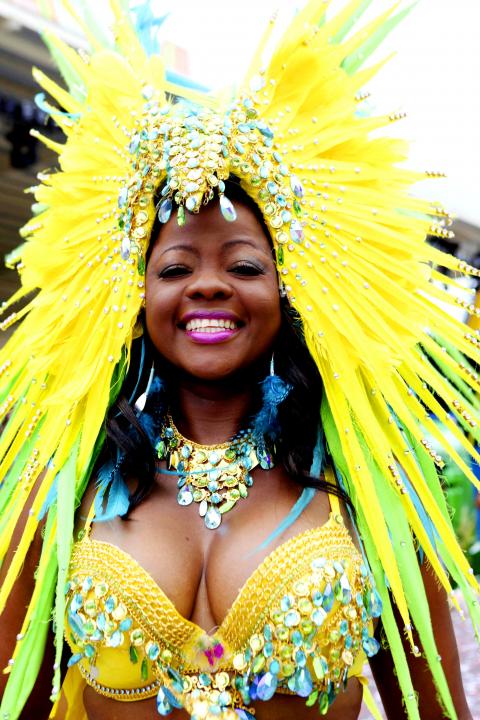
photos: Agencies
In parades held throughout the country, as many as 300,000 people march around trucks blasting soca music, according to government estimates. And while Brazil’s Carnival may dwarf the celebrations here, organizers are quick to point out that their numbers are comparable for an island of this size. What distinguishes Carnival here is an emphasis on getting people — even tourists — to purchase a costume from a band for as little as US$200 and march in the parade. Several bands like Tribe have taken it a step further, charging between US$400 and US$1,000 for a whirlwind experience that includes an open bar for both days, meals, security and shuttle service.
Ackin said that Tribe, which has around 5,000 masqueraders each year, usually has a waiting list 2,000 people long. Several celebrities have also marched with Tribe, including the actor Idris Elba and the billionaire Richard Branson.
His new band, Bliss, had just over 2,000 masqueraders this year and a long waiting list as well, he said. Overall, the market to pay hundreds of US dollars to join a band, even in a tight economy, seems to be growing.
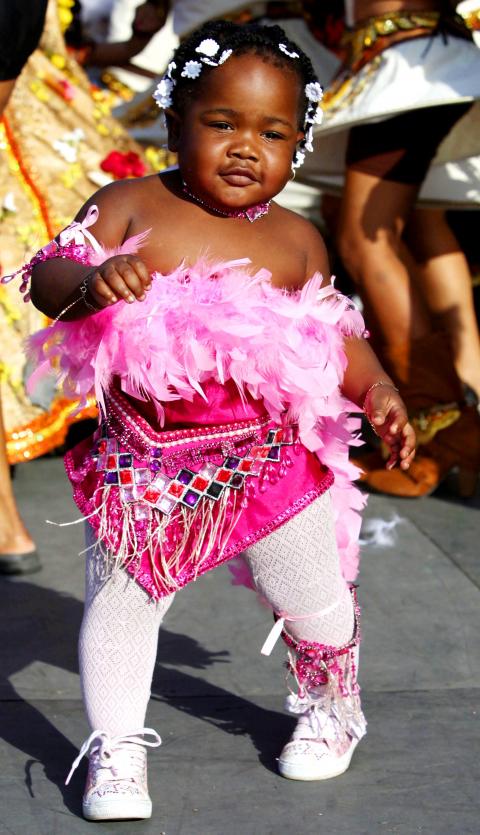
photos: Agencies
Ackin, who drives a Mercedes and has emerged as quasi-celebrity here, spent years working in a bank and running a women’s fashion boutique. But he and his wife Monique, a co-bandleader, got into the Carnival business by creating a band in 2000 for J’Ouvert, the early-morning parade that kicks off Carnival. His company now throws five parties around Carnival time here. It also throws parties at Carnivals in Miami, Washington and London, and has done a small section for a band in Barbados’ Carnival.
The transformation of Carnival bands into businesses has disrupted the social order in which bands consisted of friends getting together to hang out, make costumes, and eat and drink together, traditionalists said. “The designers or the bandleaders of those other bands call themselves designers and artists, but I think that is fraud,” said Brian Mac Farlane, whose band won large band of the year in each of the previous four years. “If you really, truly are a designer and artist, you’d be holding true to the art form and the culture.”
Indeed, Trinidad’s Carnival has started to resemble “Brazil in a lot of ways,” said Winston Peters, the government’s minister of arts and multiculturalism, “where you just have decorated bikinis and stuff with a headpiece. I can’t be against that because that’s what people want. At the same time, we don’t want the traditional Mas of our country to die.”
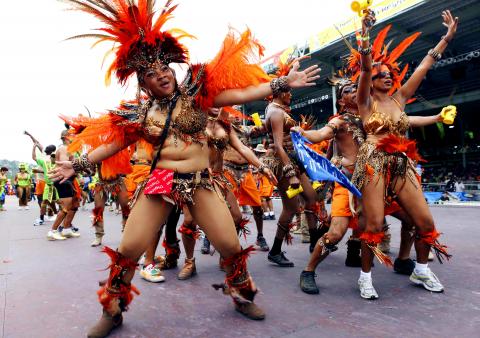
photos: Agencies
Perhaps the most contentious aspect of the bikini costumes is that many bands import some of them from China. Peters has proposed putting a 2,000 percent tax on imported costumes.
Ackin said that Tribe and Bliss imported about 20 percent of their costume pieces, a necessity to meet their demand and get high-quality production unavailable in Trinidad.
People on both sides of the argument seem to agree that Trinidad needs to better harness the skills of people in the Carnival business — from the artisans who make the costumes to the people who manage the bands — and the country’s resources to create an exportable industry.
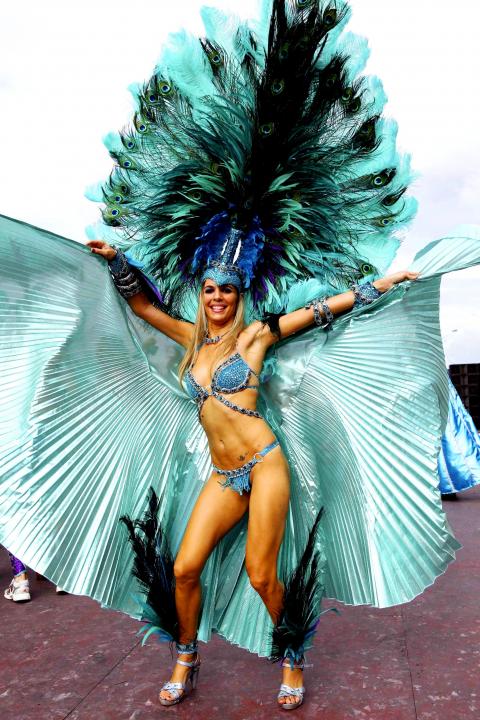
photos: Agencies
The government is considering increasing the prize money for the bands with the best costumes, and it has started a band with which anyone can march in a homemade costume. Those efforts come after the creation of a Mas Academy that teaches and certifies people in Carnival trades.
Derrick Lewis, who, along with his brother Dane, started a wildly popular band, Island People, in 2005, said it was important to find ways to marry the traditional Carnival with the new.
“I think popular culture will become culture,” said Lewis, 52. “The same that happened with hip-hop. I’ve seen Kanye West performing with full orchestral violins and stuff like that. I think we need to encourage the fusion of the traditional and the contemporary.”
Ajay Verma, a consultant gastroenterologist at Kettering general hospital in Northamptonshire, says our gut is a “complex machine.” “It is constantly providing us with the nutrition we need, initially to grow and develop, and then for us to survive, thrive and repair from injury and illness.” How can we keep it functioning well? Put simply: “Make sure what you put into it is balanced, and that you clear out its waste products adequately,” Verma says. “In a general gastroenterology clinic, the most common conditions we see are irritable bowel syndrome (IBS), gastroesophageal reflux disease, inflammatory bowel disease and constipation,” says Nisha

And so, in the wake of US President Donald Trump’s trip to the People’s Republic of China (PRC), all the experts on the Strait of Hormuz suddenly became experts on US-China-Taiwan relations. The Internet has certainly expanded human knowledge. Lots of these sudden experts made noise this week about Trump’s words after the meeting with PRC dictator Xi Jin-ping (習近平). Trump is going to sell out Taiwan! Longtime Taiwan commentator J. Michael Cole summed the situation up neatly in the Guardian: “We need to keep in mind that he has a tendency to say many things — sometimes contradicting himself within

Last week US President Donald Trump was asked by a reporter whether he would speak on the phone to the President of Taiwan. “l’ll speak to him. I speak to everybody. We have that situation very well in hand,” Trump said. This marked the second time in a couple of weeks he had said he would talk to the President of Taiwan. In 2016 he famously took a call from then-president Tsai Ing-wen (蔡英文), when he was president-elect. Despite warnings that the apocalypse was nigh because of a phone call, the world quickly forgot about the conversation between two democratically-elected presidents.
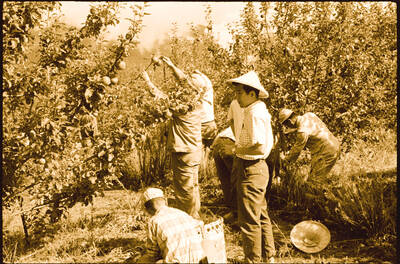
May 25 to May 31 Few believed that apples could be cultivated on a commercial scale in Taiwan’s high mountains. When horticulturalist Cheng Chao-hsiung (程兆熊) first proposed the idea in 1955, both American and Taiwanese colleagues dismissed it as implausible, arguing that temperate fruit could not be reliably grown on a subtropical island, especially on rugged terrain. However, it was this terrain in the Central Mountain Range where many Chinese Civil War veterans were resettled in the late 1950s. With limited job prospects and no family in Taiwan, they were placed on cooperative farms aimed toward self-sufficiency. Some say the conditions


 RSS
RSS