


Smile Taiwan (微笑台灣) celebrates a decade of spotlighting Taiwanese musicians tomorrow afternoon with an outdoor concert at Huashan 1914 Creative Park (華山1914).
This year’s lineup includes rock group Wonfu Jr (小旺福, formerly known as Wonfu), Pau-dull (陳建年, better known as Chen Jian-nian), Yan Yung-neng (嚴詠能) and Takaorun (打狗亂歌團) and Beautiful Haiyan (美麗心民謠). All the acts have been nominated for or won Golden Melody Awards (金曲獎).
The event was launched in 2002 by the publishers of Commonwealth Magazine (天下雜誌) as part of their 319 Townships (319鄉) program, which promotes tourism to off-the-beaten-path locations throughout the country.

PHOTO: TAIPEI TIMES
“We want to let Taiwan shine,” 319 Townships director Wang Sheng-feng (王聖鳳) says.
Smile Taiwan’s organizers look for groups that play lively, upbeat music.
“We want bands that are exciting, but at the same time we also look for ones that create a warm, welcoming atmosphere,” Wang says.
Wonfu Jr’s newest album, Flying to You, Flying to Me (飛向你飛向我), was inspired by the group’s 2009 visit to the Rock ’n’ Roll Camp for Girls in Portland, Oregon, where girls aged eight to 18 were encouraged to explore different styles of music ranging from heavy metal to country. After returning to Taiwan, the group added “Jr” to its name to pay tribute to the rocking youngsters. Released last month, Flying to You, Flying to Me is intended to expand the musical horizons of its young listeners, with tracks featuring unusual percussion instruments such as conga drums and tap dance shoes to create a playful sound.
In addition to being an award-winning singer and songwriter, Pau-dull also serves as a policeman in Taitung County. His music combines influences from American folk, blues and jazz with melodies from his Puyuma Aboriginal background.
Beautiful Haiyan’s repertoire also includes traditional Puyuma music, as well as contemporary Aboriginal songs sung in Mandarin.
A folk singer who performs mainly in Hoklo (commonly known as Taiwanese), Yan and his group Takaorun were the surprise winners of the best Taiwanese-language album award at last year’s Golden Melody Awards ceremony for Ta Yuan I Chia Nung Chu Lai (大員一家農出來).

Taiwan’s English education system is being pulled apart by three opposing forces. Bilingual Nation 2030 pulls students toward English and global communication. Artificial Intelligence (AI) readiness pulls them toward digital judgment, verification and AI-mediated work. But Taiwan’s old exam culture pulls them back toward memorization, grammar drills, timed reading and correct answers. If the education system keeps using old exams to define success, it risks producing graduates who are neither genuinely bilingual nor genuinely AI-ready, but trained for tasks machines can already perform. The first force is Bilingual Nation 2030. Launched in 2018, the policy aimed to “help Taiwan’s workforce connect
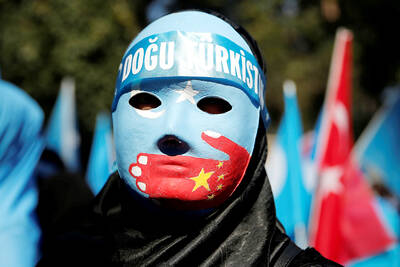
It seems every few days one bumps into one of those “real man” comments in which Taiwan is urged to “face reality” or similar, and “make a deal,” with the speaker implying that soon it will be too late. “Deal” advocates always present themselves as having a superior grip on reality, and the manly ability to make the “hard choice.” Their testosterone-laden language often echoes that of Taiwan sellout advocates. Note that such commentary always specifies a process (“make a deal, work with, make progress”), never the end state of what occupation by a violent authoritarian colonialist state will entail. In
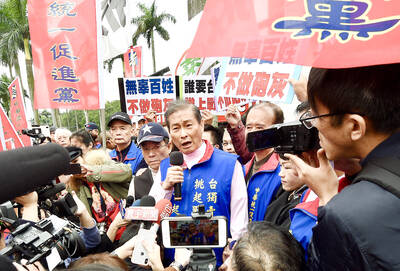
There are shadowy cabals plotting to sell out Taiwan to be annexed by China, by invasion if necessary. Fortunately, they are buffoons. In 2019, former Bamboo Union gangster and founder of the China Unification Promotion Party (CUPP), Chang An-le (張安樂, colorfully known as “White Wolf”), led a protest at the Legislative Yuan against comments made by then-premier Su Tseng-chang (蘇貞昌) that in the event of an attack by China, he would never surrender, but would protect the nation by fighting to the end, even if he only had a broom. Chang had party members bring a wooden casket that they
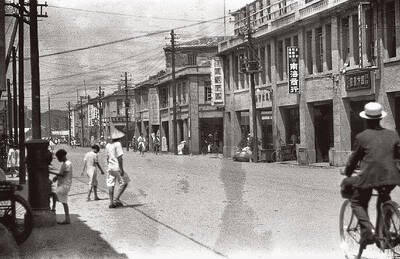
June 1 to June 7 "If all Taiwanese were as afraid of dying as you, then what would happen?” Physician Shih Chiang-nan (施江南) reportedly said this to his wife Chen Chiao-tung (陳焦桐) after she urged him to stop intervening on behalf of Taiwanese soldiers stranded overseas after serving in the Japanese Army during World War II. Shih had clashed with high-ranking officials over the issue, engaged in several heated arguments with Taiwan governor-general Chen Yi (陳儀) and allegedly shouted at general Ko Yuan-fen (柯遠芬), chief of staff of the Taiwan Garrison Command, over


 RSS
RSS