


Reggae just might find its way into Taiwan’s pop mainstream, thanks to Aboriginal singer-songwriter Matzka (瑪斯卡), who performs tonight at Riverside Live House (西門紅樓展演館).
The 28-year-old Taitung County native, who just released a debut CD, has been a word-of-mouth sensation since winning a government-sponsored songwriting contest several years ago.
In 2009, Matzka and his four-piece band won the top prize at the Ho-Hai-Yan Rock Festival’s (貢寮國際海洋音樂祭) annual battle of the bands contest, considered a stepping stone to fame for Taiwan’s best indie rock artists. They also landed a spot as the opening act for Guns N’ Roses’ concert in Taipei that same year.
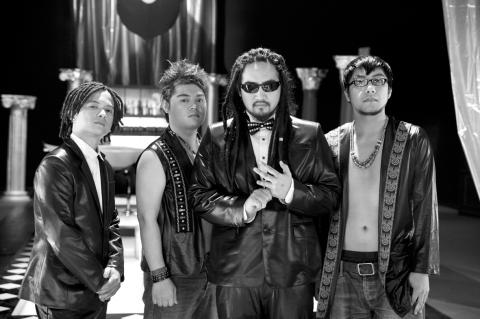
Photo courtesy of Arrival Music
Matzka has been seen in a handful of TV show appearances and several flashy music videos, including one for his signature song, Ma Do Va Do (Like a Dog, 像狗一樣) , the video for which has racked up more than 100,000 hits on YouTube.
Despite his shoulder-length dreadlocks and his band’s reggae-heavy grooves, Matzka insists that his main influence lies in the traditional songs of his Paiwan (排灣) ancestry.
He tried to downplay the cross-genre stylings of his music when he spoke to the Taipei Times on the phone from Taitung earlier this week.
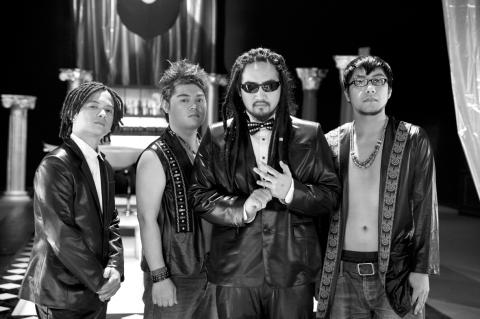
Photo courtesy of Arrival Music
“At that time, I didn’t know that [my music would sound like] reggae,” he said of writing his first songs. “I only knew that when I did it, it felt good, very smooth.”
“Of course my reggae is not so pure ... but anyway it just has that sound. And we’ve added some rock elements to it,” he said.
Matzka says he grew up listening to Spanish folk and Latin jazz at home and with friends, and hip-hop and reggae.
But he never expected to be using Caribbean rhythms when he started learning guitar and writing songs five years ago. He says it was the Paiwan language that led him there.
“I’ve tried many styles and I think [reggae] felt the most suitable,” Matzka said.
Indeed, on Ma Do Va Do, which earned Matzka a songwriting prize for best Aboriginal song, the Paiwan language lends itself well to his rapid-fire “toasting,” the rap-like chanting heard in dancehall music.
The language, at least in the way Matzka sings it, has a few sounds similar to the vowels and rolling R’s heard in Spanish.
Ma Do Va Do happens to be an exception in his repertoire. As he is not “100 percent fluent” in the Paiwan language, Matzka sings most of his songs in Mandarin, which presented another challenge.
“I found it was hardest to sing in Chinese, because the language sounds stiff and square. But when I added my [Aboriginal] accent to sing it, I found that it became smooth and sounded good,” he said.
Indigenous pride is one theme in Matzka’s song No K, in which he laments the mindless aping of American hip-hop culture among kids in Taiwan’s Aboriginal communities. One line goes, “At the end of the day, are you from the tribe, or are you from Brooklyn?” (到底是來自部落還是布魯克林區).
But the lyric that tends to elicit cheers from live audiences is “Taiwanese people sing Taiwanese songs!” (台灣人唱台灣歌), after which Matzka and his bandmates break into a traditional Aboriginal melody.
“Foreigners’ cultures are very cool, very beautiful,” he said in explaining why he wrote the song. “But our own culture is also very beautiful. Our languages are disappearing and the situation is serious. A lot of young people can’t speak their mother language. I’ve always thought this was a pity, and that we have to do something right away to preserve them.”
For his part, Matzka says he aims to record an album in the future that’s completely sung in his mother language.
For now, the Taipei-based singer appears to be grooming for stardom, starting with some name changes. His backing band, composed of fellow Taitung natives from both the Paiwan and Puyuma (卑南族) tribes, have dropped their moniker De Hot and now perform as simply Matzka (瑪斯卡樂團).
“It’s easier to remember and it suits us,” said Matzka, who declined to give his Mandarin name, although the Taiwan embassy in Paraguay listed it as Sung Wei-nung (宋唯農) in an online press release. (The band played a show in Asuncion in October last year as part of an official cultural exchange).
Matzka’s self-titled debut CD, released three weeks ago, has already sold more than 4,000 copies, according to his label and management company Arrival Music (有凰音樂). It’s an impressive figure for a Taiwanese indie artist, assuming the number is accurate.
If Matzka’s momentum keeps up, it’s not just reggae grooves that could percolate into the mainstream, but an Aboriginal language — Ma Do Va Do is certainly catchy enough for radio listeners.
Matzka says he hopes that just as a song sung in English can hold popular appeal among Mandarin speakers in Taiwan, so could a song sung in the Paiwan language.
“Even if people can’t understand it, they can still have fun singing it. I don’t feel language is the most important — the most important is to make people feel something,” he said.

Taiwan’s English education system is being pulled apart by three opposing forces. Bilingual Nation 2030 pulls students toward English and global communication. Artificial Intelligence (AI) readiness pulls them toward digital judgment, verification and AI-mediated work. But Taiwan’s old exam culture pulls them back toward memorization, grammar drills, timed reading and correct answers. If the education system keeps using old exams to define success, it risks producing graduates who are neither genuinely bilingual nor genuinely AI-ready, but trained for tasks machines can already perform. The first force is Bilingual Nation 2030. Launched in 2018, the policy aimed to “help Taiwan’s workforce connect
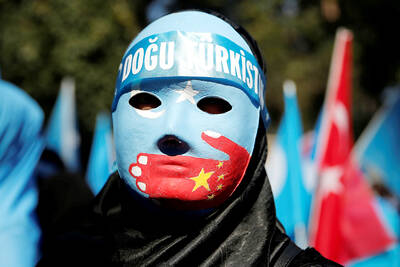
It seems every few days one bumps into one of those “real man” comments in which Taiwan is urged to “face reality” or similar, and “make a deal,” with the speaker implying that soon it will be too late. “Deal” advocates always present themselves as having a superior grip on reality, and the manly ability to make the “hard choice.” Their testosterone-laden language often echoes that of Taiwan sellout advocates. Note that such commentary always specifies a process (“make a deal, work with, make progress”), never the end state of what occupation by a violent authoritarian colonialist state will entail. In

There are shadowy cabals plotting to sell out Taiwan to be annexed by China, by invasion if necessary. Fortunately, they are buffoons. In 2019, former Bamboo Union gangster and founder of the China Unification Promotion Party (CUPP), Chang An-le (張安樂, colorfully known as “White Wolf”), led a protest at the Legislative Yuan against comments made by then-premier Su Tseng-chang (蘇貞昌) that in the event of an attack by China, he would never surrender, but would protect the nation by fighting to the end, even if he only had a broom. Chang had party members bring a wooden casket that they
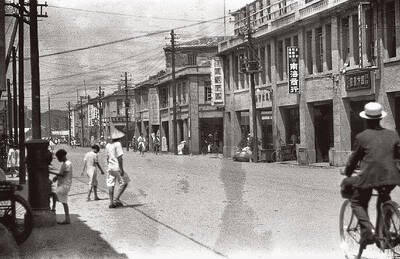
June 1 to June 7 "If all Taiwanese were as afraid of dying as you, then what would happen?” Physician Shih Chiang-nan (施江南) reportedly said this to his wife Chen Chiao-tung (陳焦桐) after she urged him to stop intervening on behalf of Taiwanese soldiers stranded overseas after serving in the Japanese Army during World War II. Shih had clashed with high-ranking officials over the issue, engaged in several heated arguments with Taiwan governor-general Chen Yi (陳儀) and allegedly shouted at general Ko Yuan-fen (柯遠芬), chief of staff of the Taiwan Garrison Command, over


 RSS
RSS