


Despite its relatively secluded location in a residential area near Zhongshan Junior High School MRT Station (中山國中捷運站), Hestia Tapas Bar (西班牙小酒館) is a popular spot for Spanish fare.
The restaurant’s hard-earned reputation is endorsed by a wealth of positive food blogger reviews, and to cater to an expanding clientele it operates two venues, located opposite each other.
A last-minute visit on a recent Sunday evening almost ended before it had begun. “We are fully booked tonight,” said a staff member when I called to make a reservation. “But I can squeeze you in for an hour.”
Four hours later, my dining partner and I arrived at the restaurant.
The interior palette is brown, black and white, and with jazzy Spanish background playing in the background, the atmosphere is more chill-out lounge than restaurant.
The spot soon filled up after the clock struck six.
We began with oven-dried tomato and homemade chili-flavored sausage (NT$200), a harmonic combination of sweetness and savoriness, followed by pan-fried mushroom with garlic (NT$200). The deep-fried garlic provided piquancy and crunchy texture, while a delectable blend of herbs was strongly aromatic without overwhelming the delicate taste of the mushrooms.
The chef’s adept use of spices was also evident in the cubes of roasted beef short rib steak with honey and mustard seeds (NT$290).
Sprinkled with lime juice, each bite was an explosion of flavors. We also gave two thumbs up to the restaurant’s popular deep-fried calamari rings — crunchy on the outside and chewy on the inside — with aioli (NT$220).
The tapas joint’s paella (NT$350 for a small plate and NT$900 for a large pan) was just the right moistness, and contained an appetizing mix of shrimps, clams, scallops and mussels.
Other recommendations include roasted pita bread pizza with green onion and white anchovies (NT$250), truffle risotto (NT$350) and fried potato with aioli and spicy sauce (NT$190). The drinks selection includes sangria (NT$220 per glass and NT$900 per pitcher), rebujito (NT$220 per glass) and Spanish red and white wines priced between NT$250 per glass and NT$1,650 to NT$3,500 per bottle.
With the fast and efficient service offered by the staff, who all wear black uniforms, the overall dining experience at Hestia Tapas Bar exceeded expectations.



Taiwan’s English education system is being pulled apart by three opposing forces. Bilingual Nation 2030 pulls students toward English and global communication. Artificial Intelligence (AI) readiness pulls them toward digital judgment, verification and AI-mediated work. But Taiwan’s old exam culture pulls them back toward memorization, grammar drills, timed reading and correct answers. If the education system keeps using old exams to define success, it risks producing graduates who are neither genuinely bilingual nor genuinely AI-ready, but trained for tasks machines can already perform. The first force is Bilingual Nation 2030. Launched in 2018, the policy aimed to “help Taiwan’s workforce connect
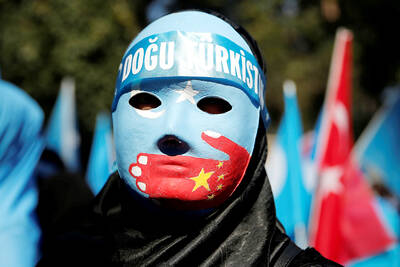
It seems every few days one bumps into one of those “real man” comments in which Taiwan is urged to “face reality” or similar, and “make a deal,” with the speaker implying that soon it will be too late. “Deal” advocates always present themselves as having a superior grip on reality, and the manly ability to make the “hard choice.” Their testosterone-laden language often echoes that of Taiwan sellout advocates. Note that such commentary always specifies a process (“make a deal, work with, make progress”), never the end state of what occupation by a violent authoritarian colonialist state will entail. In
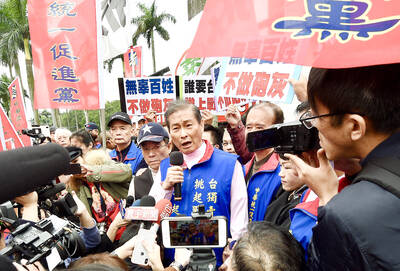
There are shadowy cabals plotting to sell out Taiwan to be annexed by China, by invasion if necessary. Fortunately, they are buffoons. In 2019, former Bamboo Union gangster and founder of the China Unification Promotion Party (CUPP), Chang An-le (張安樂, colorfully known as “White Wolf”), led a protest at the Legislative Yuan against comments made by then-premier Su Tseng-chang (蘇貞昌) that in the event of an attack by China, he would never surrender, but would protect the nation by fighting to the end, even if he only had a broom. Chang had party members bring a wooden casket that they
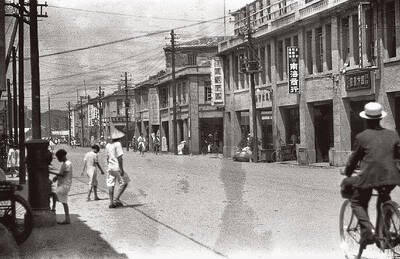
June 1 to June 7 "If all Taiwanese were as afraid of dying as you, then what would happen?” Physician Shih Chiang-nan (施江南) reportedly said this to his wife Chen Chiao-tung (陳焦桐) after she urged him to stop intervening on behalf of Taiwanese soldiers stranded overseas after serving in the Japanese Army during World War II. Shih had clashed with high-ranking officials over the issue, engaged in several heated arguments with Taiwan governor-general Chen Yi (陳儀) and allegedly shouted at general Ko Yuan-fen (柯遠芬), chief of staff of the Taiwan Garrison Command, over


 RSS
RSS