


When Justin Li, a bank worker in Taipei, attended Club Jump’s annual Christmas Eve bash a couple of years back, he was stunned by what he heard through the cacophony of music and gay male partygoers.
“Whether I was at the bar for a drink or lining up to use the washroom, all I could hear was people speaking English.” Gazing at the sprawling dance floor and its undulating sweaty bodies, he realized Taipei’s gay scene was in the midst of significant change.
Since the second half of the last decade, Taipei’s gay community has witnessed an influx of gay tourists from Japan, South Korea, Hong Kong, Singapore, Malaysia and Australia descending upon it for holiday, elevating the city’s status from the gay capital of Taiwan to a top gay destination for all of Asia.
While no official numbers exist, a recent survey by Fridae, an online gay media and services company, reveals a growing interest in Taipei among regional gay travelers.
According to unpublished data from its 2010 Asia Internet MSM (men who have sex with men) Sex Survey of almost 15,000 gay men, 9 percent had traveled to Taiwan in the past six months alone.
“Taiwan is increasingly a destination of choice for the discerning gay traveler because of its profile as a progressive society which embraces diversity,” says Fridae CEO Stuart Koe (古志耀). “News about Taiwan’s gay-friendly government and policies has been reported widely by Fridae and other international media, and the Internet has contributed to an increased awareness of the vibrancy of Taiwan’s gay community amongst affluent gay travelers in the region.”
Looking to bank on Taipei’s heightening popularity, the Australian company Formosa Travel and Holiday has released a 20-page Taipei Gay and Lesbian Travel Guide on the Internet, extolling the nightlife scene, gay-friendly accommodations and top citywide tourist sites.
“Taipei is a rising star for gay and lesbian travel,” says general manager Michael Lee. “A lot of gay people in Australia don’t know about Taipei. They would rather go to London or Europe. We are the only travel company in the country which has put out a gay and lesbian travel guide to Taipei and since its release in February, we have received well over 100 inquiries.”
J.J. Lai (賴正哲), owner of the bookstore Gin Gin’s in the Daan District (大安), says he has seen a marked increase in gay tourists “especially from Japan, Hong Kong, and Singapore” visiting his store over the last few years. Chang Yuan Shao (張原韶), who owns Cafe Dalida in Ximending’s (西門町) Red Square (紅樓), says he has noticed more gay Asian travelers coming to Taipei since 2006 and is not the least bit surprised.
“I think Taiwan is more open than their countries,” says Chang. “People can walk down the street here in Ximen and hold hands and nobody cares.”
Cheng Chih-wei (鄭智偉), secretary-general of the Taiwan Tongzhi Hotline Association (同志諮詢熱線), a lesbian, gay, bisexual and transgender rights organization, says Taipei’s welcome atmosphere is a huge draw for regional visitors. “We can go to a public place and not hide ourselves. There’s a lot of freedom.”
Ben Ng, 43, a masseur in Singapore, made his first visit to Taipei in March. “All my friends say that Taiwanese guys are friendly and good-looking.” Steve Chan, 31, an accountant from Hong Kong, has been to Taipei more than half a dozen times in the past 10 years and credits the city’s “comfortable environment and gay-friendly” atmosphere for his visits.
Steve Chi Leung, a computer consultant in Sydney, flew in on Dec. 30 last year with his boyfriend to spend New Year’s in the capital and take part in a string of massive parties at Luxy and Club Jump over several days. “Many friends from all over the world, mostly Asia, were going there too, so it would be a great time to catch up with them and have fun.”
Other than boasting an indefatigable gay nightlife with an abundance of bars and clubs, Taipei hosts Asia’s largest annual pride parade, which organizers say drew an estimated 25,000 participants in October last year. (Taipei, however, was not the first city to hold a pride parade in Asia. That distinction goes to Manila, which held the region’s first parade back in 1994.)
The political and legal environment has been warming up for some time too. Gay marriage legislation was drafted back in 2003 by the Legislative Yuan, although the bill has failed to budge since. In 2007, the government enacted a law forbidding discrimination based on sexual orientation in the workplace.
Compared to other Asian countries (and swathes of Europe and the US for that matter), Taiwan has become one of the region’s and world’s most progressive countries regarding gay rights and societal acceptance.
It hasn’t always been so good.
In 2003, Lai’s bookstore was targeted by police for selling gay pornographic content. The owner was later found guilty by a district court for selling “indecent” magazines. In 2004, police raided a sex party, or homepa (home 趴), and forced participants to pose for pictures in little more than their underwear. The images were sensationalized in the local media, leaving gay rights advocates on the defensive.
Even now, hurdles remain. After courting the gay vote in the run-up to his election, President Ma Ying Jeou
(馬英九) has lost the faith of a community that feels both used and ignored. And in March, more than 100 protestors gathered outside Taipei City Hall to demonstrate against a memo from the Ministry of Education calling for the prohibition of gay student groups in primary and secondary schools. Following the outrage by civil activists, the government has promised to include gay topics in textbooks starting from elementary school.
Of course, a plethora of Asian countries are home to vibrant and ever-expanding gay communities. Thailand, long-hailed as a gay paradise, continues to attract travelers the world over, but an ongoing political crisis and a wave of conservative sentiment sweeping the country in recent years (early last year, protestors barred the staging of a pride parade in Chiang Mai) has prompted gay travelers to look elsewhere.
Activists in South Korea and Singapore are up against powerful Christian evangelical figures. Malaysia’s gay community is growing, but it remains largely underground because homosexuality in the Southeast Asian nation is punishable by law. Tokyo and other Japanese cities are home to flourishing gay scenes, but inaction by the nation’s political leaders to better protect the rights of queers has left activists there frustrated. Hong Kong, too, has had its share of disheartening setbacks, despite its relative freedoms and untamed press. And though Shanghai is China’s undisputed gay capital, Asian tourists are not prepared to flock en masse to the mainland for a gay holiday just yet.
That leaves Taiwan, an island bridge where revelers from North and Southeast Asia congregate in the capital throughout the year.
But Taipei could face competition from an unlikely source. In recent months, Nepal has garnered widespread media attention for its effort to entice tourists by offering same-sex weddings at Everest Base Camp. A bid to paint Mount Everest pink has the backing of the government and is led by an openly gay parliamentarian who is currently working with a US-based gay and lesbian market research firm to draw not only tourists from across Asia but from around the world.
For now — and for the foreseeable future — Taipei remains the destination de jour for many Asian gay tourists.
For Justin Li, the gay community’s transformation from a primarily local scene to an international one is a welcome change. “It makes me feel that Taipei is a progressive city. I feel lucky that even though I don’t live in London, Paris, or New York, I live in the most open-minded city in Asia.”

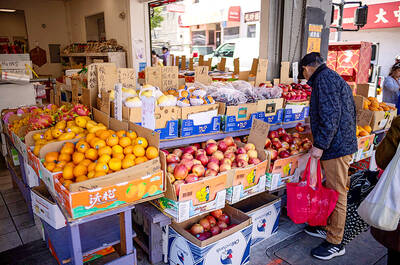
Ajay Verma, a consultant gastroenterologist at Kettering general hospital in Northamptonshire, says our gut is a “complex machine.” “It is constantly providing us with the nutrition we need, initially to grow and develop, and then for us to survive, thrive and repair from injury and illness.” How can we keep it functioning well? Put simply: “Make sure what you put into it is balanced, and that you clear out its waste products adequately,” Verma says. “In a general gastroenterology clinic, the most common conditions we see are irritable bowel syndrome (IBS), gastroesophageal reflux disease, inflammatory bowel disease and constipation,” says Nisha
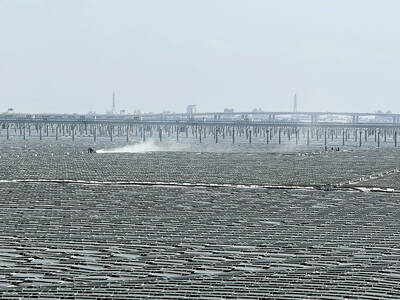
The arithmetic is straightforward and uncomfortable. By the end of 2025, Taiwan had committed itself to a 50-30-20 electricity mix — half natural gas, 30 per cent coal, 20 per cent renewables. The Ministry of Economic Affairs’s (MOEA) own monthly energy reports tell a different story. Natural gas reached 47.8 per cent of generation last year. Coal stood at 35.4 per cent, comfortably above its target ceiling. Renewables came in at 13.1 per cent, well short of the 20 per cent Taipei had pledged a decade earlier. Installed renewable capacity reached roughly half of the 12 gigawatts (GW) the government
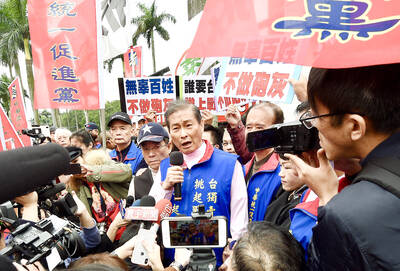
There are shadowy cabals plotting to sell out Taiwan to be annexed by China, by invasion if necessary. Fortunately, they are buffoons. In 2019, former Bamboo Union gangster and founder of the China Unification Promotion Party (CUPP), Chang An-le (張安樂, colorfully known as “White Wolf”), led a protest at the Legislative Yuan against comments made by then-premier Su Tseng-chang (蘇貞昌) that in the event of an attack by China, he would never surrender, but would protect the nation by fighting to the end, even if he only had a broom. Chang had party members bring a wooden casket that they
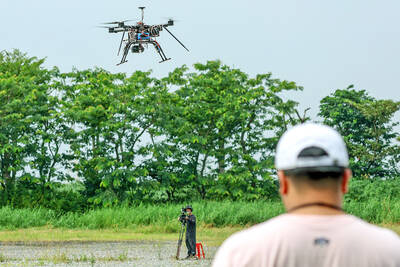
Taiwan’s drone exports are taking off, fuelled by the war in Ukraine, as Taiwanese companies seek a stake in the fast-growing global market for unmanned aerial vehicles (UAV). Low-cost drones used for reconnaissance and strikes are in high demand as governments around the world boost defense spending in the face of intensifying conflicts. A relative new player in the increasingly competitive industry, Taiwan’s pitch is to be an “Asian hub” for the production of UAVs and components free of Chinese materials, or “non-red.” That means its UAVs can be up to three times more expensive than their Chinese competitors, like the world’s biggest




 RSS
RSS