


The Greasy Spoon is a small cafe that serves a soul-satisfying burger in an unlikely place, near Wanfang Hospital (萬芳醫院) in Taipei’s Wenshan District (文山區).
But the locale suits owner and area resident Jim Chan (吉姆) perfectly. The San Francisco native loves the neighborhood but decided that the restaurant choices, consisting mostly of non-descript cafeterias, and cheap stir-fry and fast food restaurants, needed a little more “color.”
The menu appears to favor espresso drinks and teas at first glance, with just four burgers and two pasta dishes, ranging from NT$200 to NT$300.
But the food is definitely the star of the show, thanks to some homemade goodness and a little sweat. Chan says he heads to Neihu every morning at 7am to fetch the day’s ingredients at a fresh produce market and Costco, then rushes back to grind the beef and whip up hamburger patties before opening at noon.
The mushroom melt burger (NT$250), topped with sauteed white and shitake mushrooms and sliced jack cheese, was so good the first time I ordered it again on two follow-up visits. The beef patties, about 1cm thick, have a hearty, brothy flavor and are cooked medium rare, unless diners request otherwise. Chan says he uses USDA beef as opposed to Australian beef for its heavier bacon-like taste. The side of French fries was crispy and not too oily.
The burgers, which Chan calls “Texas-style,” come as a towering mass of beef patty, lettuce, tomato and raw onion sandwiched between a tall, buttery bun. Managing the first bite was a bit of a challenge, but also part of the fun. Make sure to ask for extra napkins.
The restaurant’s name aptly describes the food but is outclassed by the shop’s interior, which has a minimalist gallery look: white walls, gutted ceiling painted black and halogen lights.
Chan attributes his obsession with keeping things “simple and clean” to his military past — the 37-year-old is a US Marine veteran who served in Afghanistan and Iraq. A severe head injury from a friendly fire incident put him out of commission for several years and forced him to retire.
But maybe this also drives him to keep this 20-ping shop cozy and soothing. Ambient electronic or jazz always plays in the background, and natural light coming through wall-sized windows on two sides of the shop gives the space warmth And he even manages outdoor seating on wooden patio decks.
Chan says openly that he adjusts a few recipes for local clientele, such as the spaghetti with Bolognese sauce (NT$200), which is labeled “meatball spaghetti” on the already-outdated menu. He would prefer to make it less sweet and does so on request. Nonetheless, his rendition tastes like a classic, and it’s the rare instance in Taiwan where one finds fresh celery and carrot properly cooked in a Bolognese sauce.
Another concession to local customs to look out for: the burgers come already loaded with toppings and condiments like ketchup for the burgers and a zesty wasabe-mayonnaise in the case of the teriyaki chicken burger (NT$300). Those who don’t like surprises should advise the wait staff, who are supposed to ask but unfortunately never asked me.
The Greasy Spoon is located near the southeast corner of the intersection of Xinhai (辛亥) and Xinglong (興隆) roads.

Taiwan’s English education system is being pulled apart by three opposing forces. Bilingual Nation 2030 pulls students toward English and global communication. Artificial Intelligence (AI) readiness pulls them toward digital judgment, verification and AI-mediated work. But Taiwan’s old exam culture pulls them back toward memorization, grammar drills, timed reading and correct answers. If the education system keeps using old exams to define success, it risks producing graduates who are neither genuinely bilingual nor genuinely AI-ready, but trained for tasks machines can already perform. The first force is Bilingual Nation 2030. Launched in 2018, the policy aimed to “help Taiwan’s workforce connect

It seems every few days one bumps into one of those “real man” comments in which Taiwan is urged to “face reality” or similar, and “make a deal,” with the speaker implying that soon it will be too late. “Deal” advocates always present themselves as having a superior grip on reality, and the manly ability to make the “hard choice.” Their testosterone-laden language often echoes that of Taiwan sellout advocates. Note that such commentary always specifies a process (“make a deal, work with, make progress”), never the end state of what occupation by a violent authoritarian colonialist state will entail. In
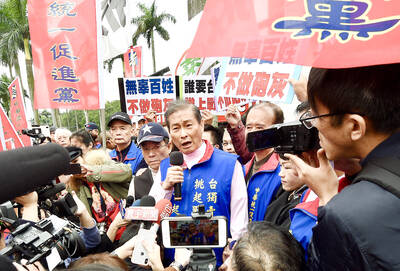
There are shadowy cabals plotting to sell out Taiwan to be annexed by China, by invasion if necessary. Fortunately, they are buffoons. In 2019, former Bamboo Union gangster and founder of the China Unification Promotion Party (CUPP), Chang An-le (張安樂, colorfully known as “White Wolf”), led a protest at the Legislative Yuan against comments made by then-premier Su Tseng-chang (蘇貞昌) that in the event of an attack by China, he would never surrender, but would protect the nation by fighting to the end, even if he only had a broom. Chang had party members bring a wooden casket that they
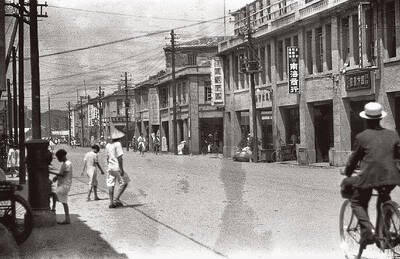
June 1 to June 7 "If all Taiwanese were as afraid of dying as you, then what would happen?” Physician Shih Chiang-nan (施江南) reportedly said this to his wife Chen Chiao-tung (陳焦桐) after she urged him to stop intervening on behalf of Taiwanese soldiers stranded overseas after serving in the Japanese Army during World War II. Shih had clashed with high-ranking officials over the issue, engaged in several heated arguments with Taiwan governor-general Chen Yi (陳儀) and allegedly shouted at general Ko Yuan-fen (柯遠芬), chief of staff of the Taiwan Garrison Command, over


 RSS
RSS