


The Battle of Red Cliff is an event known to every Chinese school student, not just as an encounter that altered history, but as a story that defines all manner of human virtue and vice. The National Palace Museum’s exhibition A Thousand, Thousand Churning Waves: The Legendary Red Cliff Heritage (捲起千堆雪 — 赤壁文物特展) looks back over some of the works, both in literature and in the visual arts, that helped define this millennia-old conflict as part of a Chinese national consciousness.
The exhibition, which runs until Aug. 31, mainly consists of calligraphy, books and paintings. Many of them are beautiful, but their significance is often buried deep in the notes that accompany each piece. To endow these scholarly items with greater dynamism, the museum has launched a series of artistic and educational activities that will take place in conjunction with the exhibition. The most elaborate component is the staging of two outdoor performances, one tonight and one on June 20, of theatrical pieces that feature characters who took part in the great battle.
The two performances, by the Beijing opera troupe of the National Guoguang Opera Company (國立國光劇團) and by puppetmaster Huang Chun-hsiung (黃俊雄), show that the story of Red Cliff remains very much a living part of Chinese traditional arts.
Like Agincourt or Waterloo, the figures in the battle lines on either side are more than dusty characters from the past. They have been turned into living embodiments of a cultural and moral consciousness. In recent years, comic books and video games have introduced the characters of the story to the young, and recently, the popularity of the story has been given a further boost by John Woo’s (吳宇森) massive star-studded two-part epic, Red Cliff (赤壁). The second installment was released in Taiwan at the beginning of this year.
Linking the National Palace Museum’s academic might with a topic that is so closely connected with popular culture seemed to be a winning idea. It was, therefore, disconcerting to hear the show’s chief curator, Lin Tien-jen (林天人), eagerly disowning any association with the popular expressions of interest in the story. That he might not want his serious and painstaking research undermined is understandable, but the determinedly scholarly presentation of the show runs counter to many major museums’ efforts to create exhibitions that wear their scholarship more lightly in an effort to foster a broader appeal.
For an audience familiar with the history of the Three Kingdoms and the works of literature that brought it to life, the exhibition has some astonishing treasures, not least a Sung Dynasty scroll by the poet Su Shi (蘇軾) of the Former Ode on Red Cliff (前赤壁賦), which helped turn the Battle of Red Cliff into a potent literary symbol both of the splendor of great ambition and of the impermanence of all man’s work.
Lin sees this work as a major milestone in the establishment of Red Cliff as a literary theme. The other side of the exhibition looks at the historical and practical aspects of the battle, with exhibits including a Sung Dynasty copy of pages from Sun Zi’s Art of War (孫子兵法) as annotated by Cao Cao (曹操), a major protagonist whose ambitions to bring southern China under his sway were scuppered at the Battle of Red Cliff. Then there are the illustrated books, the comics of former centuries, shown alongside learned speculation from ancient scholars about mundane aspects of archaic warfare in treatises such as the delightfully abstruse Description of the Machinery and Implements Employed on Rivers (河工器具圖說), an academic work from the Qing Dynasty.
Lin believes that his achievement in organizing this exhibition is to break out from the confines of an actual historical event and look at perceptions of it over many centuries. “The exhibition is not caught up in the events of 208 (when the battle was fought). It starts there, in the earth-shattering battle, then it becomes a topic from which artists and poets drew inspiration, and finally into a popular story known by all. I am looking at how the idea of Red Cliff developed through history and art,” Lin said.
The exhibition itself fails to update this iconography by not relating ancient artifacts to recognizable characters such as Tony Leung Chiu Wai (梁朝偉) and Takeshi Kaneshiro (金城武), who both play major parts in Woo’s movie. From the perspective of foreign visitors to the museum, who may well have at least heard about the Battle of Red Cliff as a result of the significant publicity for Woo’s films, the exhibition tantalizes, but offers little to draw them deeper into the subject.
The museum has attempted to make good this deficiency by staging a program of educational activities and performances, but the opportunity to build this kind of accessibility into the exhibition itself is wasted.
The desire to be enlightened about subjects of popular appeal can be seen from the fact that a Parents and Children DIY class (scheduled for June 21), which includes a special guided tour of the exhibition and various hands-on activities, is already full. Two further DIY activities aimed at families are scheduled for July 5 and July 15 (online bookings can be made at tech2.npm.gov.tw/signup/frontend/index.asp). An online educational game has also been designed for children (tech2.npm.gov.tw/98events/redcliffgame).

As mega K-pop group BTS returns to the stage after a hiatus of more than three years, one major market is conspicuously missing from its 12-month world tour: China. The omission of one of the group’s biggest fan bases comes as no surprise. In fact, just the opposite would have been huge news. China has blocked most South Korean entertainment since 2016 under an unofficial ban that also restricts movies and the country’s popular TV dramas. For some Chinese, that means flying to Seoul to see their favorite groups perform — as many were expected to do for three shows opening
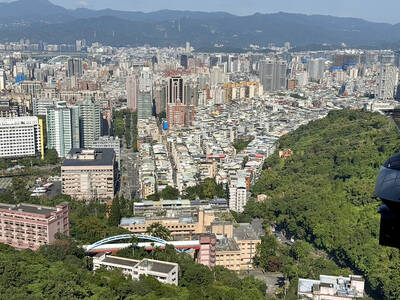
A recent report from the Environmental Management Administration of the Ministry of Environment highlights a perennial problem: illegal dumping of construction waste. In Taoyuan’s Yangmei District (楊梅) and Hsinchu’s Longtan District (龍潭) criminals leased 10,000 square meters of farmland, saying they were going to engage in horticulture. They then accepted between 40,000 and 50,000 cubic meters of construction waste from sites in northern Taiwan, charging less than the going rate for disposal, and dumped the waste concrete, tile, metal and glass onto the leased land. Taoyuan District prosecutors charged 33 individuals from seven companies with numerous violations of the law. This
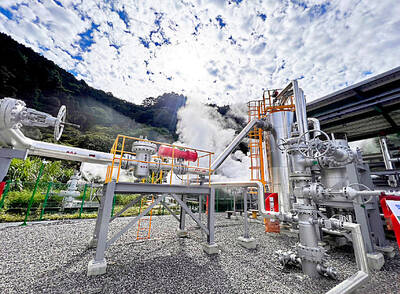
Taiwan’s semiconductor industry consumes electricity at rates that would strain most national grids. Taiwan Semiconductor Manufacturing Co (TSMC) alone accounted for more than 9 percent, or 2,590 megawatts (MW), of the nation’s power demand last year. The factories that produce chips for the world’s phones and servers run around the clock. They cannot tolerate blackouts. Yet Taiwan imports 97 percent of its energy, with liquefied natural gas reserves measured in days. Underground, Taiwan has options. Studies from National Taiwan University estimate recoverable geothermal resources at more than 33,000 MW. Current installed capacity stands below 10 MW. OBSTACLES Despite Taiwan’s significant geothermal potential, the
Chinese Nationalist Party (KMT) Chair Cheng Li-wun (鄭麗文) returned from her trip to meet People’s Republic of China (PRC) dictator Xi Jinping (習近平) bearing “a gift” for the people of Taiwan: 10 measures the PRC proposed to “facilitate the peaceful development of cross-strait relations.” “China on Sunday unveiled 10 new incentive measures for Taiwan,” wrote Reuters, wrongly. The PRC’s longstanding habit with Taiwan relations is to repackage already extant or once-existing policies and declare that they are “new.” The list forwarded by Cheng reflects that practice. NEW MEASURES? Note the first item: establishing regular communication mechanisms between the Chinese Communist Party


 RSS
RSS