


The BBC’s Written Archive Center at Caversham, Berkshire, overflows with fascinating handwritten notes — from figures as diverse as Puccini and the Rolling Stones. One from the post-punk band Yeah Yeah Noh in 1986 begs “Uncle John” Peel to please wear their T-shirt on Top of the Pops; another by the producer Dale Griffin describes UB40’s 1982 session as great, despite “flatulence and pestilence” threatening to wreck the recording.
The BBC’s archive project — which aims to make the resource more accessible and easier to understand, by putting its contents online — has been paid little attention. And while most interest has, perhaps understandably, focused on the TV and radio archives at Windmill Road in Brentford, Greater London, which account for nearly 1 million hours of programming, there are 25 more archives dating back to 1922, when the British Broadcasting Company was first established. They include the world’s largest collection of sheet music, almost everything ever recorded on gramophone, a vast news archive, 10m stills and a written archive that extends 7.2km.
Since his appointment six months ago, the BBC’s controller of archive development, Tony Ageh, has been working with the archive director, Roly Keating, to put the corporation’s plans into practice. Their ambitious scheme represents the most powerful and culturally significant project ever attempted by the BBC, they believe.
ALL THE NEWS THAT’S FIT TO ARCHIVE
“It’s rather like building the pyramids, because the people who are starting this will never see it completed,” Ageh says. “What we have is an unprecedented record of the cultural, historical and social life of a nation and of large parts of the world for more than half a century.” The written archive has been fastidiously curated by Jacquie Kavanagh for nearly 35 years. An archive serves as “the corporate memory” of the organization, she explains — meaning that its bread and butter role is contractual history, and checking for legal or editorial precedent.
The written archives are comprehensive until the 1960s, when the phone replaced written notes for much program planning. Microfilm records were used until the 1990s, and now program details are logged digitally. The breadth and scale of the corporation mean these archives are packed with production notes, program correspondence and contracts relating to just about anyone who has worked for the BBC since 1922. If you can think of a name, it will probably be there.
There is a 1963 handwritten letter from Brian Jones of the Rolling Stones to the music department, in which he applies for an audition, describing the band’s “authentic Chicago rhythm and blues music” inspired by Howling Wolf, Muddy Waters and Bo Diddley.
Another file shows the influential BBC producer Leslie Perowne accepting Roy Plomley’s 1941 pitch for Desert Island Discs with glee, wondering why nobody had thought of “such an obvious and excellent idea” before.
The collection of more than 100,000 music manuscripts includes a copy of La Boheme signed by Giacomo Puccini for Percy Pitt, the first musical director of the BBC, in 1906. And there are the original scores for Ronnie Hazlehurst’s Two Ronnies theme, Dad’s Army and Porridge, alongside furiously reworked lyrics for Blackadder’s wry opening sequence.
‘A MIRROR TO SOCIETY’
Most recently, Kavanagh has been pulling out files on Guy Burgess, the infamous double agent who began his career as a journalist for the BBC and the Times. “The archives are a fabulous source for socio-political history,” she says. “They hold up a mirror to society and reflect back the decisions that were made at the time and what happened behind the scenes.”
In December 1935, the historian George Trevelyan wrote to Cecil Graves — then program controller — supporting a job application by Burgess. “He was in the running for a fellowship in history, but decided that his bent was for the great world — politics, journalism. He is a first rate man, and has passed through the communist measles that so many of our clever young men go through, and is well out of it. I think he would prove a great addition to your staff …”
So where does the BBC start? The deadline for digitizing those parts of the archive deemed suitable has been set for 2022, 100 years after the archive began.
The corporation has started to make some headway, by establishing partnerships with other cultural organizations to address shared problems. The first such project to be confirmed is one with the British Film Institute that will focus on TV, radio and film assets. “We’ve both got the same problems to solve, whether that’s programs on George Orwell, Men Behaving Badly or Morecombe and Wise, but we can coordinate on structure, on hardware and on methods and models of discovery of content,” says Ageh.
The kernel of the BBC Archive is already online at bbc.co.uk/archive, where the first few collections are being presented to the public. Further development may take the form of crowdsourcing, Ageh says, perhaps granting access to parts of the archive to colleges or specialist groups, such as the Sherlock Holmes Society. Such organizations could help develop and validate the content. He has already asked staff across the corporation’s editorial divisions to prioritize content according to its historical and cultural relevance, and also to its long-term mainstream appeal.
PERSONAL HISTORIES
There could be a million stories waiting to be told in the BBC Archive. Ageh himself may be a good indication of the hidden delights in store for people across the country. He says that their natural instinct, after looking up favorite TV shows or personalities, is to look at the regional news archive of the time to retrace events from childhood — friends, schools or the big events of the day. Much of Ageh’s enthusiasm comes from his own experience of tracing correspondence between the BBC and his estranged father, who had worked briefly as a correspondent in Nigeria.
“I’d been going on for years about how the archives contain the personal histories of tens of thousands of people, but I never thought I’d be one of them,” he says. “The fact that I found out more about my father from the BBC’s archive than I had known in the 40-odd years up to then was stunning. More stunning still is the possibility that we may still have programs featuring him, his work or simply his voice. The idea of being able to give that to my children — his grandchildren — is miraculous.”
Perhaps the best way to get the archive online would be to leave a canister of documents outside every door in the country, Ageh jokes. With the scale of the mission ahead, that might not be such a bad idea.

Taiwan’s overtaking of South Korea in GDP per capita is not a temporary anomaly, but the result of deeper structural problems in the South Korean economy says Chang Young-chul, the former CEO of Korea Asset Management Corp. Chang says that while it reflects Taiwan’s own gains, it also highlights weakening growth momentum in South Korea. As design and foundry capabilities become more important in the AI era, Seoul risks losing competitiveness if it relies too heavily on memory chips. IMF forecasts showing Taiwan widening its lead over South Korea have fueled debate in Seoul over memory chip dependence, industrial policy and
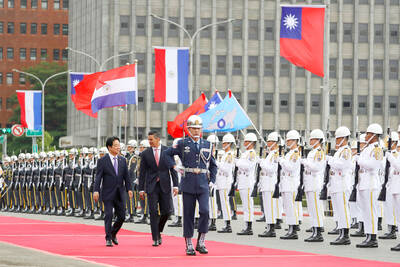
“China wants to unify with Taiwan at the lowest possible cost, and it currently believes that unification will become easier and less costly as time passes,” wrote Amanda Hsiao (蕭嫣然) and Bonnie Glaser in Foreign Affairs (“Why China Waits”) this month, describing how the People’s Republic of China (PRC) is playing the long game in its quest to seize Taiwan. This has been a favorite claim of many writers over the years, easy to argue because it is so trite. Very obviously, if the PRC isn’t attacking Taiwan, it is waiting. But for what? Hsiao and Glaser’s main point is trivial,
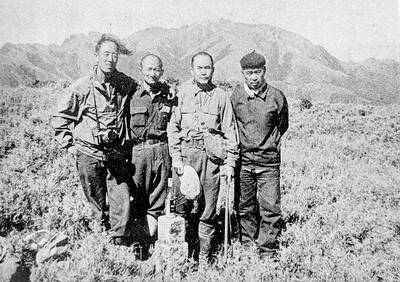
May 18 to May 24 Gathered on Yangtou Mountain (羊頭山) on Dec. 5, 1972, Taiwan’s hiking enthusiasts formally declared the formation of the “100 Peaks Club” (百岳俱樂部) and unveiled the final list of mountains. Famed mountaineer Lin Wen-an (林文安) led this effort for the Chinese Alpine Association (中華山岳協會). Working with other experienced climbers, he chose 100 peaks above 10,000 feet (3,048m) that featured triangulation points and varied in difficulty and character. The list sparked an alpine hiking craze, inspiring many to take up mountaineering and competing to “conquer” the summits. A common misconception is that the 100 Peaks represent Taiwan’s 100 tallest
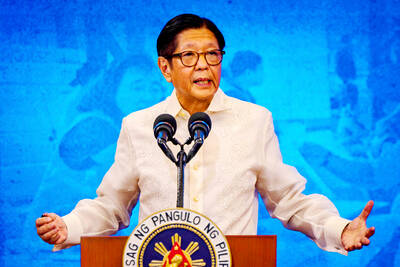
And so, in the wake of US President Donald Trump’s trip to the People’s Republic of China (PRC), all the experts on the Strait of Hormuz suddenly became experts on US-China-Taiwan relations. The Internet has certainly expanded human knowledge. Lots of these sudden experts made noise this week about Trump’s words after the meeting with PRC dictator Xi Jin-ping (習近平). Trump is going to sell out Taiwan! Longtime Taiwan commentator J. Michael Cole summed the situation up neatly in the Guardian: “We need to keep in mind that he has a tendency to say many things — sometimes contradicting himself within


 RSS
RSS