


So Free is as much a tribute to the LOHAS spirit as it is a pizzeria serving up some of the tastiest pies in town.
Opened last week, the hole-in-the-wall, located across from a park and up the street from Sababa in Gongguan (公館), resembles the inside of a small rustic cabin. Logs are stacked under the L-shaped bar — fuel for the custom-built brick oven in which the vegetarian pizzas are cooked.
Embers from the oven, which releases a pleasant aroma of burning wood, are placed in traditional wicker baskets and set on the long wooden bar for patrons to warm their hands. Two long wooden benches, the restaurant’s limited seating, face the kitchen area.
Like the restaurant’s architecture, So Free keeps the menu simple with an eye towards the environment and wholesome fare. There is a choice of six small pizzas (NT$120), with which there can be no mixing and matching of toppings.
The service is quick and the portions generous but not gluttonous. The pizza crusts are thin (those used to Pizza Hut might may think a little too thin) and cooked crispy on the outside with the center left soft and chewy.
The basil (pesto) mushroom is the only pie served without marinara sauce and is my favorite so far: slices of fresh king oyster mushrooms and onions on a bed of delicious homemade pesto sauce and topped with just the right amount of mozzarella cheese, and not too greasy.
The potato rosemary pizza sees the pesto sauce replaced with marinara. Generous amounts of diced potatoes make up the “meat” of this pie with dry rosemary sprinkled over the spuds and covered with mozzarella. I spent the first minute smelling the mouthwatering aroma of freshly cooked rosemary before digging in.
The other four pizza selections are mushroom and asparagus, smoked cheese, apple cinnamon and the somewhat bizarre ginger and egg (ginger superman).
The beverage menu is limited to organic barley tea (NT$20), a malt drink called Karamalz (NT$35), Perrier (NT$50) and apple juice (NT$65).

Taiwan’s English education system is being pulled apart by three opposing forces. Bilingual Nation 2030 pulls students toward English and global communication. Artificial Intelligence (AI) readiness pulls them toward digital judgment, verification and AI-mediated work. But Taiwan’s old exam culture pulls them back toward memorization, grammar drills, timed reading and correct answers. If the education system keeps using old exams to define success, it risks producing graduates who are neither genuinely bilingual nor genuinely AI-ready, but trained for tasks machines can already perform. The first force is Bilingual Nation 2030. Launched in 2018, the policy aimed to “help Taiwan’s workforce connect
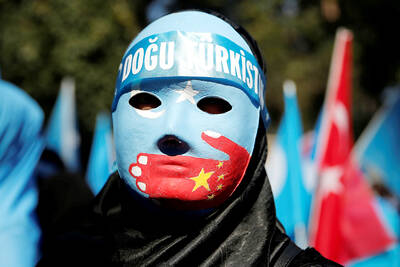
It seems every few days one bumps into one of those “real man” comments in which Taiwan is urged to “face reality” or similar, and “make a deal,” with the speaker implying that soon it will be too late. “Deal” advocates always present themselves as having a superior grip on reality, and the manly ability to make the “hard choice.” Their testosterone-laden language often echoes that of Taiwan sellout advocates. Note that such commentary always specifies a process (“make a deal, work with, make progress”), never the end state of what occupation by a violent authoritarian colonialist state will entail. In
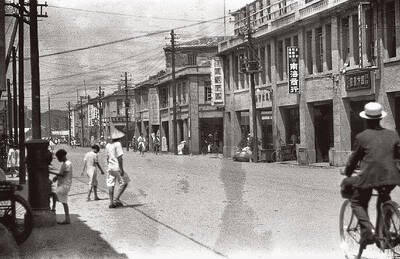
June 1 to June 7 "If all Taiwanese were as afraid of dying as you, then what would happen?” Physician Shih Chiang-nan (施江南) reportedly said this to his wife Chen Chiao-tung (陳焦桐) after she urged him to stop intervening on behalf of Taiwanese soldiers stranded overseas after serving in the Japanese Army during World War II. Shih had clashed with high-ranking officials over the issue, engaged in several heated arguments with Taiwan governor-general Chen Yi (陳儀) and allegedly shouted at general Ko Yuan-fen (柯遠芬), chief of staff of the Taiwan Garrison Command, over

“Taiwan’s Opposition Leader Comes to US With a Message Straight Out of Beijing” read a May 31 headline in the Wall Street Journal. Top US administration officials and members of Congress almost certainly read the WSJ, and if there was a bullet point takeaway that people in Washington should absorb ahead of Chinese Nationalist Party (KMT) Chair Cheng Li-wun’s (鄭麗文) arrival in DC on June 9, that headline is it. The last few columns have discussed this very topic, and the timing is not coincidental. While those top officials likely do not read the Taipei Times, judging by the number


 RSS
RSS